A cavity that needs repair
Decay can create a hole even before you notice discomfort. When a cavity needs restoring, a filling rebuilds the affected area after the dentist prepares the tooth.


A small repair can make an everyday difference. Explore tooth-coloured fillings in Milton, with care that considers your comfort, your bite, and the natural look of your smile.
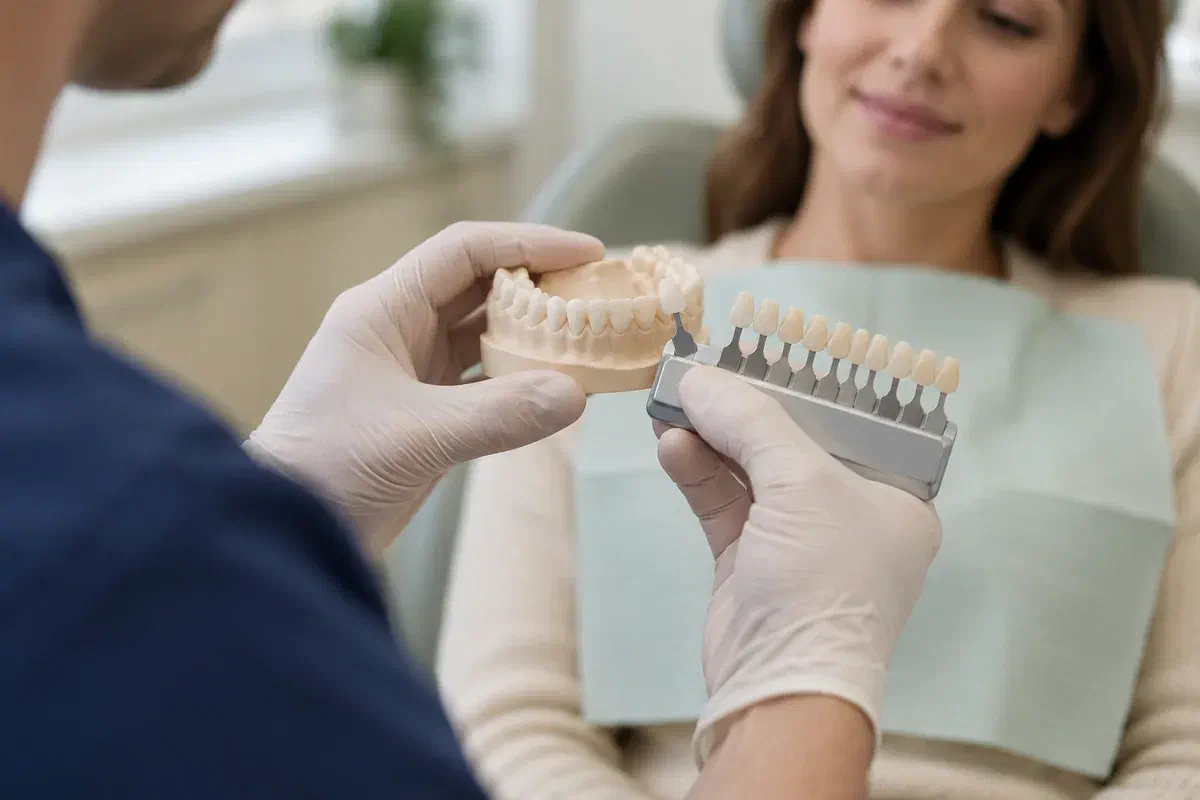
A composite filling replaces a damaged area of a tooth with a resin material that can be matched to the surrounding enamel. It is shaped directly on the tooth, helping rebuild the surface you use to bite, chew, and smile.
The starting point is understanding what your tooth needs. A small cavity, a chipped edge, and an older filling with a problem can look similar from the outside, but they may call for different care. At Milton Dental Clinic, we begin with an assessment and a conversation about your options.
You do not need to arrive knowing which treatment to request. Tell us what you have noticed, how long it has been happening, and what matters to you. We will help you understand the next step.
A filling is one possible response to tooth damage. An examination helps determine the cause, the extent of the problem, and whether there is enough healthy tooth to support a repair.
Decay can create a hole even before you notice discomfort. When a cavity needs restoring, a filling rebuilds the affected area after the dentist prepares the tooth.
Composite may suit a limited area of damage. The position of the chip, your bite, and any deeper crack help determine whether a direct repair is appropriate.
A rough edge or a change around an older filling deserves attention. It does not automatically mean the whole filling needs replacing; the recommendation depends on what the examination shows.
Sensitivity has several possible causes. Describe what triggers it and how long it lasts rather than assuming that every sensitive tooth needs a filling.
Composite is often considered when appearance matters, including suitable repairs on visible teeth. It can also be used for selected back-tooth cavities, where the size of the filling and chewing forces need particular attention.
There are practical limits as well as advantages. The tooth must stay sufficiently dry during placement, and a large or heavily loaded repair may need a different approach. A material that suits one tooth may not be the right choice for the next.
Patient information: ADA — tooth-coloured fillings · FDA — filling materials
The aim is to blend the restoration with neighbouring enamel, rather than choosing one shade for every smile.
Bonding to the tooth can allow the dentist to preserve healthy structure where the condition of the tooth permits.
Many direct fillings can be placed in one treatment appointment. The assessment and any additional care may require separate visits.
Knowing what happens next can make a visit feel more manageable. Tell us if you are nervous or would like a pause; questions are welcome throughout your appointment.
We review your concern and examine the area. X-rays may be recommended when they would help assess decay or the surrounding structures. Before treatment, discuss the proposed repair, alternatives, and estimated fee.
Local anaesthetic may be used to numb the area. The dentist prepares the damaged portion and keeps the working area clean and dry so the filling can bond appropriately.
The composite is placed and shaped, often in layers hardened with a curing light. Careful contouring helps recreate the tooth’s surface and its contact with the neighbouring tooth.
The restoration is finished and polished, and your bite is checked. You will receive guidance for the treated tooth and an opportunity to ask about eating, cleaning, or anything that still feels unfamiliar.
Follow the instructions given for your own treatment. If something does not feel right, let us know rather than waiting until your next routine visit.
Avoid chewing while your mouth is numb, and take care with hot drinks so you do not accidentally injure your cheek, lip, or tongue.
Some temporary sensitivity can occur. Contact the clinic if pain is worsening, sensitivity is not settling, or the filled tooth seems to meet first when you bite.
Brush twice daily with fluoride toothpaste and clean between your teeth each day. A filling repairs damage, but the tooth can still develop decay around it.
Patient information: Cleveland Clinic — dental fillings
Bring your questions, even if you are unsure how to describe the problem. We can start with what you are noticing.
Patient information: CDA — tooth-coloured fillings · FDA — existing amalgam fillings
Visit our Bronte Street practice to discuss a cavity, an older filling, or a change you have noticed. Start with an assessment and leave the conversation with a clearer understanding of your options.
For significant pain or swelling, please call. Online requests are for non-urgent enquiries.
