Decay between teeth
Surfaces where teeth touch are hard to see and easy to miss with a toothbrush. When decay there needs treating, it is removed and the contact is rebuilt.


Told you have a cavity, but the tooth feels perfectly fine? For people coming from Burlington, we show you what the exam found and explain why a tooth-coloured filling might be suggested now.
Decay rarely announces itself early. It can work through enamel for some time before a tooth becomes sensitive, which is why many cavities are found on X-rays or during a routine exam rather than because of pain.
Treating a cavity while it is small usually means a more modest repair. A composite filling replaces the decayed portion with a tooth-coloured resin that bonds to the remaining tooth and is shaped to restore its surface. Not every early change needs drilling, though; some can be monitored and supported with prevention, and the dentist will tell you which category yours falls into.
Anyone from Burlington is welcome to ask to see the image and have it explained. Understanding the finding makes the decision yours.
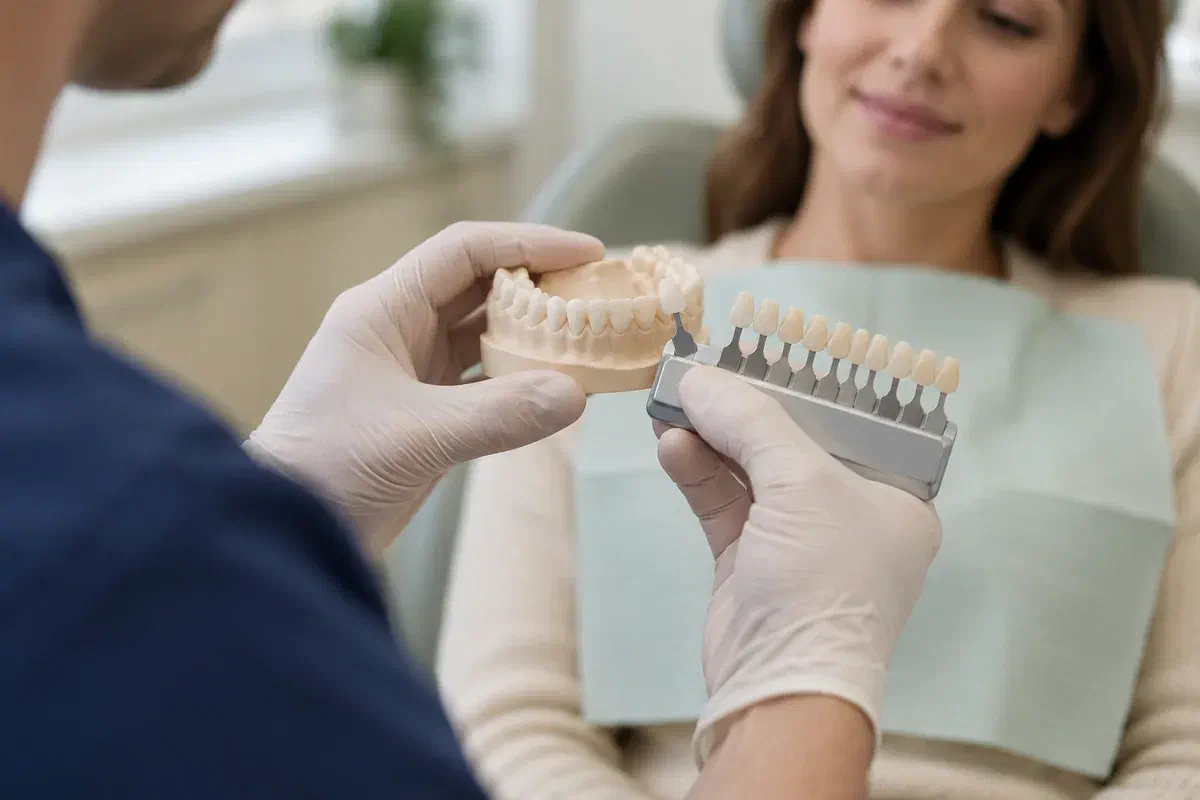
The same small repair can follow quite different problems. Examination shows the cause, how far it reaches, and whether enough healthy tooth surrounds it for a filling to be reliable.
Surfaces where teeth touch are hard to see and easy to miss with a toothbrush. When decay there needs treating, it is removed and the contact is rebuilt.
A minor chip can sometimes be restored with composite. The dentist considers where it is, how much force it takes when you chew, and whether there are signs of a deeper crack.
Changes along the border of earlier work can be spotted at a checkup. Whether that leads to a repair, a replacement or simply watching depends on what is seen.
A tooth that is sensitive is not necessarily one that needs filling. When you describe it, mention what sets it off and how long the feeling stays.
Composite suits many early cavities because it bonds to the tooth and can be shaded to blend in. It is used on front teeth and on selected back teeth, where the dentist pays close attention to the filling’s size and the chewing forces it will face.
There are trade-offs to discuss too. The material needs a dry tooth during placement, and an extensive or heavily stressed restoration might call for a different solution. A material that is ideal in one spot may not be right in another.
Patient information: ADA — tooth-coloured fillings · FDA — filling materials
A colour is selected for the tooth in question, so the filling blends with the enamel around it.
With a bonded material, the dentist may be able to preserve more healthy structure when the tooth’s condition allows.
Many small fillings are completed in one treatment visit. Assessment or other care may be booked on another day.
Knowing the order of things can make the time pass more easily. You can ask for a break or a quick explanation whenever you like.
We go over what was seen and examine the tooth. Where it would help, X-rays may be suggested to assess the decay and the nearby structures. Before anything starts, we discuss the repair, the alternatives and an estimated fee.
Local anaesthetic may be given to numb the area. The decayed portion is removed and the tooth is kept clean and dry so the composite can bond.
The resin is placed in layers and set with a curing light. The dentist contours it to rebuild the tooth’s surface and its contact with the neighbouring tooth.
The filling is polished and checked against your bite. You get advice for the tooth and time to ask about eating, flossing or anything that feels unfamiliar.
Your dentist’s instructions take priority. If the tooth does not feel right, tell us instead of holding out until your next appointment.
Do not chew while your mouth is still numb, and be wary of hot drinks; a numb lip or tongue is easy to hurt without realising.
Some mild sensitivity may come and go. Contact the clinic if pain is getting worse, sensitivity persists, or the filled tooth seems to land before the others.
Brush with fluoride toothpaste twice a day and clean between teeth daily. New decay can still begin around a filling, especially on surfaces that touch.
Patient information: Cleveland Clinic — dental fillings
Ask whatever is on your mind. If you are not sure how to put it, tell us what you were told and we will explain it.
Patient information: CDA — tooth-coloured fillings · FDA — existing amalgam fillings
Make the trip from Burlington to our Bronte Street practice to talk about a cavity found at a checkup, a small chip or an older filling. We assess first, so you leave knowing what the tooth needs.
Please phone about significant pain or swelling. Use online requests for non-urgent matters.
