Illustrative dental consultation with a patient discussing her care
Restorative Dentistry

Composite Fillings in Etobicoke

Making a longer trip for dental work means every visit should count. From Etobicoke, you can plan a tooth-coloured filling with a clear sequence of appointments and know in advance when a problem needs closer urgent care.

Making the trip worthwhile

Fewer visits, better organised

When the clinic is a fair way from home, the practical questions come first. How many appointments will this need? What can be done in one sitting? And what happens if something goes wrong between visits?

A composite filling is often one of the more straightforward repairs to plan. The dentist removes decay or damaged tooth, then bonds a tooth-coloured resin in place and shapes it to restore the surface. Many direct fillings are completed in a single treatment visit, but the assessment may show a different need, such as a crack, a large missing section or an inflamed nerve.

For people coming from Etobicoke, we try to map out the whole sequence early, so you can group visits sensibly and avoid unnecessary trips.

Map out your visits
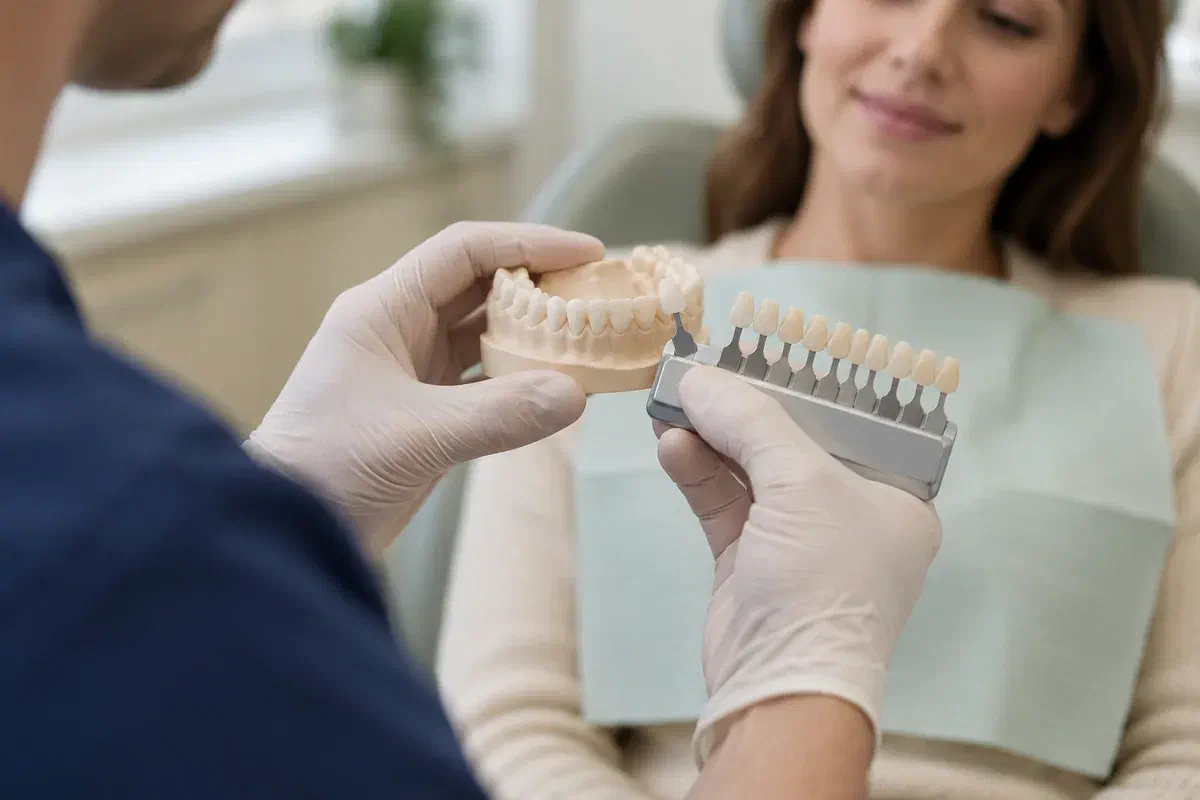
A dental model and shade guide illustrating tooth-colour selection
Is it a filling problem?

Sorting the cause before the trip

A filling is only one possible answer to a damaged tooth. Examination shows what caused the problem, its extent, and whether there is enough healthy tooth for a direct repair.

A cavity found or suspected

Decay may need treatment before it hurts. If it does, the affected portion is removed and composite fills the space, rebuilding the tooth’s shape.


A chipped or broken edge

A small break may be suited to composite. The site of the chip, how your teeth meet, and any crack extending deeper determine whether a direct repair is wise.

An existing filling with a problem

An edge that catches, or a change around old work, is worth assessing. It may need repair, replacement, or simply monitoring; the findings guide the choice.

Sensitivity is not always a sign that a filling is needed. Note the trigger and how long the discomfort lasts, as this helps narrow down the cause.

What composite brings

A discreet repair, done directly

Composite is popular for visible teeth because its shade can be matched to your enamel. On back teeth it is also used for suitable cavities, provided the repair is not too extensive and the forces of chewing are considered.

Some conditions limit its use. Bonding needs a dry field, and a large restoration or one under heavy load may last better with a different approach. One tooth’s ideal material is not always another’s.

Patient information: ADA — tooth-coloured fillings · FDA — filling materials

A carefully chosen shade

Colour is picked for the individual tooth, so the repair blends rather than standing out.

Natural tooth conserved

Bonding can help the dentist keep healthy tooth structure where the tooth’s condition makes it possible.

Often finished in one go

A direct filling usually needs one treatment appointment; the exam or extra care may be separate.

What the day looks like

One appointment, four stages

Knowing what is ahead makes a longer outing easier to plan. Ask for a break whenever you need one, and bring any questions.

  1. Assess and plan

    We discuss your concern and examine the tooth. X-rays may be recommended when they would help evaluate decay or the surrounding structures. You hear the proposed repair, alternatives and estimated fee before treatment, and we talk about how many visits to expect.

  2. Numb and prepare

    A local anaesthetic may be used to numb the area. Damaged tooth is removed and the site kept clean and dry so the resin can bond.

  3. Build it up

    Composite is applied in layers and hardened with a curing light. The dentist shapes the tooth’s surface and its contact with the next tooth.

  4. Finish before you head home

    The filling is polished and your bite checked carefully, since a return trip for a small adjustment is less convenient. Ask about eating, cleaning or anything that feels unfamiliar before you leave.

On the way home and after

Know what’s normal, and what isn’t

Follow the advice for your treatment. If something does not feel right, call us before deciding whether to make the trip back.

Wait for feeling to return

Avoid chewing while numb, and be careful with hot drinks so you do not injure a lip, cheek or tongue you cannot feel yet.

Notice the bite over a day or two

Mild, temporary sensitivity can occur. Phone if pain increases, sensitivity does not settle, or the filled tooth seems to hit before the others.

Keep cleaning as usual

Brush two times a day using fluoride toothpaste and clean between teeth daily. Decay can still form around a filling’s edges.

Patient information: Cleveland Clinic — dental fillings

When plans change

If the tooth needs more than a filling

Ask what a recommendation would achieve and how the alternatives compare, including how many visits each would take. The answer should depend on the tooth’s condition.

When a filling is appropriate

Composite or another direct material

Location, moisture control, cavity size and bite forces all affect the choice of material. Ask about the advantages and drawbacks of each option before agreeing.

When support is needed

Crown or partial coverage

If much of the tooth is missing or weak, a larger restoration may be advised, which usually involves more than one visit. A crown can protect a tooth unable to hold a filling.

When the pulp is infected

Root canal treatment

A filling cannot address infection inside the tooth. Depending on the diagnosis, root canal treatment and an appropriate final restoration may be discussed.

Patient information: ADA — crowns · ADA — root canals

Planning questions

Before you make the drive

Ask anything that helps you plan. If you cannot pin down the problem, describe what you have felt and we will go from there.

(905) 876-4488
Can the exam and the filling happen on the same day?
Sometimes, depending on what the exam shows and the time available. Mention when booking that you are travelling a distance, and we can discuss whether combining them is realistic for your tooth.
What if a filling breaks when I’m far from the clinic?
Call us for advice first. A small chip without pain can often wait for a planned visit, while severe pain or swelling may need prompt care closer to home in Etobicoke. Swelling that affects breathing or swallowing needs emergency care.
Is a temporary filling ever used?
In some situations, yes, for example when a tooth needs time to settle or further treatment is planned. The dentist will explain why if one is suggested and when the final repair would follow.
How can I tell whether tooth pain is urgent?
Pain that is severe, getting worse, keeps you awake, or comes with swelling or fever deserves a prompt call. Mild sensitivity to cold that fades quickly is usually less pressing but still worth mentioning.
Which teeth are best suited to composite?
Composite is often used for front teeth and for small to moderate cavities on back teeth. Very large repairs or teeth under heavy bite forces may suit another option. The dentist will explain the reasoning for yours.
Should a sound silver filling stay where it is?
Often, yes. Removing an intact amalgam filling with no decay beneath it can mean losing healthy tooth. Ask the dentist about any specific concern before choosing to replace it.

Patient information: CDA — tooth-coloured fillings · FDA — existing amalgam fillings

Etobicoke to Bronte Street

A well-planned repair starts here.

Visit our Bronte Street practice to have a cavity, a chip or an older filling assessed. We plan the sequence with you, so each trip has a clear purpose and you know what comes next.

For marked pain or swelling, call us first. Use the online request only when the concern can wait.

Visit Milton Dental Clinic
Unit 1, 342 Bronte St. S, Milton, ON L9T 5B7
Get directions Clinic hours
Monday–Thursday
11am–7pm
Friday–Sunday
By appointment only

Areas we serve

  • Milton
  • Oakville
  • Mississauga
  • Georgetown
  • Halton Hills
  • Acton
  • Campbellville
  • Brampton
  • Burlington
  • Puslinch
  • Rockwood
  • Erin
  • Caledon
  • Etobicoke
  • Old Milton
  • Bronte Meadows
  • Timberlea
  • Dorset Park
  • Dempsey
  • Clarke
  • Beaty
  • Coates
  • Harrison
  • Scott
  • Willmott
  • Ford
  • Bowes
  • Cobden
  • Walker
  • Mountain View
  • Milton Heights
  • Hawthorne Village
  • Valley View
  • Fallingbrook
  • Nassagaweya
  • Trafalgar
  • Esquesing
  • Nelson
  • Brookville
  • Moffat
  • Glen Williams
  • Norval
  • Limehouse
  • Stewarttown
  • Ashgrove
  • Hornby
  • Silver Creek
  • Speyside
  • Scotch Block
  • North Oakville
  • River Oaks
  • Glen Abbey
  • West Oak Trails
  • Palermo
  • Bronte Creek
  • College Park
  • Joshua Creek
  • Uptown Core
  • Preserve
  • Iroquois Ridge
  • Lisgar
  • Meadowvale
  • Meadowvale Village
  • Churchill Meadows
  • Erin Mills
  • Central Erin Mills
  • Streetsville
  • East Credit
  • Creditview
  • Heartland
  • Sheridan
  • Mount Pleasant
  • Credit Valley
  • Huttonville
  • Churchville
  • Springbrook
  • Northwest Brampton
  • Bram West
  • Fletcher's Meadow
  • Fletcher's Creek South
  • Alton Village
  • Orchard
  • Millcroft
  • Headon Forest
  • Tansley
  • Brant Hills
  • Tyandaga
  • Kilbride
  • Lowville
  • Aberfoyle
  • Morriston
  • Arkell
  • Hillsburgh
  • Freelton
  • Carlisle
  • Waterdown
  • Flamborough
  • Mountsberg

How can we help?

Milton Dental Clinic

Have a question about your smile? Choose the option that works best for you.

For urgent dental concerns, please call.
Messages are reviewed during clinic hours.