Decay reaching the inner tooth
As a cavity moves past the enamel, sweets and cold may start to register. Where it needs treatment, the decay is removed and the space rebuilt with composite.


A zing when you bite into something sweet can mean decay, or something else entirely. From anywhere in Halton Hills, you can have the tooth examined first and hear whether a tooth-coloured filling is really the answer.
You bite into a cookie and one tooth answers with a sharp little jolt. It fades, but it keeps happening. A cavity is one possible reason; exposed root surfaces, a cracked tooth or a leaking older filling are others.
If decay is the cause, a composite filling is one way to deal with it. The dentist clears out the damaged tooth and replaces it with a resin in a shade close to your enamel, bonded on and shaped to restore the chewing surface. If the cause lies elsewhere, a filling would not help, which is why the exam comes before any treatment.
People booking from Georgetown, Acton, Glen Williams and other parts of Halton Hills can simply tell us when the twinge happens and which side it is on. We take it from there.
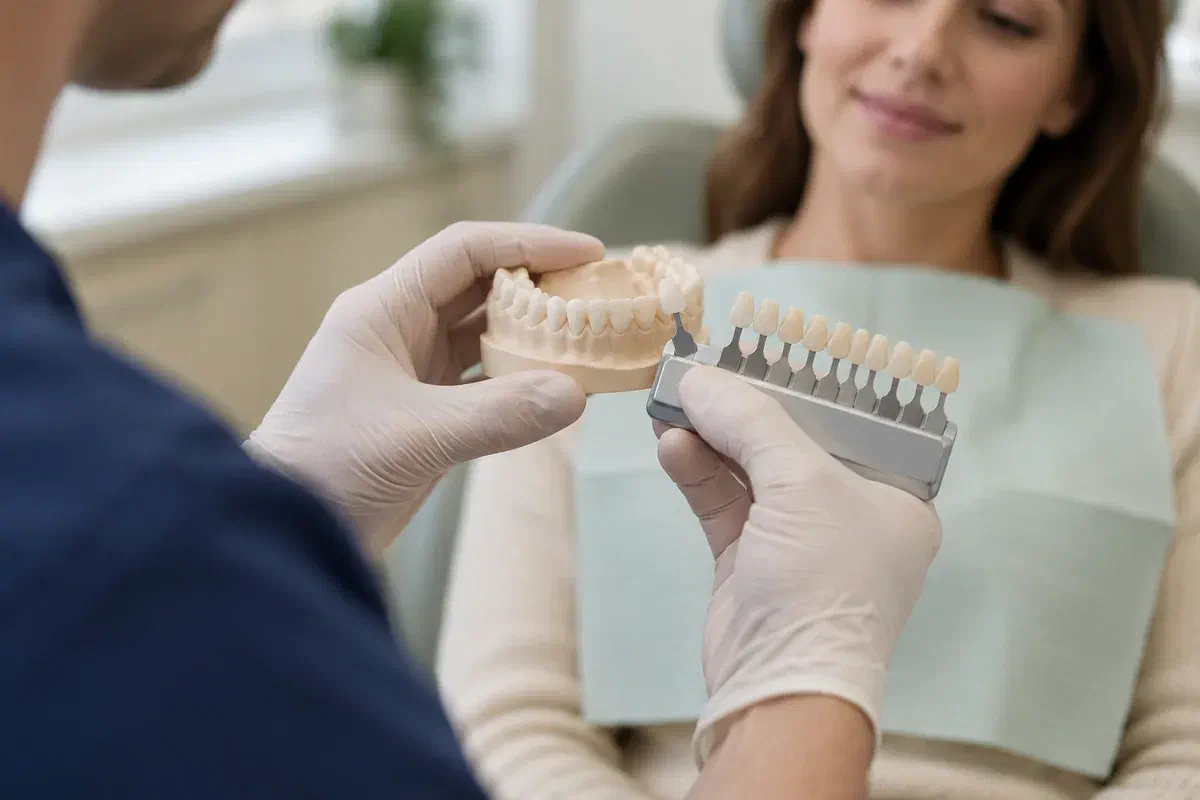
Several problems can look or feel alike. Examination identifies the cause, how much of the tooth is affected, and whether there is enough healthy structure for a bonded filling.
As a cavity moves past the enamel, sweets and cold may start to register. Where it needs treatment, the decay is removed and the space rebuilt with composite.
A small break can leave a sensitive spot. Whether composite suits it depends on the chip’s position, your bite and whether a crack runs beneath.
If the seal around earlier work has opened, the tooth may react. A small repair, a replacement or watching it may each be appropriate; the findings decide.
Plenty of sensitive teeth need no filling at all. Describe what sets yours off, whether sweets, cold or biting, and how quickly the feeling goes away.
Once decay is removed, composite bonds to the tooth and can be matched to its colour, so it is commonly used for teeth that show. It also suits some back-tooth cavities, as long as the filling size and chewing pressure are taken into account.
There are boundaries. Bonding needs a dry tooth, and a large repair or one that takes heavy biting forces may need another solution. What fits one tooth well might not fit the tooth beside it.
Patient information: ADA — tooth-coloured fillings · FDA — filling materials
The dentist selects a shade for your particular tooth, so the restoration is less noticeable.
Since composite bonds, preparation can sometimes be kept conservative, depending on the tooth’s condition.
A direct filling can usually be completed in one appointment, though the exam or added care may be separate.
Knowing what comes next can ease the waiting. Say if you would like a moment to pause, and ask questions at any stage.
We ask about the sensitivity and look closely at the tooth. X-rays may be recommended if they would help show decay or the tissue around the root. The proposed treatment, alternatives and estimated fee are discussed before starting.
Local anaesthetic may be used to make the area comfortable. The decayed or damaged part is removed and the tooth is kept clean and dry for bonding.
Composite is added, usually in layers set by a curing light. The dentist shapes it to restore the tooth’s outline and its contact with the adjacent tooth.
After the filling is polished, your bite is checked. You will get guidance for the tooth and can ask about eating, cleaning or anything that still feels odd.
Follow the instructions for your own treatment. If something does not seem right, tell us now rather than at your next visit.
Chewing on a numb side risks injuring your cheek, lip or tongue. Take hot drinks carefully until sensation is back.
Some short-lived sensitivity is possible as the tooth settles. Call if pain worsens, sensitivity continues, or the filling seems to strike first when you bite.
Brush with fluoride toothpaste in the morning and at night and clean between teeth daily. Decay can start again at the margins of a filling.
Patient information: Cleveland Clinic — dental fillings
Ask what you need to know. If the feeling is hard to describe, tell us when it happens and we will work from that.
Patient information: CDA — tooth-coloured fillings · FDA — existing amalgam fillings
Book a visit at our Bronte Street practice to look into a sensitive tooth, a cavity or an older filling. We assess first and explain your options before any treatment.
For significant pain or swelling, please call. Use online requests for non-urgent enquiries.
