Decay you may not feel yet
A cavity can form quietly, without any ache. Once it reaches the point of needing treatment, the dentist removes the decayed portion and the filling rebuilds what was lost.


Floss that shreds on the same tooth every night is easy to ignore. In Milton, our team checks what is causing it and explains whether a tooth-coloured filling is the right way to rebuild the surface.
Food that wedges in the same gap, or floss that frays on one tooth, is often how a problem first gets noticed. Sometimes the cause is a small cavity; sometimes it is a chipped edge or the margin of an older filling. A composite filling is a tooth-coloured resin that the dentist bonds and sculpts directly onto the prepared tooth, restoring a smooth surface for chewing and cleaning.
Before anything is placed, the tooth itself needs a proper look. Damage that seems minor from the outside can run deeper, and an area that feels rough may need nothing more than monitoring. An exam, sometimes with X-rays, shows which situation you are dealing with.
For anyone booking with us in Milton, a short description is plenty: which tooth, what you feel, and since when. That gives the visit a useful starting point.
Several different problems can lead to the same repair. The exam is what tells them apart and confirms there is enough sound tooth left for a filling to hold.
A cavity can form quietly, without any ache. Once it reaches the point of needing treatment, the dentist removes the decayed portion and the filling rebuilds what was lost.
Composite can rebuild a modest chip. Where the break sits, the forces of your bite, and whether a crack runs deeper all influence whether a bonded repair makes sense.
A ledge that catches floss, or a dark line at the edge of a filling, is worth checking. Sometimes only part of it needs attention, and sometimes nothing needs changing yet.
A sensitive tooth is not always a tooth that needs filling. Tell us what sets it off, and for how long, so the cause can be found first.
Because composite can be tinted to match enamel, it is a common choice for teeth that show when you talk or smile. It can also restore suitable cavities on back teeth, provided the repair is not too large and the chewing load is taken into account.
It has limits. The tooth needs to be kept dry while the material bonds, and a very large or heavily stressed area may be better served by something sturdier. The best material for one tooth will not always be the best for its neighbour.
Patient information: ADA — tooth-coloured fillings · FDA — filling materials
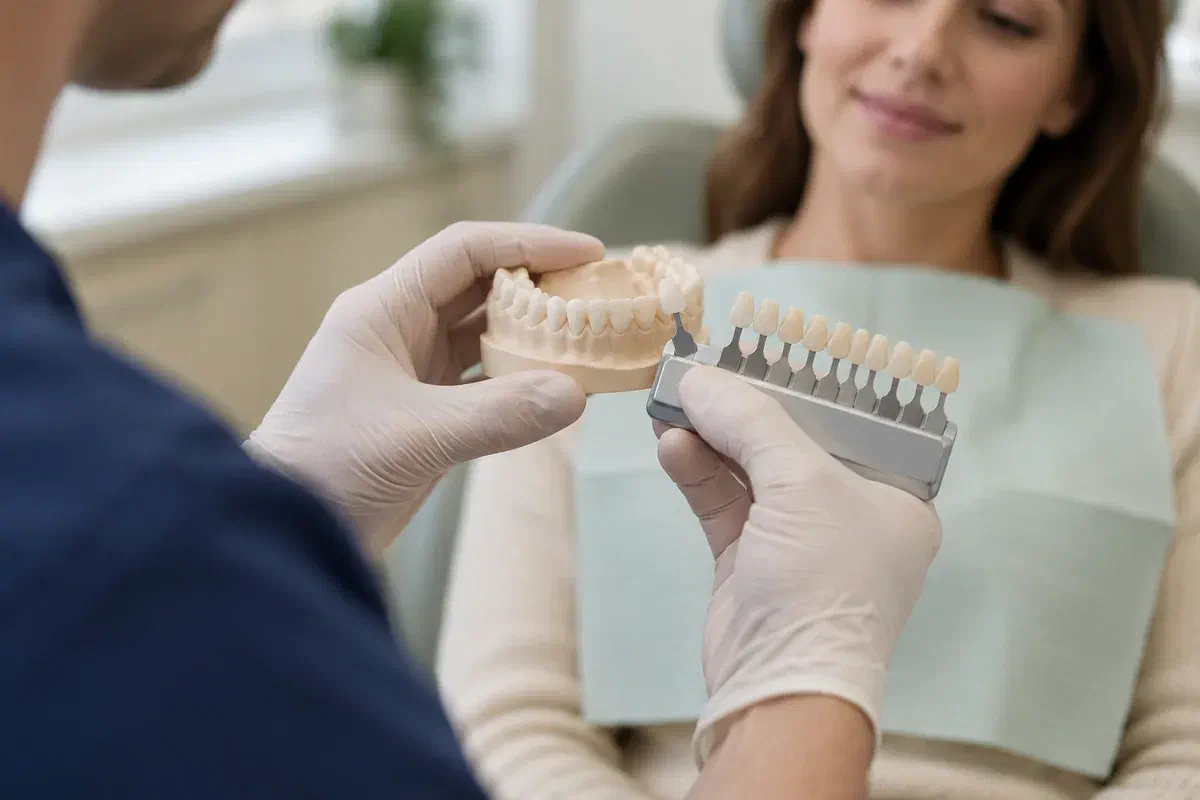
Your dentist selects a shade for the specific tooth, so the repair sits quietly among the teeth around it.
Since composite bonds to the tooth, the preparation can sometimes stay smaller, keeping more natural structure when the tooth’s condition allows.
Many fillings are completed in one sitting, though the initial exam or any added treatment may be booked separately.
Some people like to know every detail; others would rather not. Tell us which you prefer, and say so any time you would like a break.
We start with what you noticed and examine the tooth. X-rays may be suggested if they would show decay or the surrounding bone more clearly. You will hear the proposed repair, other options and the estimated fee before deciding.
The area can be numbed with local anaesthetic. The damaged part of the tooth is removed, and the site is kept clean and dry, which the bonding process depends on.
Composite goes on in thin layers, each set with a curing light. The dentist sculpts it to restore the tooth’s contours and a proper contact with the tooth beside it.
Once smoothed and polished, the filling is checked as you bite and grind gently. Before you leave, ask anything about cleaning, eating or how the tooth should feel.
Your own instructions come first. If anything feels off after the visit, call us; there is no need to wait for your next checkup.
Hold off on chewing until feeling returns, and be careful with hot drinks, since it is easy to bite or burn a lip, cheek or tongue you cannot feel.
Mild, short-lived sensitivity can happen. Let us know if pain builds, sensitivity lingers, or the new filling seems to touch before your other teeth.
Brush morning and night with a fluoride toothpaste and clean between teeth daily. A filled tooth can still decay at its edges, so the routine still matters.
Patient information: Cleveland Clinic — dental fillings
Bring any question, however small or hard to put into words. We can work from whatever you have noticed.
Patient information: CDA — tooth-coloured fillings · FDA — existing amalgam fillings
Come to our Bronte Street practice to have a cavity, a chipped edge or an ageing filling looked at. An assessment comes first, so you can leave knowing what the tooth needs and why.
Call us about significant pain or swelling. Online requests are best for concerns that are not urgent.
