A contained cavity
When decay is limited and surrounded by healthy tooth, removing it and placing a filling is often the simplest fix.


Filling, crown or something else? From Rockwood, you can bring a damaged tooth and your questions, and we will explain what each option is meant to do so the decision about a tooth-coloured repair feels like yours.
Perhaps you have been told a tooth needs work and you are not sure what kind. Or a crown was mentioned and you wonder whether a smaller repair could do. These are good questions, and the answer comes from the tooth itself.
A composite filling is the most conservative of the usual options: a tooth-coloured resin bonded into the prepared area and shaped to restore its form. It works well when enough strong tooth surrounds the damage. When too much has been lost, a crown or partial-coverage restoration may protect the tooth better, and if the nerve is infected, root canal treatment would come first.
Anyone weighing options from Rockwood is welcome to ask us to show the X-ray, explain the reasoning and set out the alternatives side by side.
The same complaint can lead to quite different recommendations. Examination shows the cause, the extent of the problem, and whether the remaining tooth can anchor a direct repair.
When decay is limited and surrounded by healthy tooth, removing it and placing a filling is often the simplest fix.
A small chip may suit composite. If the break is large, the tooth carries heavy biting forces, or a crack runs deeper, more coverage may be advised.
A tooth that already holds a big filling may have thin walls. Problems at its edge can mean a patch, a new filling or a different restoration altogether.
Sensitivity alone does not decide the treatment. Tell us what sets it off and how long the feeling persists, since that helps the dentist judge what is going on inside the tooth.
Composite tends to be considered when appearance matters, since it can be matched to enamel. It is also suitable for some back-tooth cavities, with careful thought about the repair’s size and the chewing load on it.
Its practical limits are part of the comparison. The tooth must be kept dry during bonding, and a large or high-stress area may need a different restoration to last. Choosing well means looking at each tooth separately.
Patient information: ADA — tooth-coloured fillings · FDA — filling materials
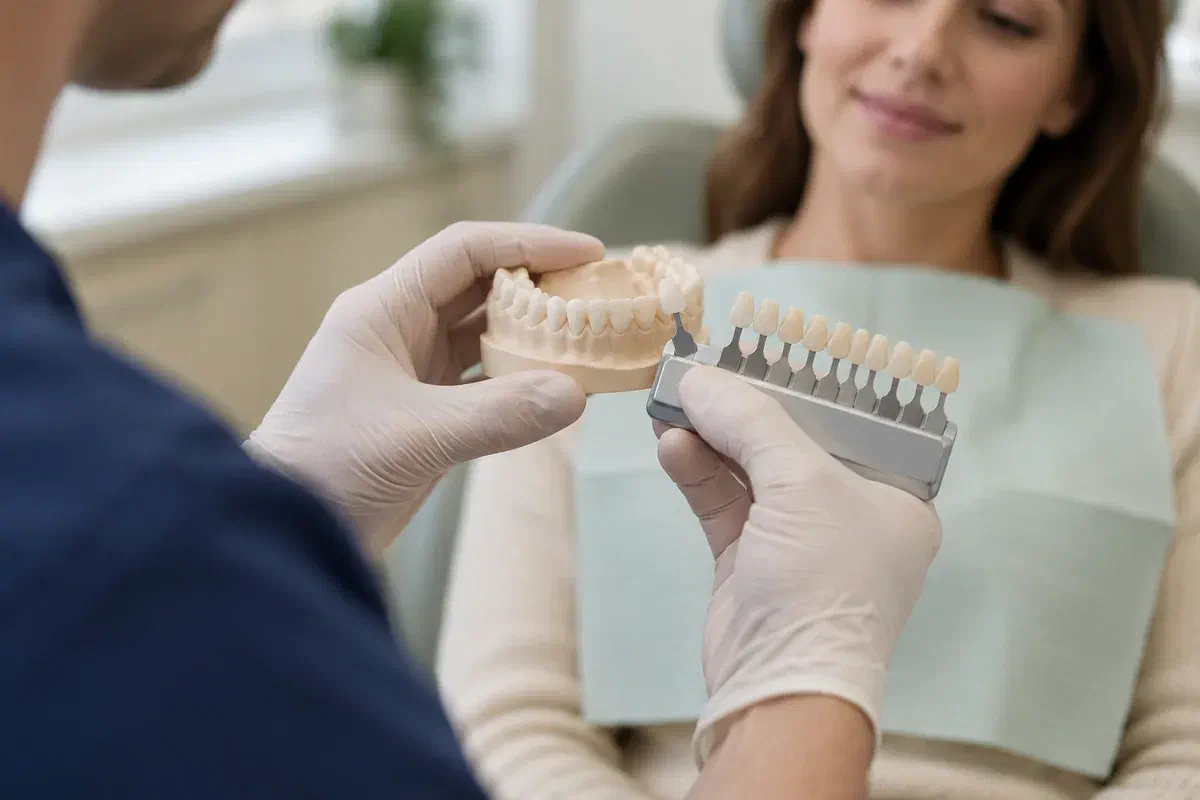
A shade is selected for the specific tooth so the repair is not obvious.
Bonding means the dentist may be able to remove less sound structure, if the tooth’s condition allows it.
Many direct fillings take one treatment appointment, compared with the extra steps a crown can involve. Assessment may still be separate.
Knowing the process can help you compare it with other options, whether you decide in the chair or later at home in Rockwood. Ask for a pause or an explanation at any point in the appointment.
We discuss your concern, examine the tooth and, where useful, recommend X-rays to judge decay and surrounding structures. You hear the proposed treatment alongside alternatives and their estimated fees before deciding.
Local anaesthetic can be used to numb the tooth. The dentist removes the damaged part and keeps the area dry and clean so the bond is sound.
Composite is built up in increments, each cured with a light, and contoured to restore the surface and the contact with the next tooth.
After polishing, your bite is checked and refined. There is time to ask about chewing, cleaning or how this compares with what another option would have involved.
Follow the instructions you receive. If the tooth does not feel right, let us know instead of waiting for a checkup.
Chewing while numb can injure your lip, cheek or tongue. Be cautious with anything hot until normal sensation returns.
A little sensitivity may come and go. Call if pain worsens, sensitivity does not settle, or the filling seems to touch before your other teeth.
Brush with fluoride toothpaste two times daily and clean between teeth. Decay can begin again at a filling’s border.
Patient information: Cleveland Clinic — dental fillings
Ask as many questions as you need to feel sure. If you are not sure where to begin, tell us what you have been told so far.
Patient information: CDA — tooth-coloured fillings · FDA — existing amalgam fillings
Come to our Bronte Street practice with a damaged tooth, a cavity or a recommendation you want explained. We assess first and set out your choices so you can decide with confidence.
If you have significant pain or swelling, please phone. Online requests are for non-urgent bookings.
