Structures close to the implant site
If a gap lies near a nerve, the sinus or another root, an implant may need more planning or may be less suitable. The clinician picks the records that are justified and explains what they mean for the decision.

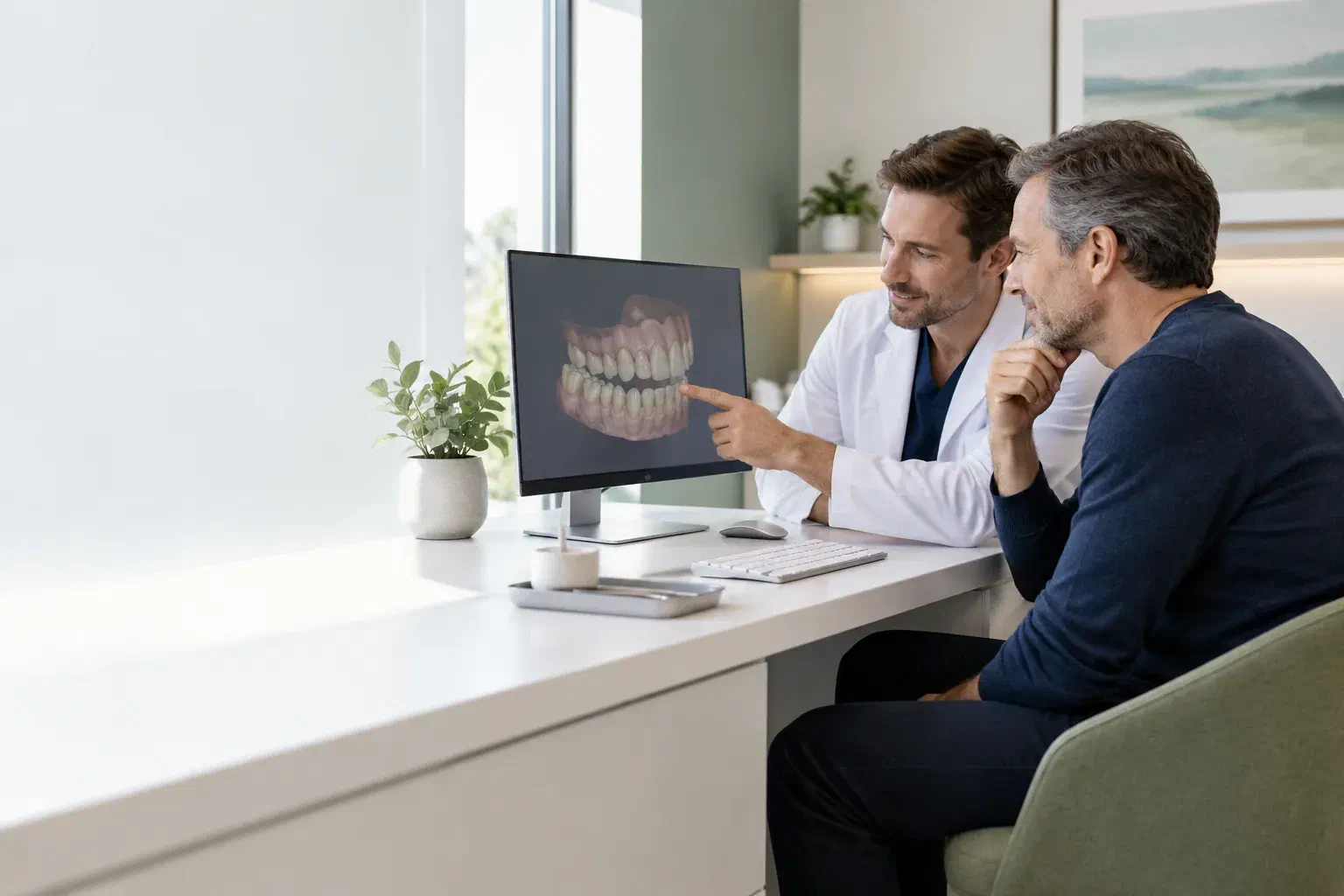
Implant or bridge? It is one of the most common questions about a missing tooth. If you are coming from Acton, a consultation can show how digital planning informs that choice and what each path would really involve.
A bridge borrows support from the teeth beside a gap. An implant takes its support from the bone. Neither is automatically better, and the right answer depends on those neighbouring teeth, the bone, your health and your preferences. Computer-planned placement uses digital records to judge whether an implant could sit well beneath the crown you want, clear of nearby roots and nerves and easy to clean. That judgement then sits beside the bridge option for a fair comparison.
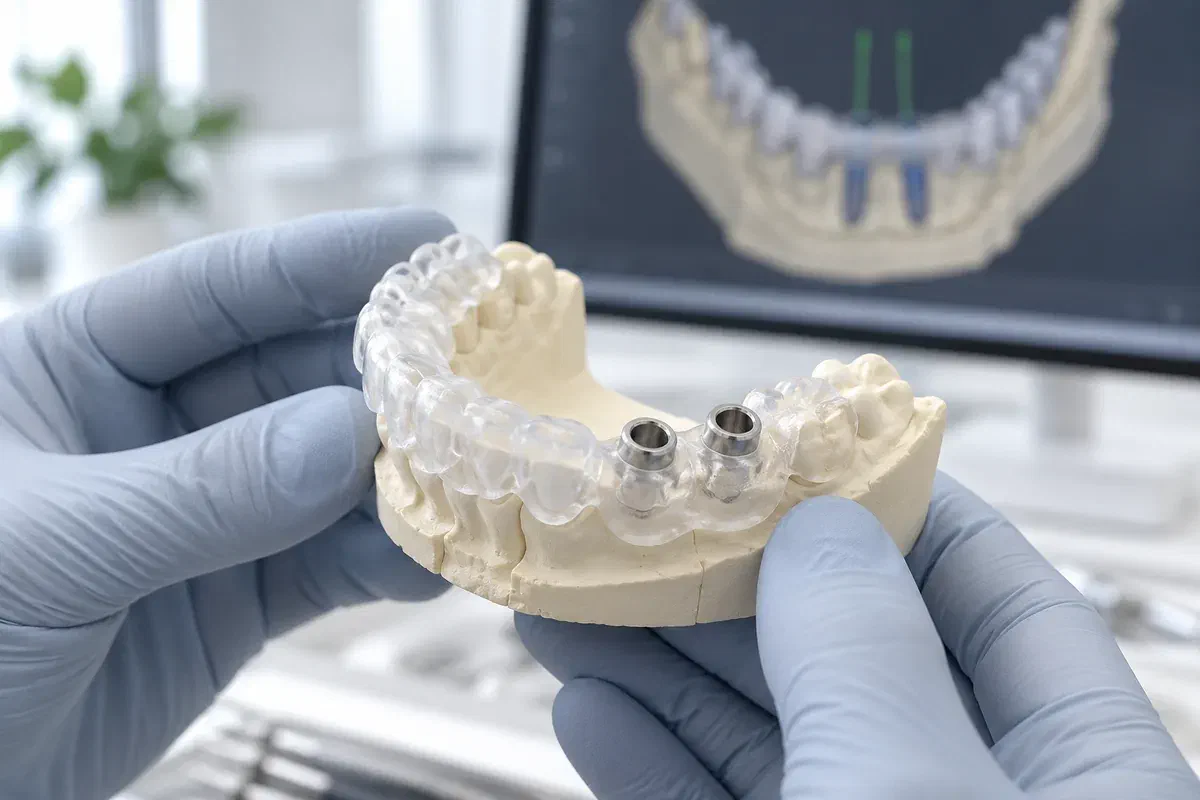
You may hear the words scan, plan and guide used almost interchangeably. They are not the same thing. A scan collects information, a plan interprets it, and a guide is a device that may help carry the plan into surgery. Ask which are proposed and who handles each part.
For anyone driving in from Acton, our first visit focuses on the gap and on every reasonable replacement. We look at whether an implant is suitable before we talk technique. Imaging, any referral, surgery and the restorative stages are described together so you can compare them with a bridge.
Whatever you choose, the goal is a tooth you can chew with and clean. The assessment connects your mouth’s condition to that result rather than starting from a favourite technique.
If a gap lies near a nerve, the sinus or another root, an implant may need more planning or may be less suitable. The clinician picks the records that are justified and explains what they mean for the decision.
Heavily filled teeth beside a gap may benefit from crowns anyway, which can favour a bridge. Untouched, healthy neighbours may tip the other way. The space for the new tooth and cleaning access also matter.
A bridge is often handled by one dentist, while an implant may include a specialist. Ask how responsibilities are divided, how records are shared and who answers your questions at each stage.
A digital plan is not a verdict on suitability. Your health history, the exam, your expectations and your ability to care for the restoration all shape the recommendation.
With good records, the clinician can view a possible implant together with the planned crown and the anatomy around it. That makes it easier to judge whether an implant is a sensible alternative to a bridge. In suitable cases, the plan may also be used to make a surgical guide, depending on your situation and the team’s judgement.
Seeing more does not eliminate risk or guarantee an outcome. The quality of the records, the appropriateness of the position and the team’s response to findings during surgery all still matter.
Patient information: ITI — computer-guided implant surgery
Whether supported by a bridge or an implant, the replacement should fit your bite and be cleanable. Ask how the proposed crown shape guided the comparison.
Records can show if an implant would need grafting, extra healing or a specialist first, which helps you weigh time and effort against a bridge.
Planning can show what an implant offers your situation and what it does not. A removable partial may also deserve a look if neither fixed option suits.
Visits and tools differ from person to person. Before you commit, ask for an outline of assessment, preparation, placement, the final restoration and maintenance for each option, including where they happen.
We review your medical history, previous dental work and what you want from the replacement. The exam looks closely at the teeth on either side and checks whether decay or gum disease needs treatment first.
Photographs, scans or impressions and appropriate radiographs may be advised. Ask what each will show for an implant versus a bridge, and whether existing records are enough.
You see the proposed implant position with the future crown, alongside what a bridge would involve. Costs, benefits, limits, and any graft, guide or referral are discussed openly.
If you choose an implant, the treating team confirms surgery and follow-up, and the final tooth is planned around healing. Either way, you receive cleaning instructions and a review schedule.
Each option needs its own aftercare, and digital planning does not replace personal instructions. Follow the clinician who treats you, and know whom to call if healing seems different from what you expected.
After implant surgery, advice may cover cleaning, food, activity and any medicines prescribed. It reflects the work done, including any graft, so clarify anything before you leave.
A temporary crown, partial or flipper may be used while you heal. Ask how to clean and wear it, and report looseness, bite changes or damage promptly.
Bridges and implants both need specific cleaning, such as threaders or small brushes. Ask for a demonstration and agree on regular reviews, and mention any soreness or gum changes.
There is rarely one obvious answer. Ask us to relate each option to your mouth and the tooth you want to replace.
Visit our Bronte Street practice for a consultation about the missing tooth, the teeth around it and what you want to achieve. We will set the possible pathways side by side and point out what to ask about planning, who is responsible for each stage and how each option is maintained.
If you have already been offered a bridge or implant elsewhere, bring the details and any imaging so we can discuss them.
