How close the plan sits to key structures
A good plan accounts for neighbouring roots, nerves and the sinus. Ask which records were used, why they were justified, and how they shaped the chosen position or the decision to consider something else.

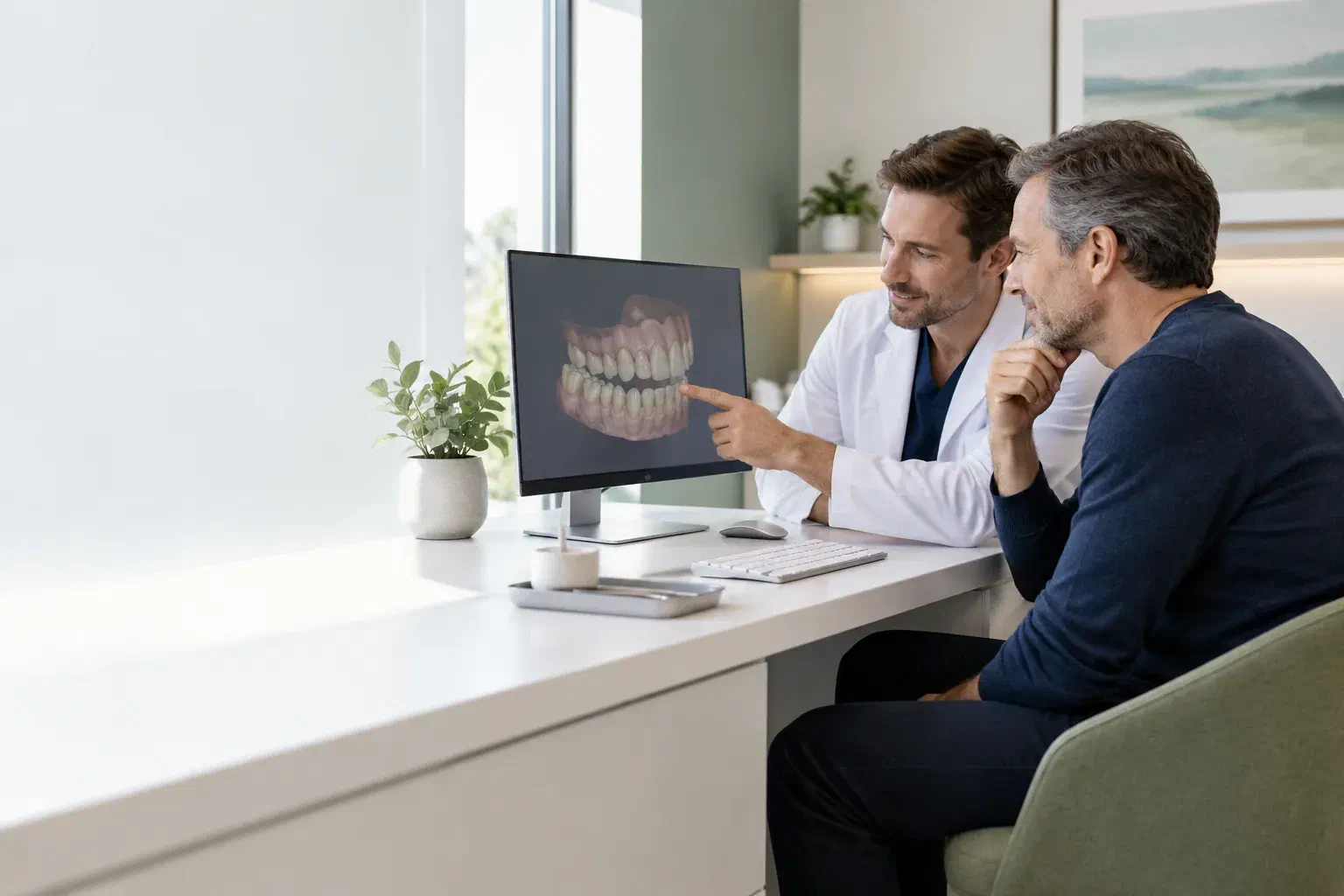
Already holding an implant proposal and not sure it fits? If you are travelling from Burlington, we can look over the plan and records with you, explain what the digital work shows, and talk about what a fresh assessment would add.
Sometimes people arrive with a printout of a virtual implant and a long list of terms. It helps to know what that printout represents. Computer planning combines imaging and software to consider an implant’s position against the crown it will support, the bone, adjacent roots and nerves, and your future access for cleaning. The image is a summary of decisions, and it is worth asking how each one was reached.
A scan, a planning file and a surgical guide are three distinct things. One proposal might include all of them, while another relies on a different workflow. When reviewing a plan, find out which parts are included, why they were chosen, and who will carry out each stage.
For visitors from Burlington, a review here begins with your gap, your goals and the options that deserve a closer look. Our first concern is whether implant treatment is right for you; the planning technique comes afterward. Any imaging, specialist care, surgery and restorative work should be explained as a single, understandable sequence.
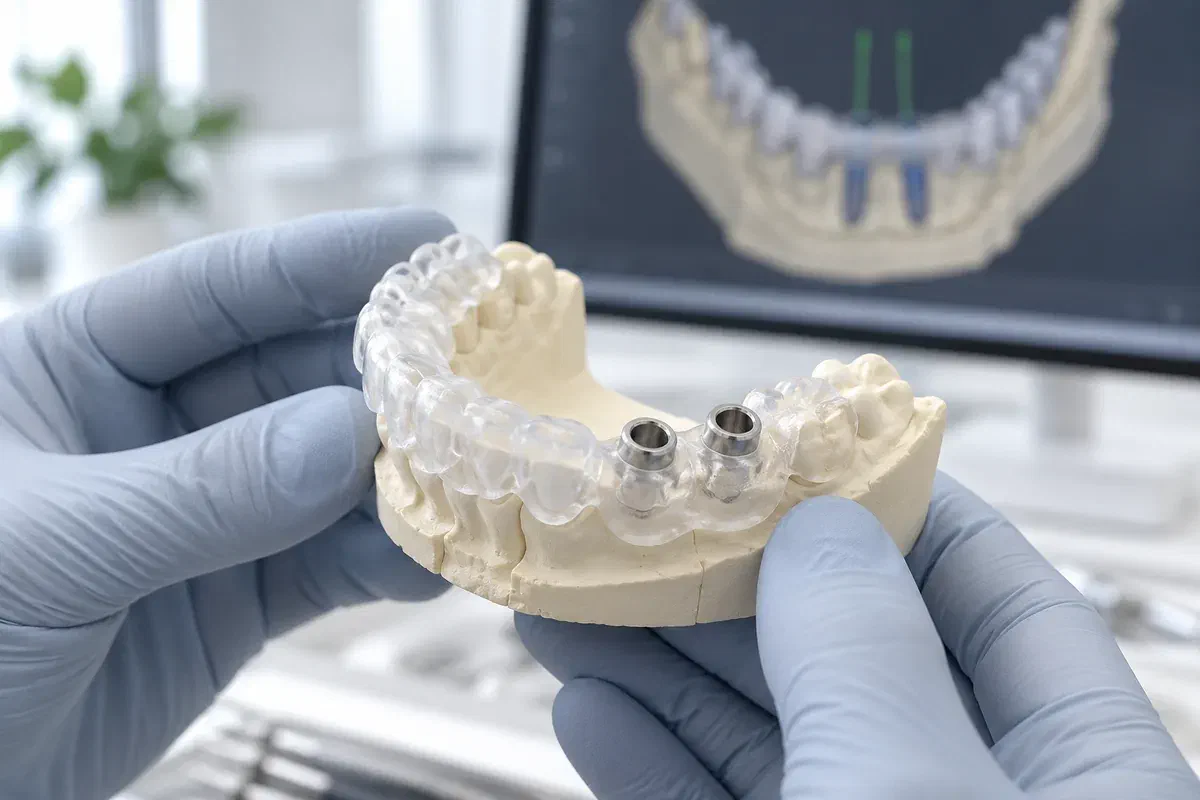
The fixture hidden in the bone exists to hold a tooth you can use and clean. A proposal should explain how the site and that tooth were considered together, not just where a post would fit.
A good plan accounts for neighbouring roots, nerves and the sinus. Ask which records were used, why they were justified, and how they shaped the chosen position or the decision to consider something else.
The plan should consider width and height in the gap and in the bone. Look for discussion of the crown’s shape, its relationship to nearby teeth and how easily you will be able to brush and floss around it.
If one office plans, another places and a third builds the crown, those handovers need to be clear. Ask how records will be shared and whom you should contact with questions at every stage.
A plan is only as good as the assessment behind it. Medical history, examination, expectations and your ability to maintain the restoration all belong in the decision, beyond what any scan can show.
Digital records may let a reviewing or treating clinician assess the proposed implant relative to the intended crown and the surrounding anatomy. In appropriate cases, the plan can support the design of a guide for placement. Whether that is suitable depends on the clinical situation and the judgement of the team providing care.
Planning tools inform decisions without making surgery free of risk or the outcome certain. The records must be accurate and the plan appropriate, and the clinician must still respond to what is found during treatment.
Patient information: ITI — computer-guided implant surgery
A useful plan starts from the replacement tooth. Ask whether the crown’s shape, bite and cleaning space were modelled before the implant position was decided.
Records can show why grafting, healing time or a referral is proposed ahead of surgery. They may also explain why a faster route would not suit your mouth.
A review should still weigh a bridge, a removable appliance and any other reasonable option. You should come away knowing what the planning adds and where its limits lie.
Visits and technology vary from case to case. Before agreeing to treatment, ask for an outline of assessment, preparatory care, placement, the final restoration and maintenance, including the location of each stage.
Bring the proposal, your medical history and details of past dental care. We examine your mouth, discuss your priorities and check whether other dental problems should be handled before an implant is considered further.
Existing photographs, scans and radiographs may be enough, or extra images may be suggested. Ask what any new record would show that the current ones do not, and how it would change the advice.
We talk through the proposed position alongside the future crown, along with benefits, limitations, costs and alternatives. That includes whether a guide, graft, referral or temporary tooth is genuinely part of the plan.
If you choose treatment, the surgical arrangements and follow-up are confirmed by the treating team. The final tooth is planned around healing, and you are shown how to clean it and when to return for reviews.
Recovery instructions are individual, and a digital plan cannot replace them. Follow the advice of the clinician who carries out the procedure and make sure you know whom to call if things feel different from what was explained.
Expect advice about cleaning, eating, activity and any prescribed medication, tailored to the work performed, including any grafting. Ask for clarification before you go home instead of relying on a description of guided surgery in general.
A temporary tooth or appliance comes with its own care instructions. Let the team know about looseness, a changed bite or damage so it can be checked before you keep wearing it normally.
When the final crown is fitted, ask to practise cleaning around it and agree on review visits. Point out any discomfort, awkward cleaning access or gum changes near the implant.
Reviewing someone else’s proposal can feel awkward, but it is a normal part of making an informed choice. Ask us to explain how each part relates to your mouth and your replacement tooth.
Book a consultation at our Bronte Street practice and bring the plan you have been given. We will talk about the missing tooth, your expectations and what assessment makes sense, and help you identify questions about planning, responsibilities and long-term care.
Copies of the existing proposal, estimates and any scans or X-rays help us see what has already been assessed.
