Anatomy that calls for extra care
Some gaps lie close to nerves, the sinus or neighbouring roots. The clinician chooses the records that are justified and explains whether the findings change the position, add a stage or favour another approach.

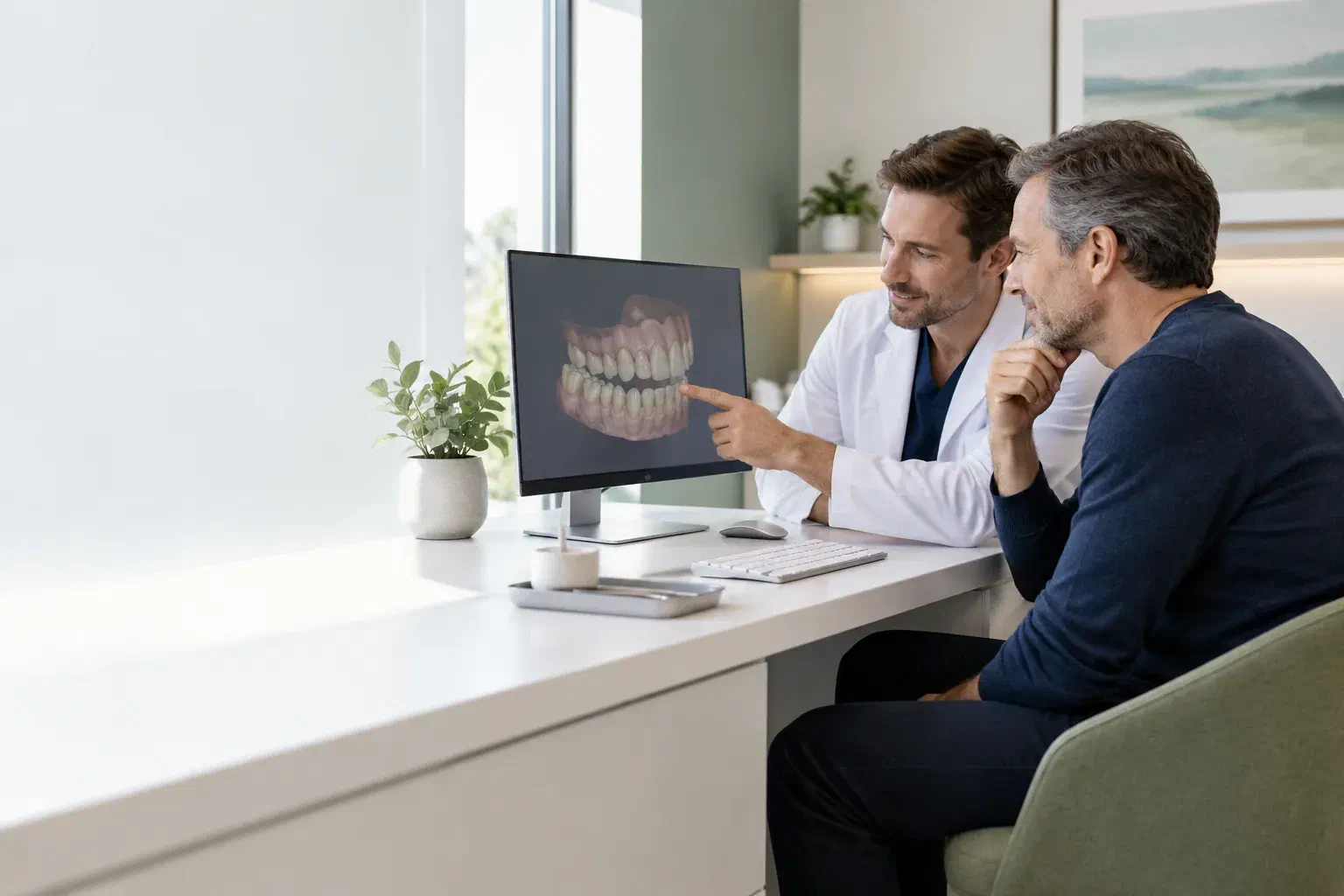
Implant treatment involves several stages, so a longer trip calls for a well-organised plan. From Etobicoke, book a consultation to learn how digital records support planning and how we can keep your visits purposeful.
When each appointment means a longer drive, it pays to know exactly why you are coming in. Computer-planned placement relies on digital records to decide where an implant could sit in relation to the tooth it will support, the bone you have, the roots and nerves around it, and how you will keep it clean. Getting those records right early can help each later visit have a clear purpose, though the screen view is only one input.
People often hear scans, planning software and guides mentioned together. They are different tools and are not always used as a set. Ask which are planned for you, what each adds, and who is responsible for every step. Knowing this early also tells you which appointments must happen in person and which questions can be handled by phone.
For anyone travelling from Etobicoke, our first meeting looks at the missing tooth and the realistic ways to replace it. We confirm whether an implant is a good fit before any discussion of technique. Then imaging, any specialist visits, surgery and restorative appointments are laid out so you can plan ahead.
The implant anchors a tooth you will depend on. Planning links your mouth’s condition to that tooth, which in turn decides how many stages and trips the treatment may involve.
Some gaps lie close to nerves, the sinus or neighbouring roots. The clinician chooses the records that are justified and explains whether the findings change the position, add a stage or favour another approach.
Space in the gap and in the bone both matter. The plan considers the crown’s shape, its fit with adjacent teeth and whether you can clean it easily once you are back home.
You may have a dentist closer to home as well as an implant team. Ask how records are shared, who handles check-ups and who is responsible if a question comes up between visits.
A scan alone does not show that an implant is right for you. Health history, examination, your goals and how well you can maintain the result all matter.
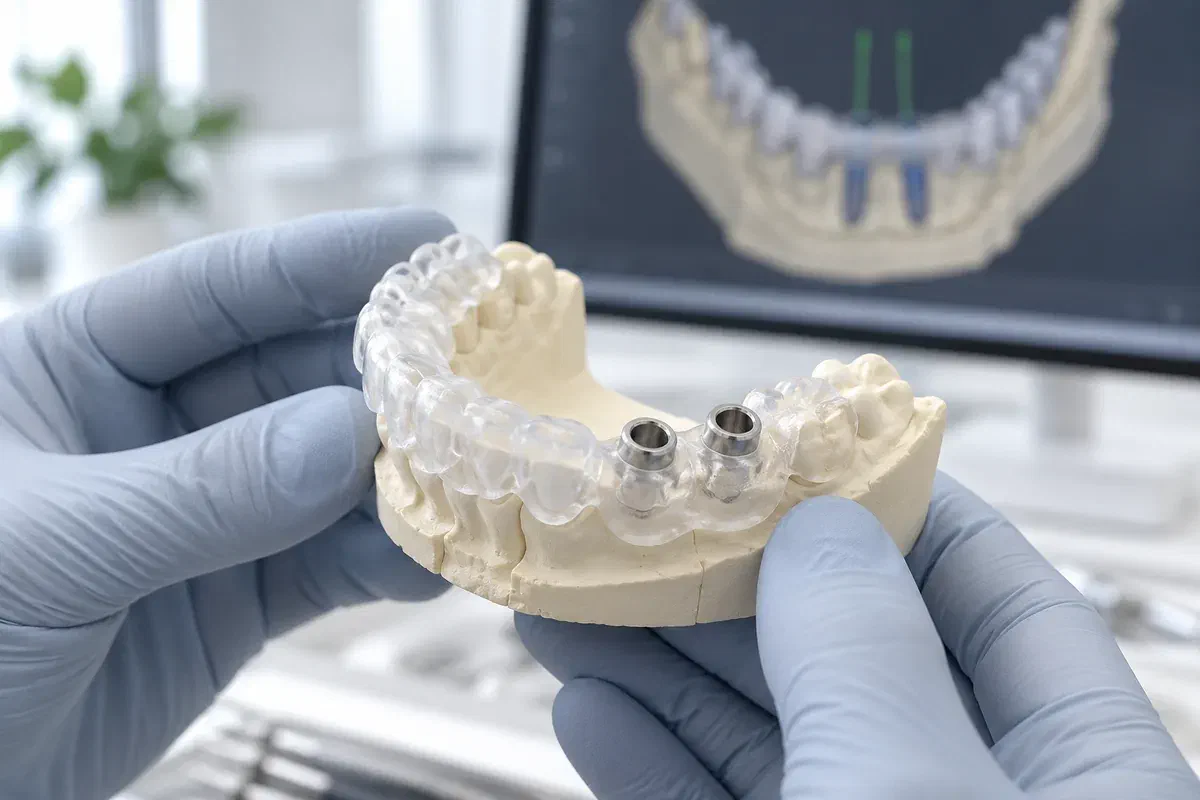
Digital planning can let the clinician review the implant position alongside the intended restoration and nearby structures. In suitable cases, that plan may be used to produce a surgical guide. Whether one is used depends on your clinical needs and the judgement of the team treating you.
Careful planning cannot make surgery free of risk or promise the final outcome. It depends on accurate records and a sensible position, and the team must still respond to findings during treatment.
Patient information: ITI — computer-guided implant surgery
Planning around the final tooth keeps the discussion practical. Ask how its shape, your bite and your cleaning routine influenced where the implant would go.
Reviewing records can explain early on why additional preparation, healing time or another opinion may be needed. That lets you plan travel and time off with fewer unknowns.
A bridge or removable appliance may involve a different number of trips and still deserves consideration. Ask what the technology adds and what it cannot solve.
The number of visits varies by case and technique. Before committing, ask for an outline of the assessment, preparation, surgery, final tooth and maintenance, and where each will happen.
We discuss the missing tooth, your health, past dental work and travel constraints. The examination highlights which options to pursue and whether other dental issues need attention first.
Photos, scans or impressions and appropriate radiographs may be needed. Ask whether recent images from your local dentist can be sent ahead, and what any additional imaging would show.
The proposed implant position is reviewed with the future crown in mind. Discuss the benefits, limitations, costs and alternatives, and whether grafting, a guide or a referral would add visits.
If you go ahead, surgical arrangements and follow-ups are confirmed. The final tooth is planned around healing, and you are given cleaning instructions and a review schedule that suits your travel.
Your recovery instructions come from the clinician who carried out the procedure, not from the plan. Since you will be healing further away, be clear about whom to call and when to seek care closer to home.
Directions may cover cleaning, eating, activity and any prescribed medicine. They reflect what was actually done, including grafts, so ask for anything unclear in writing before you set off.
If you have a provisional crown or appliance, learn how to wear and clean it. If it loosens, cracks or your teeth stop meeting the way they did, phone first, so the team can tell you whether to come in and how to manage until then.
After the final tooth is fitted, ask for a cleaning demonstration and agree on review visits. Raise discomfort, cleaning trouble or gum changes, and ask whether your local dentist can help with routine checks.
Distance raises its own practical questions. Ask us to connect each step to your mouth, your schedule and the tooth you want to replace.
Arrange a consultation at our Bronte Street practice to discuss the missing tooth, your expectations and the assessment needed. We will sketch out the likely pathway, flag which visits must be in person, and go over what to ask about planning, scheduling and continuing care.
Send or bring any earlier implant consultation notes and imaging so we can see which records may be relevant before you travel.
