
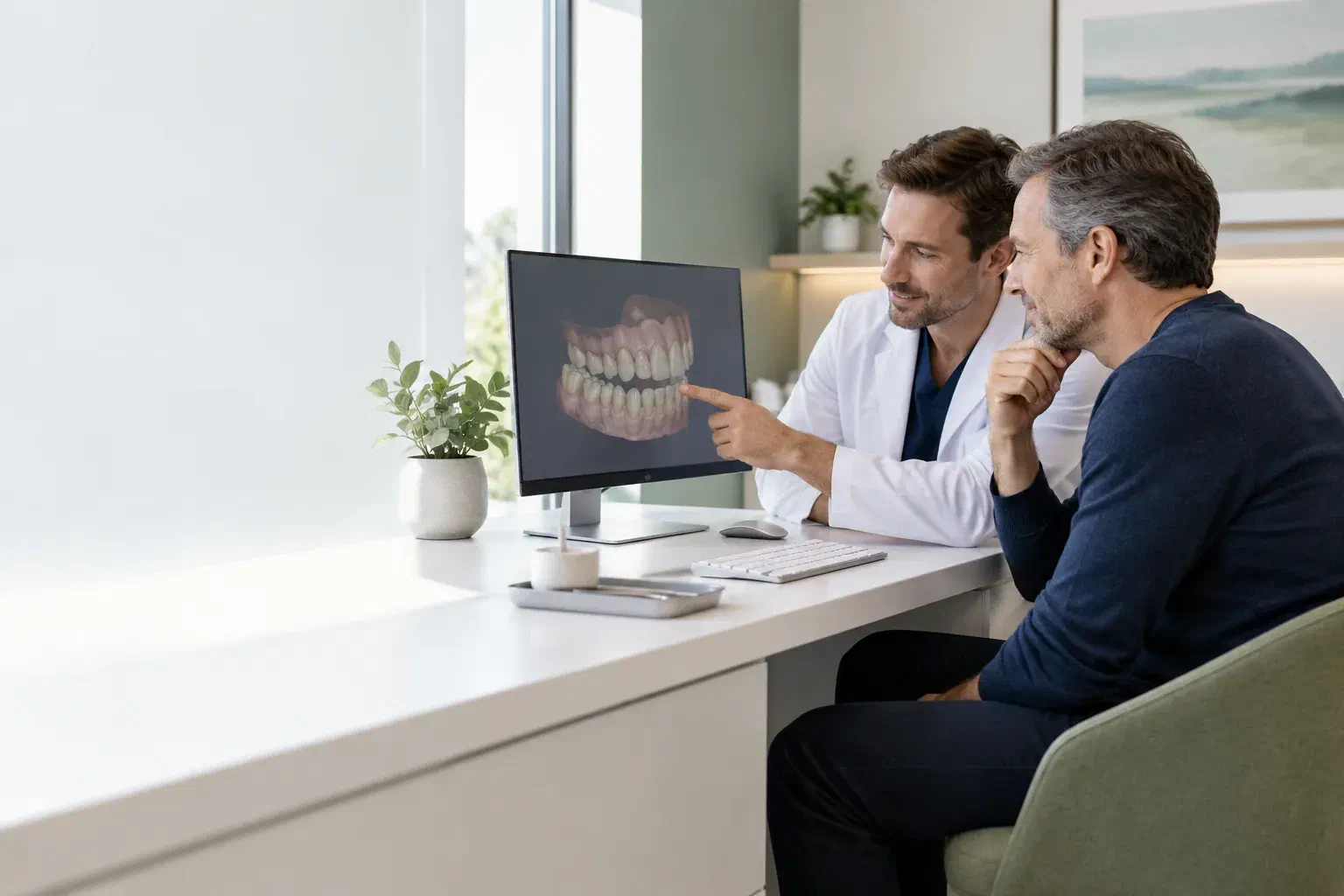
Illustrative consultation about digital planning for a dental implant
Restorative Dentistry

Computer-Planned Implant Placement in Puslinch

Worried you may not have enough bone for an implant? For households in Puslinch, a consultation can explain what imaging reveals, when grafting enters the conversation and how digital planning fits around it.

Bone, grafting and the digital plan

Software can measure bone. It cannot make more.

Someone may have mentioned that your jaw looks thin where the tooth used to be. That observation is where careful planning becomes useful. In computer-planned placement, three-dimensional images and planning software help a clinician study how much bone is present, where the nerves and sinus lie, and how an implant could support the crown you need while leaving room to clean. The images inform a decision; a person still makes it.

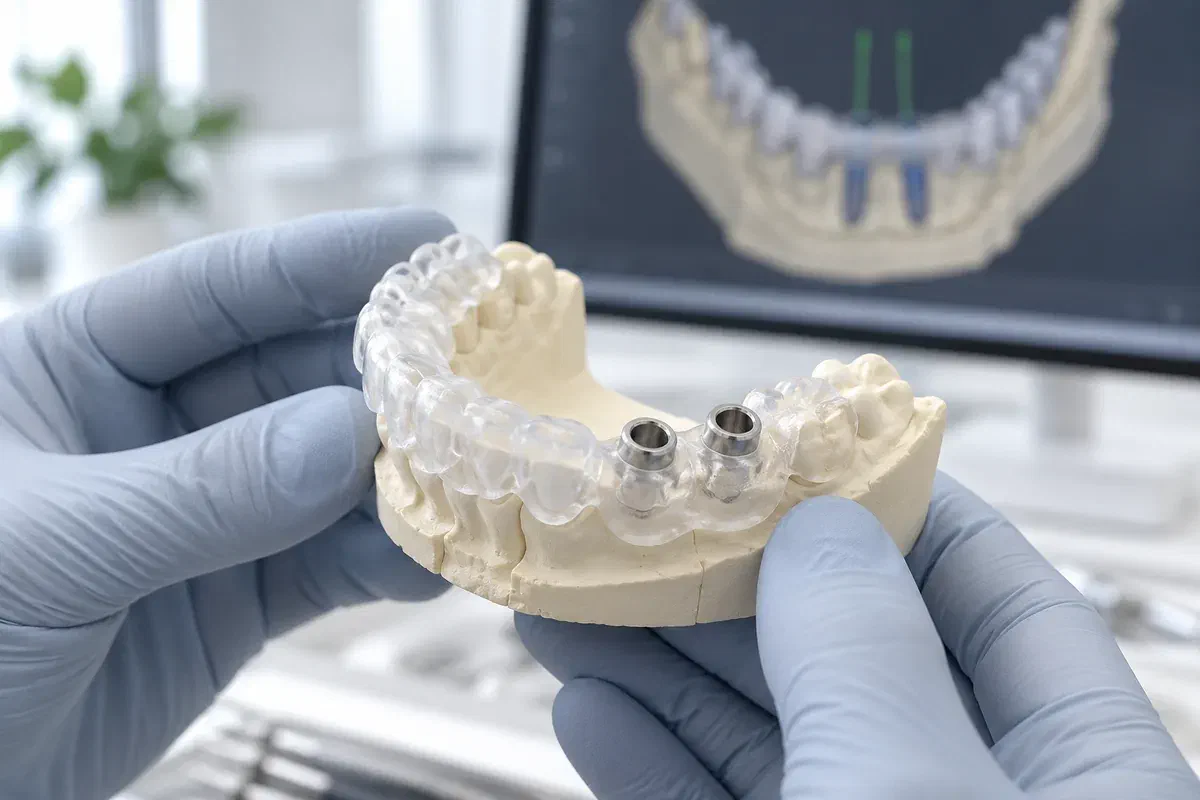
It helps to keep three ideas apart. Imaging gathers information about the site. Planning software is where a possible position is tested. A surgical guide is an optional device made from that plan. Ask which of these are proposed, why, and who performs each stage.

Coming in from Puslinch, you can expect the first visit to focus on the gap, your health and the replacements worth exploring. We look at whether an implant is suitable at all before discussing grafts or guides. Any imaging, referral, surgery and restorative work are then explained in a sequence you can follow.

Talk about bone and implant options
Dental implant planning model and illustrative surgical guide
When bone is in question

Height, width and what sits nearby.

An implant has to be surrounded by enough healthy bone to support a working tooth. The assessment ties that support to the crown you will use, instead of simply searching for a spot where a fixture might fit.

Bone close to a nerve or the sinus

Limited bone height can bring an implant close to the lower jaw nerve or the upper sinus. The clinician decides what imaging is justified and explains whether a shorter implant, a graft or a different replacement makes more sense.

A ridge that has narrowed

After a tooth is lost, the ridge of bone often shrinks in width as well as height. The plan weighs this against the shape of the final crown, its fit beside other teeth and how you will reach it with a brush.

Grafting done by another clinician

Grafting is sometimes carried out by a specialist before or during implant placement. Ask how records move between offices, who checks that the graft has healed, and who restores the tooth afterward.

Even a clear scan is only part of the picture. Your medical history, examination, expectations and ability to maintain an implant are weighed alongside the bone measurements.

Why planning matters with limited bone

Measure first, then decide what is reasonable.

Three-dimensional records allow the clinician to compare the available bone with the position the crown would ideally need. That comparison often shows whether grafting is worth discussing. Where appropriate, the plan may be used to make a guide for surgery, depending on your circumstances and the treating team’s judgement.

Planning gives better information but cannot remove the risks of surgery or grafting, and it cannot promise success. Accurate records and a sound plan matter, and the team still responds to what they encounter in the bone during treatment.

Patient information: ITI — computer-guided implant surgery

The crown still leads

Even when bone is limited, the plan starts with the tooth you need. Ask how its shape and your bite affect the ideal implant position and whether that position has enough support.

A clear reason for any graft

Records can show why a graft is recommended, what it should achieve and how long it may need to heal before an implant is placed. They also help explain why a fast option may not suit your site.

Room for non-surgical choices

If grafting feels like too much, a bridge or removable partial might still meet your needs. You should understand what the implant route adds and what it asks of you.

Where grafting may fit in

A plan that may have an extra chapter.

Limited bone can lengthen the sequence. Before committing, ask for an outline that includes assessment, any graft and its healing, implant placement, the final tooth and maintenance, along with where each step takes place.

  1. Explore the gap and your history

    We talk about the missing tooth, when it was lost, your medical history and previous dental work. The examination shows which options deserve a closer look and whether gum or tooth problems should be treated first.

  2. Image the bone where it counts

    Photographs, an intraoral scan or impressions, and three-dimensional imaging may be recommended to measure the site. Ask what each record shows and whether existing images are recent and detailed enough.

  3. Decide whether grafting belongs in the plan

    We review the proposed implant position beside the future crown, the available bone and the alternatives. Fees, limitations and benefits are discussed, including whether a graft, specialist referral, guide or temporary tooth is proposed.

  4. Treat in stages and keep reviewing

    If you proceed, any graft and the implant surgery are scheduled by the treating team. The permanent crown follows once healing allows, and you leave with cleaning instructions and regular review dates.

Recovering from grafting and placement

Give the bone time to do its work.

Recovery after a graft or implant depends on what was done, and the digital plan cannot predict every detail. Follow the clinician who treated you, and know whom to call if healing feels different from what was explained.

Follow instructions for each procedure

A graft and an implant may come with different directions on cleaning, eating, activity and medicines. Ask about each one before you leave, and keep the written instructions somewhere easy to find.

Avoid pressure on the healing area

If you wear a temporary tooth or partial over the site, ask how it should fit and when it can be worn. Report rubbing, looseness, a changed bite or damage so the team can adjust it.

Commit to long-term reviews

After the final crown is fitted, ask for a cleaning demonstration and agree on how often you will be seen. Tell the team about tenderness, food trapping or any changes in the surrounding gum.

Paths for a site with less bone

More than one way forward.

Labels like guided or conventional tell you less than the plan behind them. For each option, ask about appointments, any grafting, the final restoration and long-term care.

When a guide is suitable

Guided placement after careful planning

A guide can help bring a carefully planned position into surgery, which may matter when bone is limited. Whether it suits you depends on records, guide support, access and clinical findings.

A different workflow

Implant placement by another method

Your clinician may prefer another technique, sometimes combined with grafting at the same visit. Ask why it is recommended and how it changes the number and order of appointments.

Bridge or partial

A tooth replacement that skips surgery

A bridge or removable partial does not depend on bone volume in the same way. Neighbouring teeth, the size of the gap, your preferences and upkeep needs guide that comparison.

Puslinch questions about bone

What if there is not enough bone?

Talk of grafting can sound daunting. We will explain each suggestion in terms of your own mouth and the replacement you have in mind.

(905) 876-4488
How do you tell whether I have enough bone for an implant?
An examination and suitable imaging, often three-dimensional, show the height and width of bone and nearby structures. The clinician then compares that with the position the future crown needs.
Where does grafting material come from?
Grafts can use different materials, including your own bone or prepared graft products. The options and their reasons should be explained by the clinician recommending the graft, so ask what is proposed and why.
Can a shorter or narrower implant avoid a graft?
Sometimes, depending on the site, the bite and the planned crown. It is not right for every case. Ask whether that option was considered and what its trade-offs would be for you.
Is a graft done at the same time as the implant?
In some cases a small graft is placed during implant surgery. In others, a graft needs to heal first, adding a stage. Imaging and planning help decide which approach is suitable.
What is a 3D scan actually showing the dentist?
It shows a cross-sectional view of the jaw, helping the clinician see bone thickness, the position of nerves and sinus, and the shape of the ridge. It is only recommended when that information is useful.
Will a graft change my estimate?
It may. Ask for the graft, any specialist fees, extra imaging and additional visits to be listed separately, along with costs that depend on what is found during treatment.
From Puslinch to our clinic

Find out what your bone can support.

Book a visit to our Bronte Street practice to talk about the gap, your concerns about bone and the assessment that would come next. We will walk you through the likely pathway, including any grafting, and help you think about who is responsible for each stage and how to care for the result.

Earlier scans, X-rays or notes from a previous implant consultation can help us judge which records are still useful.

Visit Milton Dental Clinic
Unit 1, 342 Bronte St. S, Milton, ON L9T 5B7
Get directions Clinic hours
Monday–Thursday
11am–7pm
Friday–Sunday
By appointment only

Areas we serve

  • Milton
  • Oakville
  • Mississauga
  • Georgetown
  • Halton Hills
  • Acton
  • Campbellville
  • Brampton
  • Burlington
  • Puslinch
  • Rockwood
  • Erin
  • Caledon
  • Etobicoke
  • Old Milton
  • Bronte Meadows
  • Timberlea
  • Dorset Park
  • Dempsey
  • Clarke
  • Beaty
  • Coates
  • Harrison
  • Scott
  • Willmott
  • Ford
  • Bowes
  • Cobden
  • Walker
  • Mountain View
  • Milton Heights
  • Hawthorne Village
  • Valley View
  • Fallingbrook
  • Nassagaweya
  • Trafalgar
  • Esquesing
  • Nelson
  • Brookville
  • Moffat
  • Glen Williams
  • Norval
  • Limehouse
  • Stewarttown
  • Ashgrove
  • Hornby
  • Silver Creek
  • Speyside
  • Scotch Block
  • North Oakville
  • River Oaks
  • Glen Abbey
  • West Oak Trails
  • Palermo
  • Bronte Creek
  • College Park
  • Joshua Creek
  • Uptown Core
  • Preserve
  • Iroquois Ridge
  • Lisgar
  • Meadowvale
  • Meadowvale Village
  • Churchill Meadows
  • Erin Mills
  • Central Erin Mills
  • Streetsville
  • East Credit
  • Creditview
  • Heartland
  • Sheridan
  • Mount Pleasant
  • Credit Valley
  • Huttonville
  • Churchville
  • Springbrook
  • Northwest Brampton
  • Bram West
  • Fletcher's Meadow
  • Fletcher's Creek South
  • Alton Village
  • Orchard
  • Millcroft
  • Headon Forest
  • Tansley
  • Brant Hills
  • Tyandaga
  • Kilbride
  • Lowville
  • Aberfoyle
  • Morriston
  • Arkell
  • Hillsburgh
  • Freelton
  • Carlisle
  • Waterdown
  • Flamborough
  • Mountsberg

How can we help?

Milton Dental Clinic

Have a question about your smile? Choose the option that works best for you.

For urgent dental concerns, please call.
Messages are reviewed during clinic hours.