Any discomfort when chewing
Mention whether you have felt a brief sharp sensation as you bite, as you release, or with particular foods. Say whether you have begun avoiding that side. A twinge can have causes other than the line you noticed.


Spotted a thin line on a tooth and now you cannot stop looking at it? An examination for Burlington can show whether it is a harmless surface mark or something deeper, and what, if anything, should happen next.
It often starts while brushing or under bright bathroom light: a faint vertical line on a front or side tooth that you never noticed before. Many such lines sit only in the enamel and cause no trouble. Others are part of a deeper crack. A cracked-tooth assessment helps work out which one you have.
Appearance alone is a poor guide. A line can look dark because it has picked up stain, not because it is deep, and a serious crack can be nearly invisible. So we ask about symptoms too: any twinge on biting, sensitivity to cold, or a change in how the tooth feels. Silence from the tooth is useful information as well.
Coming in from Burlington, you can expect a calm look at the tooth and an explanation in ordinary language. We separate what the examination confirms from what it cannot yet show. If a further test or specialist opinion seems worthwhile, we will explain what it would add.
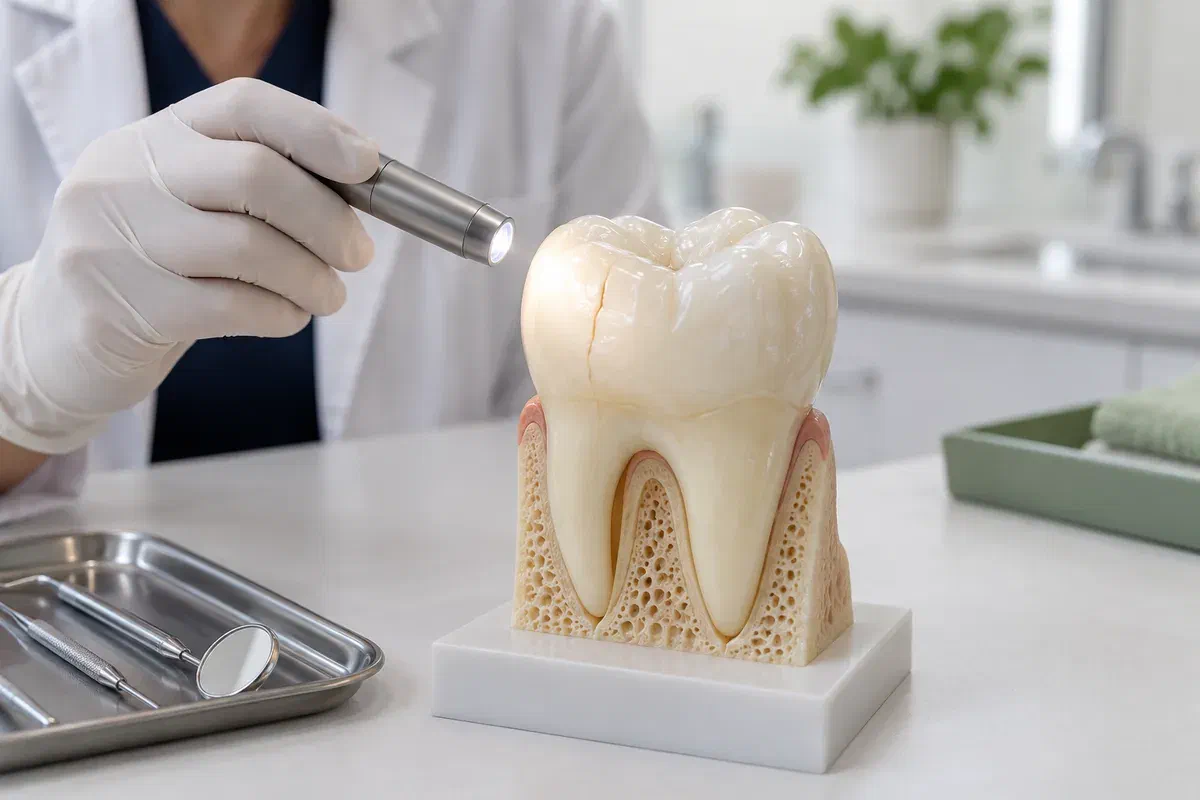
The look of a line is only one clue. How the tooth has behaved over recent weeks, even in small or occasional ways, helps put that line into context.
Mention whether you have felt a brief sharp sensation as you bite, as you release, or with particular foods. Say whether you have begun avoiding that side. A twinge can have causes other than the line you noticed.
Has it become longer, darker or easier to see? Colour can come from staining and does not reveal depth. A dated photo can help show change, but the dentist will still examine the tooth itself before drawing conclusions.
If the tooth or its neighbours have older restorations, tell us. Mention any rough edges, small breaks or new sensitivity, and share whatever you know about when the earlier work was done.
A tooth that feels loose, a recent blow to the face, swelling or significant pain should prompt a phone call first. That way the team can discuss how soon you need to be seen.
For many people who come to us from Burlington with a line, the best outcome is simply knowing. The assessment aims to establish whether the line is superficial or structural, which tooth or tissue explains any symptom, whether the tooth looks restorable, and what is still unknown.
Often the examination gives a clear answer straight away. Sometimes it raises questions that need another test or a review in a few months. You should be told honestly which situation applies. A careful account of uncertainty beats a quick reassurance or a hasty promise.
Shallow enamel lines are common and frequently need nothing more than monitoring. Assessing the tooth properly avoids both unnecessary treatment and missing a crack that does need attention.
You can ask what each part of the examination is meant to show and how the result might change the advice. That makes the appointment easier to follow and helps you mention any discomfort.
You may leave with a plan to monitor, protect, investigate or treat. Confirm what happens next, when, and which changes in the tooth would justify calling before the planned date.
Checks are chosen for the tooth in question and the symptoms you report. If you are uneasy about any step causing discomfort, say so, and we can explain it first and agree how to pause.
We cover when you first saw the line, whether it has changed, any biting or temperature symptoms, earlier dental work and any knock to the mouth. Mention swelling or a change in your bite if you have noticed either.
The dentist looks at the line under good light and magnification where useful, along with the rest of the tooth, nearby restorations and the gums. Other checks of biting or sensitivity are added if the findings suggest them.
X-rays can help with related issues, though a fine crack frequently does not appear on them. Ask what any images show and whether another opinion would help where the picture stays unclear.
We describe whether the line looks superficial or deeper, what is uncertain, and which approaches make sense. If further investigation is suggested, its purpose and possible findings are discussed before you decide.
What you should do next depends on the findings and on any temporary care given. Ask for guidance specific to your tooth, especially if more assessment or a referral is being arranged.
Pressing a nail into the line or biting hard to see if it hurts can stress a tooth that may be vulnerable. Tell us what you have already observed and ask how to eat while any next step is pending.
Write down if the line seems to grow, if a twinge becomes more frequent, or if swelling appears. Worsening symptoms are a reason to contact the clinic promptly rather than waiting for the next review.
If monitoring was advised, the follow-up matters even when nothing seems different. A tooth that feels fine has not necessarily stayed the same, and the review is how changes are picked up.
You do not need symptoms to have a line checked. These answers may help you prepare without trying to judge the tooth yourself.
Arrange an appointment at our Bronte Street practice to discuss a line, a twinge or a tooth that has changed. We will examine it carefully, explain what we see and talk through any next step.
If you have swelling, a recent injury or severe or worsening pain, please phone the clinic instead of booking online so we can talk about what you need right away.
