The bite that catches you
Say whether the jolt comes as you clamp down, as you let go, or with certain foods, and when it began. If you now avoid that side, mention it. Other problems can feel the same, so the details help.


Worried the examination will set the pain off? That concern is common, and it can be planned for. From Caledon, book an assessment where each step is explained first and you decide when to pause.
Dreading the moment the dentist finds the sore spot is one of the most common reasons people put off a check. With a suspected crack, some checks do aim to reproduce the sensation briefly, since that helps locate it. Knowing that in advance, and agreeing how to stop, makes a real difference.
Much of the assessment is simply conversation. We ask what sets the twinge off, how long it lasts and whether it is changing, and we look at the tooth before any testing. If the tooth is quiet on the day, that is fine; your description still guides the examination, and you never need to provoke it at home.
Coming down from Bolton or another Caledon village, you can expect a steady pace. We match your account to the findings, explain what is certain and what is not, and talk through the reasons if a further test or a specialist opinion might help, all before anything further happens.
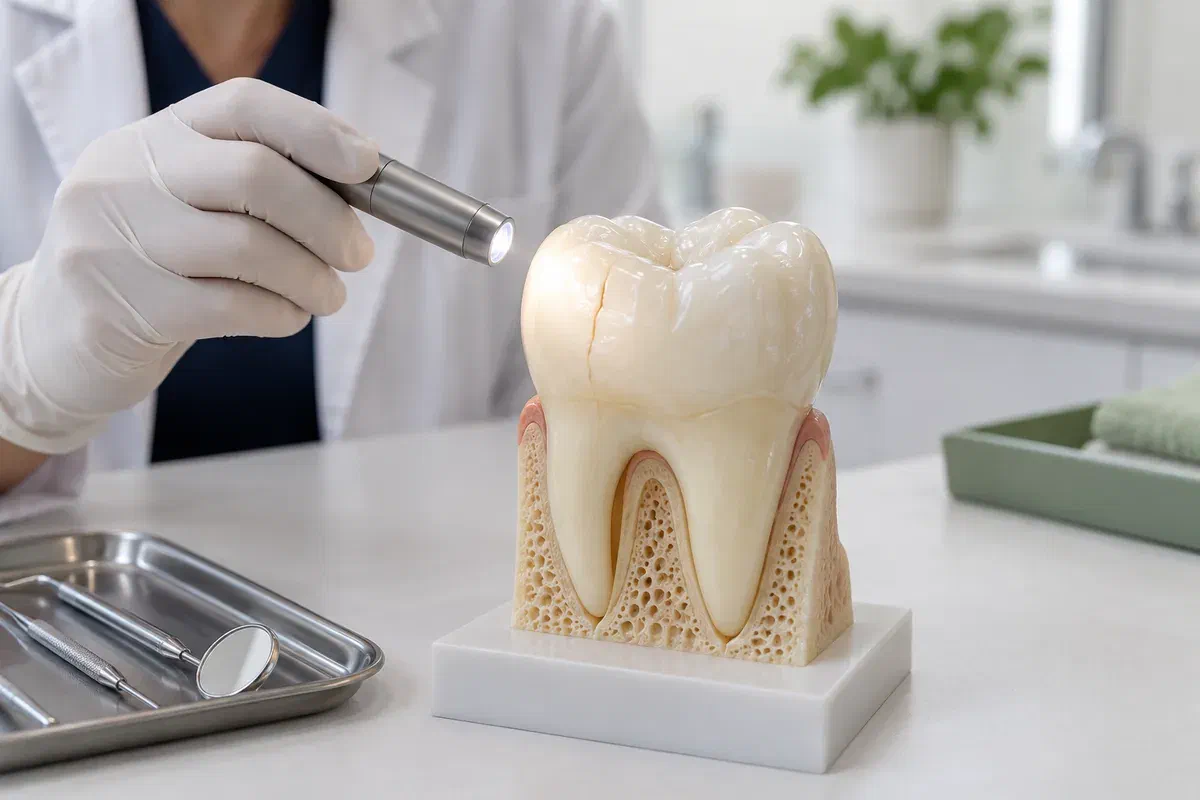
The more you share about when the tooth bothers you, the more targeted the examination can be. That can mean fewer checks and less guesswork.
Say whether the jolt comes as you clamp down, as you let go, or with certain foods, and when it began. If you now avoid that side, mention it. Other problems can feel the same, so the details help.
A line in the mirror might be superficial or more significant. Colour and length are not reliable guides. The dentist considers it with the rest of the examination rather than on its own.
Older fillings, crowns or repairs are part of the history. Mention roughness, sensitivity or a broken fragment, and any details you have about earlier treatment.
Call ahead if you have swelling, severe or escalating pain, a recent injury or a loose tooth. The team can talk through how soon you should come in and what to expect.
The assessment is more than a hunt for a line. It works out where your symptom is really coming from, whether that tooth can sensibly be repaired, and what still needs clarifying before any treatment is suggested.
Sometimes one visit settles the question; sometimes another test or a later review is needed. You should hear which, and why. A clear account of uncertainty is more useful than an early promise about the tooth before anyone understands its condition.
Biting pain does not prove a crack, and the dentist considers other explanations too. That focus means checks are selected for a reason rather than run as a routine set.
Ask what each check is for and what it might feel like. Understanding the purpose helps many people relax, and it makes describing a sensation easier when it happens.
The advice might be to keep watch, to protect the tooth, to look into it further or to treat it. Make sure you understand which one, roughly when it should happen, and what kind of change in the tooth would justify picking up the phone sooner. Writing it down before you leave can help if nerves make details slip.
Checks are tailored to your tooth and symptoms. Tell us about any anxiety before we start, so we can explain each step, agree on a hand signal to pause and go at a pace that suits you.
We cover timing, triggers, past restorations and any injury, plus how you feel about the examination. Mention lingering pain after the trigger, any swelling and whether your bite feels different.
The dentist examines the tooth, restorations, gums and nearby teeth. If a check such as biting on an instrument or a cold test is needed, it is described first and done only with your agreement.
X-rays can help reveal related problems, though fine cracks may not appear on them. Ask what the images show, and whether a further opinion would help settle the question.
We go through the likely diagnosis, what remains uncertain and the options. If a further procedure is suggested to investigate, its purpose and possible findings are explained before you consent.
Advice afterwards depends on what was found and any temporary protection. Ask what applies to your tooth, particularly if further tests or a specialist visit are on the way.
Testing it with hard foods to see if the pain is still there can put extra stress on a vulnerable tooth. You have already done enough detective work; tell the dentist what you found, then ask which foods and which side of the mouth are sensible for now.
New swelling, longer-lasting pain or a move from occasional to constant discomfort are worth noting. If the tooth worsens, call promptly rather than waiting to build a full record.
Relief can make cancelling tempting, especially if visits make you nervous. Check with the clinic first, since easing symptoms do not explain the tooth or replace the agreed review.
Feeling uneasy about a dental visit is common, and it is fine to say so. Here is what people heading in from Caledon most often want settled before the day.
When you book at our Bronte Street practice, add a line about how you feel about the examination. We will go at your pace, explain the findings and help you decide on the next step.
Puffiness in the gum or face, a knock to the mouth, or pain that keeps intensifying are reasons to phone instead of using the online form. That way the team can hear what is happening and advise you before a time is set.
