Foods you now avoid
Tell us which textures you have dropped and whether the problem comes on biting, on letting go or both. Mention when you first changed your habits. A crack is one possibility; several other conditions feel much the same.


Living with a tooth that might be cracked changes how you eat, sleep on it and plan your week. For households in Campbellville, an assessment gives you findings, a plan and practical guidance for the meantime.
When one tooth keeps catching you out, meals quietly change. Steak gets cut smaller, apples get sliced, and the crusty loaf sits untouched. A cracked-tooth assessment is a way to stop working around the problem and find out whether the tooth has structural damage or something else is going on.
Before the visit, think about the everyday moments that bother it. Is it the first bite, or the release? Does the twinge fade instantly or hang on? Has it become more frequent recently? Those answers guide the examination far better than biting down hard to prove the point, which we would rather you avoid.
For anyone coming in from Campbellville, the appointment also covers the practical side. Alongside linking your history to the findings and explaining what is certain and what is not, we talk about eating and comfort until the next step, and why a further test or referral may be worthwhile.
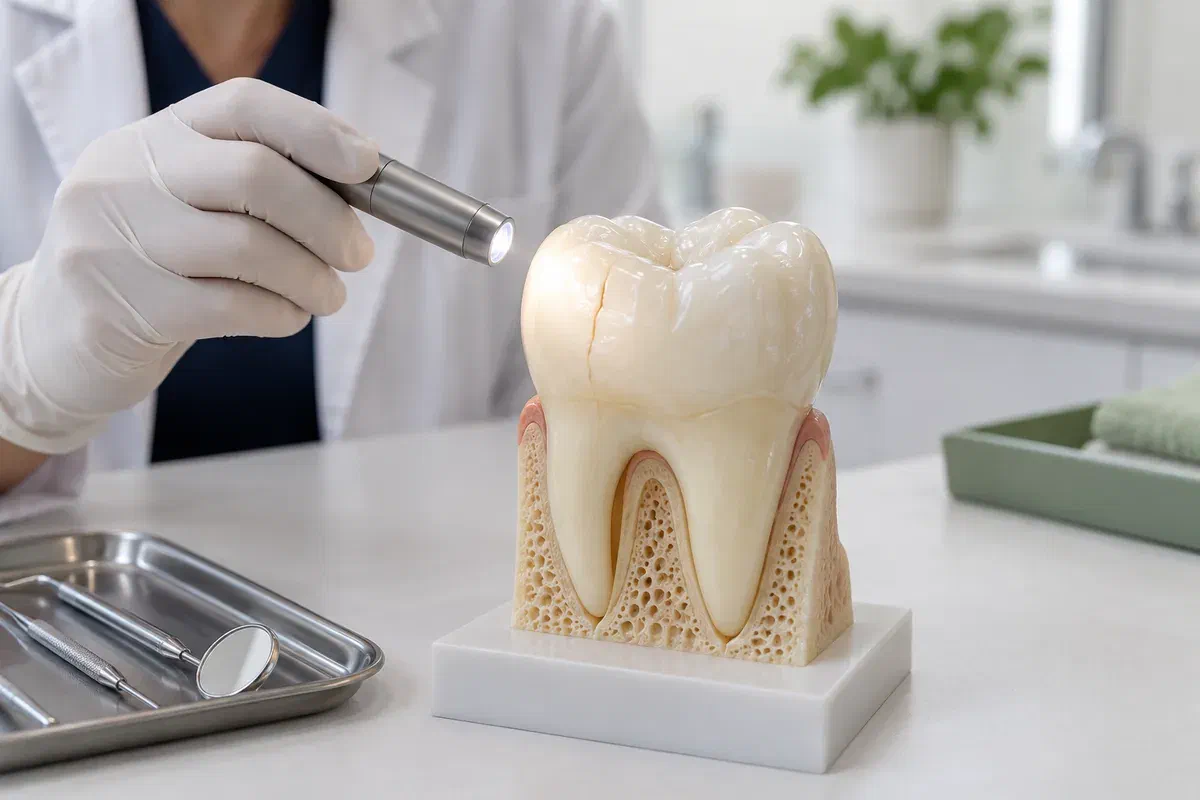
The ways you have adapted your eating are clues worth sharing. So are symptoms that appear only on some days or with some foods.
Tell us which textures you have dropped and whether the problem comes on biting, on letting go or both. Mention when you first changed your habits. A crack is one possibility; several other conditions feel much the same.
Fine lines in enamel are common and often shallow. You cannot judge depth by how dark or long a line looks. The dentist assesses it with the tooth’s overall condition and how it behaves.
A rough or chipped filling, a crown that feels different, or new sensitivity near past work are all useful details. Share any information you have about when that treatment was done.
Call the clinic before planning the trip if you notice swelling, intense or building pain, a recent injury or a loose tooth. That way the team can talk through urgency with you first.
The real aim is not just to spot a crack. It is to learn which tooth, or which bit of gum around it, is really at fault, whether that tooth is worth rebuilding, and what is still missing from the picture before care is suggested, so you know where you stand.
Sometimes that becomes clear at once. Sometimes another test or a review later on is needed, and you should hear that directly. Being straight about uncertainty helps more than reassurance about saving the tooth before anyone understands its condition.
Trouble chewing does not automatically mean a crack. Considering decay, gums and the bite as well keeps the advice tied to what the examination actually shows.
Ask what each check is for and what its result could change. When you understand the purpose, it is easier to stay relaxed and to say when something feels uncomfortable.
Whether the outcome is monitoring, protection, more assessment or treatment, confirm what comes next, roughly when, and which changes should prompt a call in the meantime.
The checks used vary with your tooth and symptoms. If you are uneasy about the pain being set off, tell us early so we can explain each step and agree on a way to pause.
We ask about triggers, timing, foods you avoid, earlier fillings or crowns and any injury. Mention any ache that hangs on after a meal, a puffy gum, or teeth that no longer seem to close the way they used to.
The dentist checks the surface, restorations, gums and neighbouring teeth, and may look at how the tooth reacts to biting or cold. The supporting tissues are checked too, guided by what turns up.
X-rays can reveal decay or infection and other related problems, although a hairline crack often does not appear on them. Ask what they show and whether a further opinion would help.
We go over the likely diagnosis, what remains unknown and the available approaches, including advice for eating until the next step. Any further investigative procedure is explained in full before you agree.
Your instructions depend on what was found and on any temporary protection. Ask for advice that fits your tooth, especially if a specialist visit or further testing is still being arranged.
Softer foods and chewing on the other side can ease the load on a tooth that may be weakened. Avoid testing it with hard foods to see if it still hurts, and ask which foods to steer clear of for now.
Make a quick note of new swelling, longer-lasting pain or occasional twinges turning constant. If the tooth is clearly worsening, call promptly instead of waiting until the next visit.
Before cancelling a follow-up because the tooth has calmed down, check with the clinic. Fewer symptoms do not explain the tooth’s condition or replace the plan you agreed.
No one expects you to know the cause before booking. These answers may help with daily life until the tooth has been examined.
Book at our Bronte Street practice to have a sore or suspect tooth examined. We will explain what we find, suggest practical ways to protect it and agree on the next step with you.
Call instead of booking online if you have swelling, a recent injury, or pain that is strong or worsening, so the team can discuss what you need straight away.
