How it feels to chew now
Explain whether pain comes on biting, on release or with particular foods, and whether that has changed since you were first seen. Mention if you now avoid that side. Similar sensations can have different sources.


Already heard one view on a tooth that might be cracked, and want another look? From Rockwood, you can arrange a fresh assessment that considers your earlier records alongside the tooth as it is today.
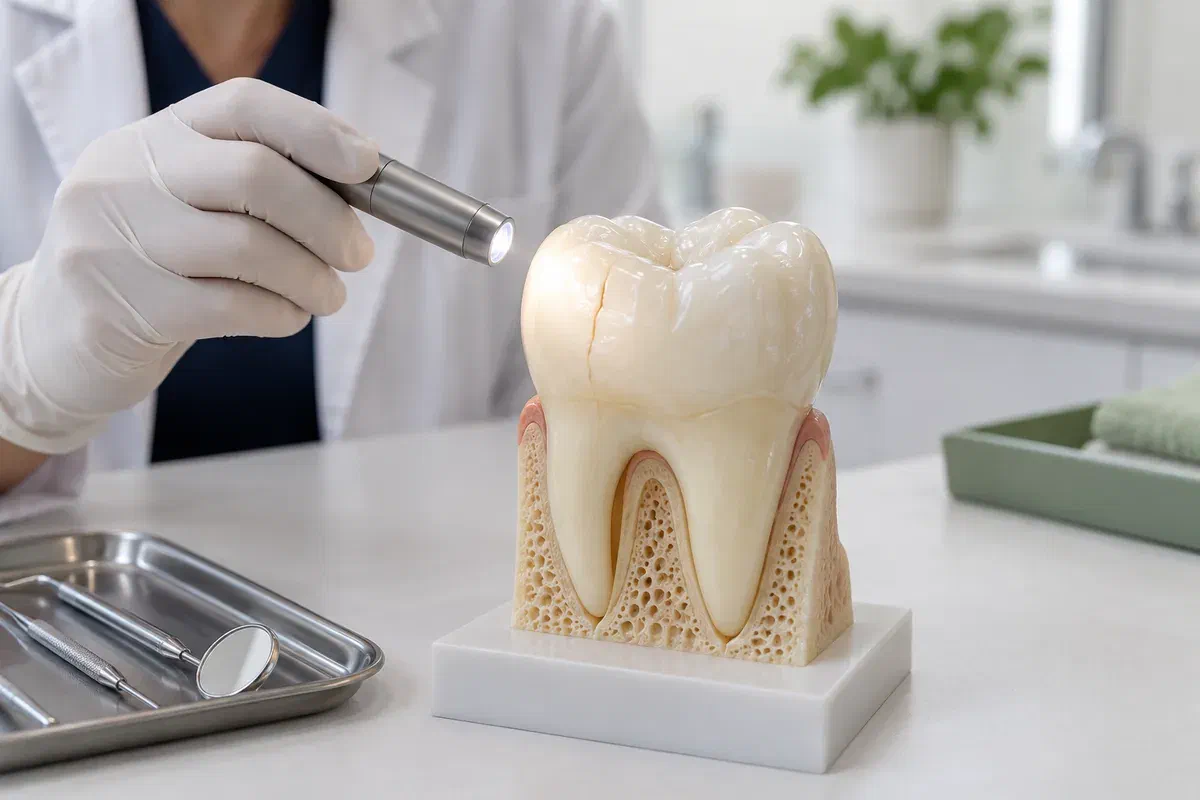
Sometimes people arrive with a suspected crack already named, and a recommendation they are not sure about. Wanting another view is entirely reasonable. A cracked-tooth assessment re-examines whether the tooth has structural damage, using your earlier information as background rather than as the final word.
Tell us what you were told, when, and what has happened since. Has the discomfort changed? Do certain foods still set it off, and does the twinge fade quickly or linger? Teeth do not always cooperate on the day of the visit, which is fine. Please avoid biting on the tooth to provoke it.
For someone making the trip from Rockwood, the value lies in a clear, independent explanation. We set your history beside today’s findings, say where we agree with what you heard and where the picture looks different, and explain why if a further test or a specialist opinion would help.
Earlier findings are useful context. Your current symptoms matter just as much, especially if they have shifted since the first opinion.
Explain whether pain comes on biting, on release or with particular foods, and whether that has changed since you were first seen. Mention if you now avoid that side. Similar sensations can have different sources.
If a line was noted before, tell us where and when. Its appearance alone does not show how deep it runs or whether it has progressed. The dentist examines it again in light of everything else.
Notes, treatment dates or the name of the earlier office all help. Mention fillings, crowns or temporary work on the tooth, and anything that has felt rough or sensitive or broken since.
If swelling, severe or growing pain, a recent injury or a loose tooth has appeared since the earlier opinion, call us first. The team can discuss how soon you should be seen.
A second assessment is not about proving anyone wrong. It aims to establish, as of today, which tooth or tissue is behind the symptom, whether the tooth appears restorable, and what still needs to be clarified before treatment.
Sometimes the findings match what you heard before. Sometimes they differ, or the picture is still uncertain and needs further testing or a review. You should be told which, and why. Clear reasoning helps more than a quick verdict about keeping the tooth.
Even with a previous diagnosis, other explanations such as decay, gum problems or bite issues are considered. The recommendation follows what is found today, not only what was found before.
Ask what each check is looking for and how it compares with earlier findings. Understanding the logic makes it easier to weigh two opinions and to speak up if a test feels uncomfortable.
You may be advised to monitor, protect, investigate further or treat. Before you leave, confirm which, how soon, and what changes would mean getting in touch earlier.
The checks are chosen for the tooth and your current symptoms. If you are worried about pain being triggered, say so first so each step can be explained and a pause agreed.
We discuss the earlier opinion, timing, triggers, past restorations and any injury. Mention whether pain persists after the trigger ends, any swelling, and whether your bite has felt different.
The dentist checks the tooth, its restorations, gums and neighbouring teeth, and may assess its response to biting or cold and the health of surrounding tissue, depending on the findings.
Previous and new X-rays may help with related issues, though a hairline crack often does not appear on them. Ask what the images show and how they compare with what you saw before.
We go through the likely diagnosis, any differences from the earlier view, what remains uncertain and the options. Any further investigative procedure is discussed, with its purpose and implications, before you agree.
The guidance you leave with reflects what this examination found and anything placed to protect the tooth for now. Ask for instructions about your tooth specifically, all the more if you are weighing two opinions side by side or still waiting to hear from a specialist.
Biting on hard foods to check the tooth can place added stress on it, and you have probably tested it plenty already. Pass those observations on, then get specific advice about meals for the stretch while the decision is being made.
Note new swelling, longer-lasting discomfort or a change from occasional to constant pain. If the tooth worsens, call promptly rather than waiting for your next visit.
If the discomfort eases, check with the clinic before cancelling. Feeling better does not explain the tooth’s condition, and it does not replace the follow-up you agreed.
You do not need to justify seeking a second assessment. These answers may help you prepare from Rockwood.
Book an appointment at our Bronte Street practice and bring what you were told before. We will examine the tooth as it is today, explain what we find and help you choose the next step.
Things that should not wait for an online booking include swelling in the gum or face, a fresh knock to the mouth, and pain that is intense or climbing. Phone the clinic so someone can talk it through with you straight away.
