A damaged section of the biting surface
If a cusp or the area around a filling is cracked, a single-visit repair might be enough. When more of the tooth is weak, a crown or onlay may be advised, which often involves an extra appointment.


Cracked-tooth care sometimes takes more than one appointment. For households in Brampton, we explain what each visit is for, how long the stages may take and how to protect the tooth in between.
Between work shifts, school runs and everything else, booking dental care can feel like a puzzle. A cracked tooth adds a twist, because treatment is sometimes staged: an assessment, a protective step, perhaps care inside the tooth, then a final restoration. Knowing why each visit exists makes the calendar far easier to plan.
How many stages you need depends on the crack. Damage limited to a cusp may be restored in one appointment. A crack heading toward the pulp, or one that reaches the root, can call for more steps or a different direction entirely. Occasionally the picture changes once an old filling is removed and the tooth can be seen clearly.
We will tell you what we expect, what might change and why. Ask about comfort, timing between visits, costs and alternatives. A plan is easier to commit to when the expected benefit, the uncertainty and the practical steps are explained together.
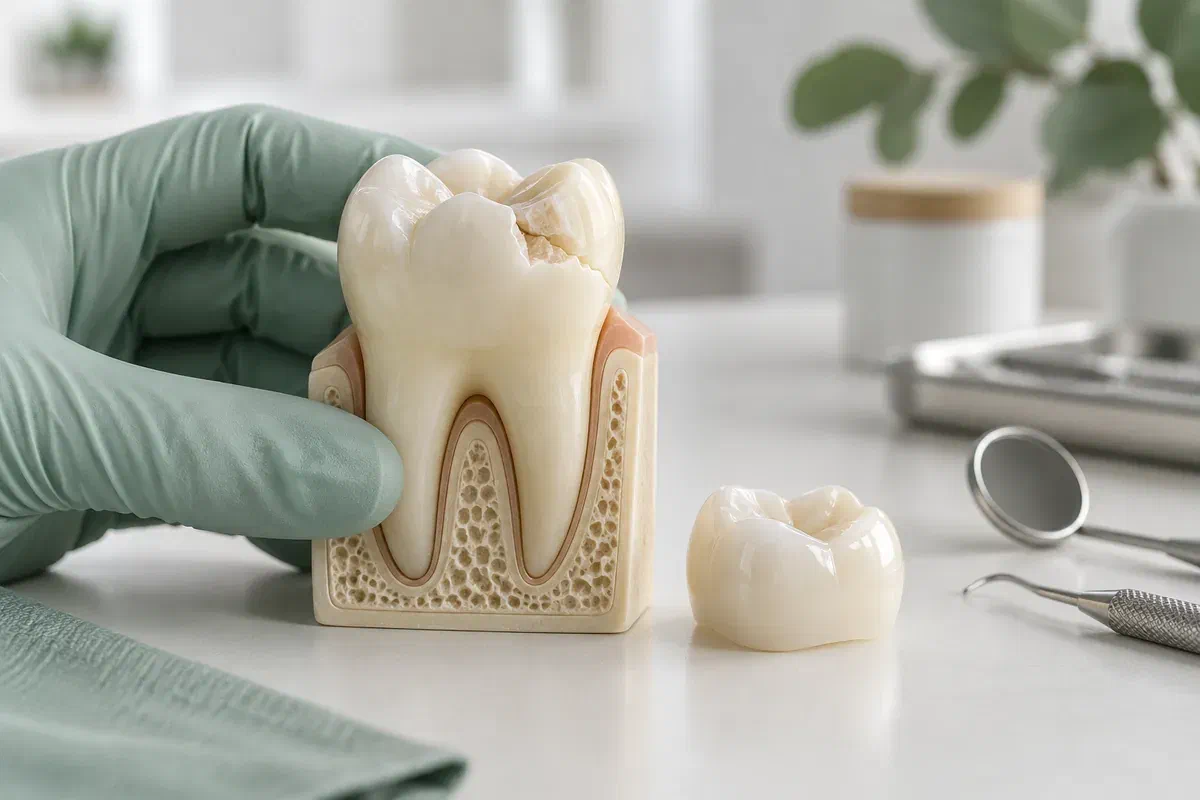
A crack can be minor or serious. The dentist considers how much healthy structure surrounds the damage, whether the pulp is affected and how far the fracture extends before suggesting a plan and a timeline.
If a cusp or the area around a filling is cracked, a single-visit repair might be enough. When more of the tooth is weak, a crown or onlay may be advised, which often involves an extra appointment.
Symptoms and tests help show whether the inner tissue is healthy. If it needs root canal treatment, that usually adds a stage before the final restoration, because covering the outside alone would not address it.
Some fractures extend too far to restore predictably. Ask which findings suggest this, how they change the plan and whether seeing a specialist first would be helpful before making a major decision.
Timelines can shift if treatment uncovers something new. Ask how that would affect the plan, the number of visits and when we would check with you before continuing.
A restorable tooth may need its damaged area rebuilt, its remaining walls supported and, sometimes, its pulp treated. These steps belong to the same goal of keeping the tooth working, but they are not the same procedure, and they are not always done on the same day.
It helps to know that cracks in teeth do not heal. A crown or onlay can protect the tooth and reduce flexing, yet it cannot guarantee the crack will never progress. That realism is part of deciding whether the time and cost of staged treatment are worthwhile for you.
Patient information: American Association of Endodontists — cracked teeth
Ask what each booked visit is meant to achieve. You should be able to tell an assessment, a temporary stage, pulp treatment and the final restoration apart, rather than seeing them as one long repair.
When the findings are favourable, retaining your own tooth can make sense. The dentist should explain why and which factors make the long-term outcome harder to predict.
Review appointments and simple contact instructions help you react if pain returns or the bite feels different, even if the tooth feels comfortable at first.
Some cracks need one visit, others a series, and a few a referral. Ask how the order of appointments relates to your diagnosis and how to look after the tooth while you wait.
We review your symptoms, examine the tooth and take any images needed. The dentist explains where the crack seems to go, whether the tooth appears restorable and what can’t yet be known.
You hear the purpose, limits, number of visits and costs of each reasonable option. We agree how unexpected findings would be handled, and you can plan appointments around work and family commitments.
Care may involve a filling, a temporary and then a crown or onlay, root canal treatment, or another suitable step. The team explains comfort measures and how to manage the tooth between stages.
Each restoration is checked against your bite. Ask when you can chew normally, what symptoms mean you should call and which appointments are still to come.
What you need to do depends on the stage you’re at and the work done so far. Keep the written instructions and our phone number somewhere easy to find, especially during a multi-visit plan.
Temporary crowns and fillings are meant to hold for a limited time. Ask which foods to avoid and how to floss around them. If one loosens or breaks, call us rather than waiting for the next booked visit.
A treated tooth that hits first, aches when you chew everyday food or develops new symptoms should be checked. Don’t try to wear down a high spot by biting on it repeatedly.
Grinding, clenching and chewing pens, ice or hard sweets can load teeth heavily. The dentist can discuss a protective appliance, while explaining that it lowers risk rather than ruling out future cracks.
Most practical questions are about how long treatment takes and what happens between visits. These answers are general; your own plan will depend on the examination.
Visit our Bronte Street practice and we’ll assess the cracked tooth, explain the findings and outline the stages that may be involved. You’ll know what each appointment is for before treatment starts.
Call the clinic about availability if you have strong pain, swelling or a newly broken tooth. Online booking is intended for non-urgent requests.
