The strength of the outer tooth
Cracks around a cusp or an existing filling can leave part of the crown of the tooth fragile. The dentist judges whether a limited repair will cope or whether a restoration that covers the biting surface is needed.


Heard the words root canal mentioned alongside your cracked tooth? From Georgetown, you can have the pulp assessed properly and learn whether care inside the tooth, an outer repair or both make sense.
For many people, the most worrying part of a cracked-tooth diagnosis is the possibility of root canal treatment. It helps to separate two questions. Is the outer tooth strong enough to rebuild? And is the pulp, the living tissue at its core, healthy, inflamed or failing? The answers decide what kind of care makes sense.
A crack can stay within one cusp, travel toward the pulp chamber or extend into the root. When it remains shallow, the pulp is often unaffected and an outer restoration may be all that is needed. Deeper cracks are more likely to irritate or infect the pulp. Occasionally the true depth is only revealed once treatment begins.
You deserve a clear account of what we find and what each option can and cannot do. Ask about comfort, appointments, fees and alternatives, including a specialist view. Decisions about root canal treatment feel far less daunting when the reasons and the limits are explained side by side.
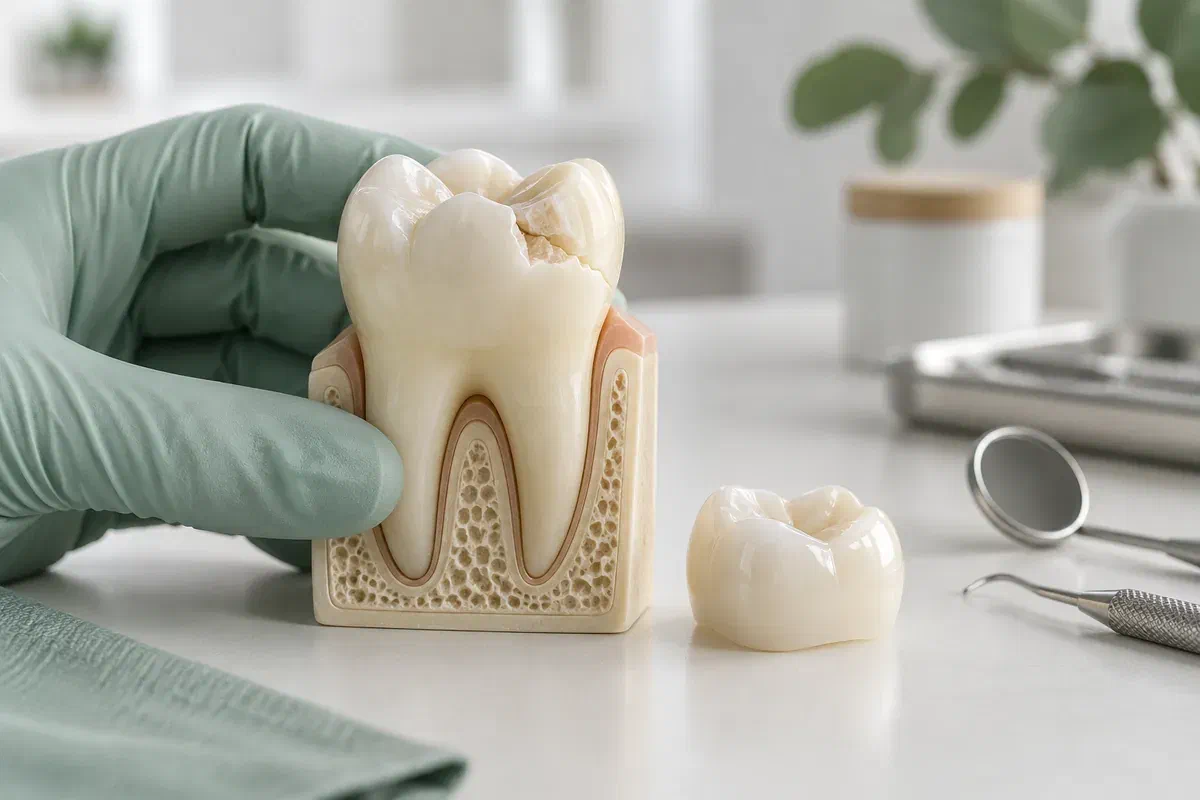
No two cracks are quite alike. Before recommending root canal treatment, a restoration or something else, the dentist looks at the remaining structure, the pulp’s condition and the depth of the fracture.
Cracks around a cusp or an existing filling can leave part of the crown of the tooth fragile. The dentist judges whether a limited repair will cope or whether a restoration that covers the biting surface is needed.
Pain that lingers after cold or heat, spontaneous throbbing and the results of pulp tests all help build the diagnosis. If the tissue is irreversibly inflamed or infected, sealing the outside would not settle the problem on its own.
Treating the pulp only makes sense if the tooth can be rebuilt afterwards. A fracture extending deep into the root may make that unlikely. Ask which findings affect the outlook and whether an endodontist should take a look.
Pulp tests and images do not always give a definite answer. Ask how the plan would shift if new information appears during treatment, and when you would be consulted first.
When the pulp is involved, root canal treatment removes the affected tissue and seals the canals. That does not repair the crack or strengthen the tooth, so a final restoration, often a crown, is planned as well. When the pulp is healthy, the outer restoration may be the only treatment required.
Teeth cannot fuse a crack back together. Even a well-executed root canal and crown cannot guarantee that a crack will stay where it is. Understanding that helps you weigh the effort and cost of saving the tooth against its outlook and the alternatives.
Patient information: American Association of Endodontists — cracked teeth
Ask whether a proposed procedure is aimed at the pulp, the outer tooth or both. Temporary protection, root canal treatment and a final crown each tackle a different part of the problem.
If the findings are favourable, keeping your own tooth can be worthwhile. The dentist should explain why and what, such as a crack near the root, could make the result less predictable.
Review visits and clear instructions help you respond if discomfort returns or your bite feels different. Feeling well after treatment is encouraging, and the tooth still benefits from being checked.
Some cracks need a single restorative visit; others need root canal treatment first, or a referral. Ask how the sequence follows the diagnosis and how the tooth should be managed in between.
We examine the tooth, review your symptoms and carry out pulp and bite tests along with any images needed. The dentist explains the likely state of the pulp, the crack and anything still uncertain.
Each reasonable path is explained, including its purpose, limits, stages and fees. We agree how a deeper-than-expected crack would be handled and which decisions could need revisiting.
That may be a restoration alone, root canal treatment followed by a crown, or a referral to an endodontist. We describe the anaesthetic and comfort measures, and how a temporary filling should be treated.
Once the final restoration is in, the bite is checked carefully. Ask when you can chew normally, what symptoms should prompt a call and whether any review or specialist appointments remain.
Aftercare depends on whether you had pulp treatment, a restoration or both, and whether the final crown is in place yet. Keep the written instructions and our number close by.
A root-treated tooth with only a temporary filling can be fragile. Chew on the other side where you can, steer clear of hard or sticky foods, and call if the temporary chips or comes out.
Mild tenderness for a few days after root canal treatment is common. Tell us if the tooth feels high, discomfort increases instead of easing or chewing becomes painful. Don’t try to grind a high spot down yourself.
Grinding, clenching and biting on hard objects can stress a cracked or root-treated tooth. The dentist can talk about a night guard or other measures, while explaining that protection lowers rather than removes the risk.
Questions about cracked teeth often turn to the pulp and what root canal treatment involves. These answers are general; your own tests will shape the advice.
Come to our Bronte Street practice for an assessment of the crack and the pulp. We’ll explain whether root canal treatment is likely to help, what else might be suitable and how the tooth would be restored.
If pain is severe, there is swelling or a piece has broken away, please call and we’ll advise on the earliest suitable time. Use online booking for non-urgent requests.
