Sound structure around the damage
When most of the tooth is intact and the crack is limited to a cusp or the edge of a filling, a repair is often realistic. The question becomes whether a localised fix will do or the tooth needs full coverage.


Not every cracked tooth can be kept, and knowing that early helps you plan. From Rockwood, we explain whether repair is realistic and, if it isn’t, what removal and replacement would involve.
Most people hope to hear that a cracked tooth can be fixed, and many can be. Some, though, have fractures that make a lasting repair unlikely, and it is kinder to say so early than to invest in treatment with a poor outlook. Hearing both possibilities from the start lets you plan rather than react.
Which side of the line a tooth falls on depends on the crack. Damage confined to a cusp is usually repairable. A crack moving toward the pulp may still be manageable with root canal treatment and a crown. A tooth split in two, or one with a fracture running down the root, is far less likely to be saved. Sometimes the answer only emerges once the tooth is opened.
We will explain what points toward repair, what points toward removal and how sure we can be. Ask about comfort, appointments, fees and every alternative. Making this decision is easier when the expected benefit, the uncertainty and the consequences of each choice are laid out together.
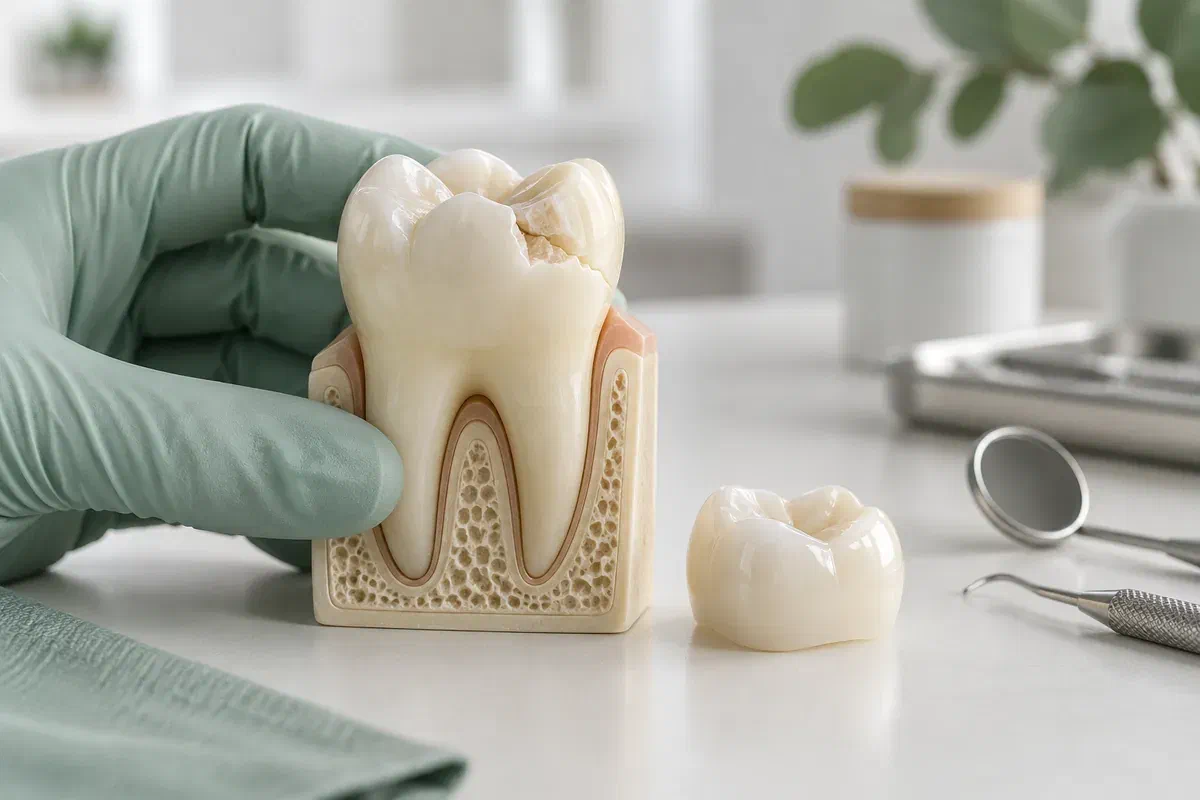
The label crack hides a wide range of outlooks. The dentist examines how much strong structure remains, how the pulp is doing and where the fracture ends before advising on whether the tooth can be kept.
When most of the tooth is intact and the crack is limited to a cusp or the edge of a filling, a repair is often realistic. The question becomes whether a localised fix will do or the tooth needs full coverage.
Lingering pain, swelling nearby and test results help reveal whether the pulp is inflamed or infected. Pulp problems can often be treated, but only if enough of the tooth remains to restore afterwards.
A crack that divides the tooth or extends well into the root may leave nothing reliable to rebuild. Ask which findings led to that view and whether a specialist could confirm it before removal is decided.
Some teeth sit in a grey zone. Ask how a discovery during treatment would affect whether the tooth is kept, and agree that you will be consulted before any change of direction.
For a tooth that can be retained, treatment rebuilds the damaged part and provides support suited to what is left, with root canal care added if the pulp needs it. Each piece has its own job. When retention isn’t realistic, a well-planned extraction and replacement can restore function in a different way.
A crack in a tooth won’t mend. Even an excellent crown can’t promise the fracture will stay still, and a tooth with a doubtful outlook may need further care later. Seeing that clearly helps you weigh the cost and effort of saving it against a replacement plan.
Patient information: American Association of Endodontists — cracked teeth
Ask what each proposed step is for, whether it aims to save the tooth or prepare for replacing it, and how confident the dentist is in the outcome.
If the findings are favourable, keeping your own tooth can be the better path. The dentist should explain why, and which factors make the result less certain.
Whether the tooth is repaired or removed, follow-up visits and clear instructions help you respond to new symptoms and keep the next steps on track.
Some cracked teeth are repaired in a visit or two. Others are removed, and replacement is planned over time. Ask how the sequence reflects the findings and what the tooth or space needs in between.
We review your symptoms, examine the tooth and take images as needed. The dentist explains how far the crack seems to go, whether the tooth looks restorable and what remains uncertain.
Repair and removal are each explained in terms of aims, limitations, stages and fees. We agree how a deeper-than-expected crack found during repair would be handled before anything begins.
That might mean a filling, onlay or crown, root canal care, or a careful extraction. We explain how comfort is managed and what to expect in the following days.
We check healing or the bite and discuss the next stage, which may include replacement planning. Ask when normal eating can resume, which symptoms warrant a call and what appointments lie ahead.
Instructions differ after a repair, a temporary stage or an extraction. Keep the written advice and the clinic’s number within reach, especially while the plan is still unfolding.
A temporary restoration is only meant to hold for a short time. Chew on the other side, avoid sticky and very hard foods, and call if it loosens or breaks rather than waiting for your next appointment.
After a repair, tell us if the tooth feels high or sore when chewing; don’t grind a high spot down yourself. After an extraction, follow the healing instructions and report pain that worsens after the first few days.
Clenching, grinding and biting on hard objects stress remaining teeth and any replacement. The dentist can discuss a night guard or other steps, while explaining that these reduce risk rather than removing it.
When a tooth’s future is in doubt, people want to understand the choices on both sides. These answers are general; your own findings will guide the advice.
Visit our Bronte Street practice for a careful assessment of the cracked tooth. We’ll explain whether repair looks realistic, describe the alternatives and help you plan the next step with all the information in front of you.
Please phone if you have severe pain, swelling or a tooth that has just broken; we’ll advise on the soonest suitable time. Online booking is for non-urgent requests.
