It lifts when you eat something sticky
Chewy foods can tug a weakly held crown upward. Steer clear of them on that side and avoid pulling on the crown. If it comes out completely, put it in a secure container and bring it to the appointment.


Your tongue keeps finding it: a crown that clicks or shifts when you bite. If you are calling from Acton, we can talk you through what to do now and check whether the crown can be secured again before it falls out.
Not every crown problem begins with the crown in your palm. Often there is a stage first, when it shifts slightly as you bite, catches floss oddly or lets a bad taste seep from around the edge. That stage is a useful warning, and it is the right time to call.
Recementation can reattach a crown that is still in good condition and fits a tooth able to hold it. When a crown starts rocking, though, the dentist wants to know why. Cement may have broken down, but movement can also come from decay under the margin, a core that has cracked or, occasionally, a problem with the tooth root itself.
Please resist the urge to wiggle it free or test it. Chew on the other side, keep the area clean and phone us. Describe how long it has been moving and whether anything else feels different. We may need to remove the crown carefully at the visit to see what is happening underneath.
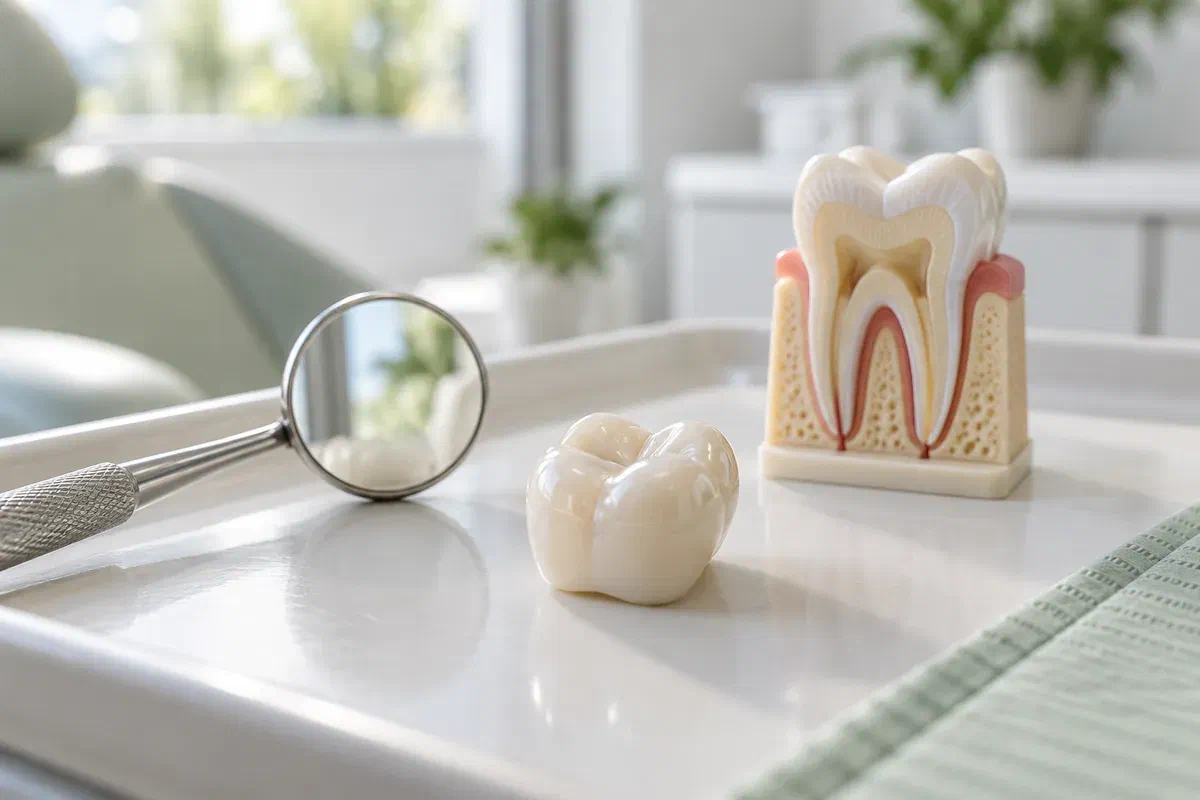
A shifting crown may not hurt at all. Still, let the team know how much it moves, whether there is a taste or smell around it and whether the tooth has become sensitive.
Chewy foods can tug a weakly held crown upward. Steer clear of them on that side and avoid pulling on the crown. If it comes out completely, put it in a secure container and bring it to the appointment.
New sensitivity around a moving crown can mean the seal has opened and the tooth is exposed. Describe what brings the twinge on and how long it lasts, so the dentist can check the tooth directly.
Repeated loosening needs a careful review of the tooth, the crown and how your teeth come together. Mention when it was last refitted and whether the same foods or habits come before each episode.
There is no need to take a moving crown out yourself. Call the clinic first, and mention pain, swelling or any recent injury when you do.
Checked before it falls out, a crown is less likely to be lost, swallowed or cracked on the way. If it turns out to be intact and the tooth beneath is sound, recementing it may let you keep it and skip a new crown. That conclusion depends on the examination.
Movement caused by decay or a fractured core will not be fixed by fresh cement alone. If the dentist advises something different, ask what they found under the crown. The explanation should relate to the current state of the tooth, not merely to how long the crown has been in.
With a good fit and a solid tooth beneath, the crown may continue to protect it. Ask whether any preparation or repair is needed before it is reattached.
An examination can uncover a cause that would worsen if left. Ask what the dentist believes started the movement and how the plan responds to it.
Sometimes a crown is resecured as a holding step while other treatment is planned. Make sure you know whether this is the final repair or an interim one.
The appointment centres on whether the crown should be reused. That may involve taking it off to inspect underneath, and the findings may suggest a different plan, so leave room to discuss them.
The dentist checks how much the crown moves and may gently remove it to inspect the tooth and the crown’s interior. Depending on your symptoms and history, imaging may also be suggested.
Fit, damage and support are assessed. If decay, a fracture or a root problem is found, you will hear what it means, which alternatives exist and what each would cost.
If reuse is right, old cement is removed, the tooth and crown are cleaned and prepared and a suitable dental cement or bonding material is applied. Each step depends on the crown material, so this is not something to attempt at home.
Seating, contacts and your bite are checked and any surplus cement is removed. Ask about eating, cleaning and whether you need another appointment.
No single set of rules fits every refit; the material, the tooth and anything else done that day all play a part. Get clear instructions before leaving, especially if this is a temporary refit or you are still frozen.
Your dentist will say how long to wait and which foods to avoid for now. Instructions from a past crown may not apply. While numb, chew carefully to avoid biting yourself.
Brush and floss around the crown as recommended. A bad taste, floss that keeps catching or sore gums near the edge are worth reporting rather than prodding at.
If the crown starts to shift again or meets the opposite tooth too early, arrange a check. Describe what you notice and avoid testing it with your tongue or fingers.
Patient information: NHS Wales — lost filling or crown
Even a crown that is still attached can hide changes underneath. These answers explain why it is checked before it is secured.
Feel a crown shifting? Ring our Bronte Street practice. We will talk you through the next few days, examine the crown and tooth at your visit, share what we find and agree with you on the most suitable way to secure or restore it.
Strong pain, a swollen face or gum, a fever or a recent knock to the mouth are reasons to call straight away, so the team can advise you on timing and the right first step.
