

Illustrative consultation about a dental crown that has become detached
Restorative Dentistry

Crown Recementation in Burlington

Crowns rarely pick a convenient moment. When yours comes away on a Saturday, there are sensible ways to protect the tooth until a visit. From Burlington, our team can then check whether the crown is fit to go back on.

A crown lost at an awkward time

Between losing it and getting it checked

Saturday brunch, a family barbecue, a long drive: crowns seem to choose the moments when booking anything feels hard. The good news is that a crown that has come off without pain, swelling or injury can usually be managed calmly for a short while, as long as the tooth is protected.

Recementation is the step that follows, when the crown is reattached in the clinic. That only happens if it still fits and the tooth underneath can carry it. A crown sometimes lets go because the cement has aged, but it can also be a sign of decay, a broken core or bite pressure that needs attention.

In the meantime, keep the crown in a closed container, favour the other side for chewing and brush the uncovered tooth gently. Our weekday hours run Monday to Thursday, and Friday to Sunday visits are by appointment, so call and explain what happened. We will look at the crown and tooth together when you come in.

Arrange a crown check
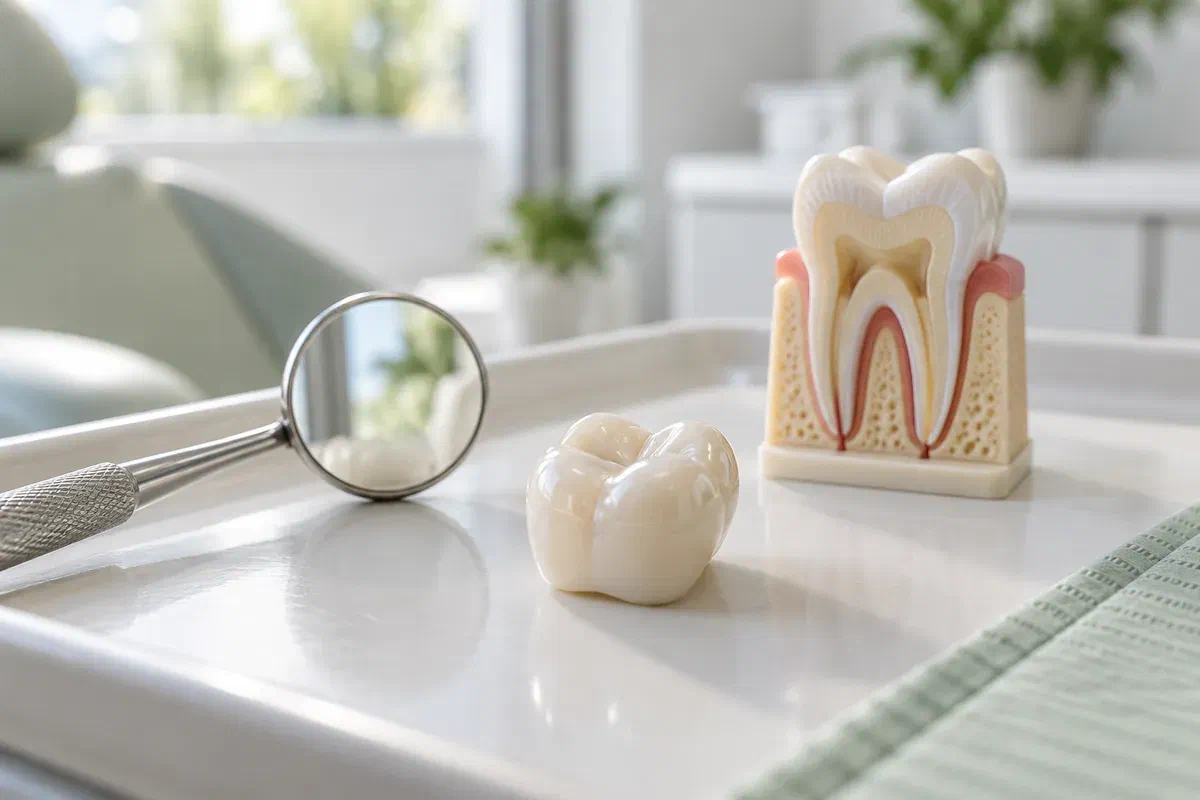
Ceramic dental crown beside a tooth teaching model and dental mirror
What the team will ask

Three situations, three sets of details

Even a painless loss deserves a phone call. Be ready to say whether the crown is completely off, whether any material is stuck inside it and how the exposed tooth is behaving.

Something chewy pulled it loose

Caramel, gum and dense bread are frequent culprits. Save the crown and bring it with you, and mention whether it felt loose in the days before. Leave it out of your mouth rather than trying to clip it back on or test the tooth with crunchy food.

The tooth reacts to drinks

Notice whether cold water, hot coffee or sweet drinks set it off and whether the feeling lingers. The exposed tooth needs its own assessment, because putting the crown back does not necessarily explain or resolve the sensitivity.

It keeps happening

A crown that has come off more than once suggests something about the tooth, the crown or your bite deserves a careful look. Tell the team roughly when it was refitted last and whether there is a common trigger.

Do not pull at a crown that is loose but still attached. Phone for guidance, and mention pain, swelling or any recent injury when you get through.

Reasons to reuse, when it fits

Refit what still works, replace what does not

A crown with no damage that seats firmly on a capable tooth is often worth reattaching. Doing so can spare you the process of having a new crown made. The call is made after examining the crown and the tooth together, since neither tells the whole story alone.

Cementing a crown onto a tooth that has weakened usually means meeting the same problem again later. If the dentist suggests something else, ask exactly what was found. The reasoning should relate to the condition of the tooth now, not only to the crown having been in place for a long time.

Continue with a crown you already have

If the fit and support are good, the same crown may carry on doing its job. You can ask if a small repair or some preparation should come before reattaching it.

Understand what went wrong

A proper examination can identify problems a temporary home fix would cover over. Ask about the likely cause and how the recommended plan takes it into account.

Know what kind of fix you are getting

A refit is sometimes a holding step while further work is arranged. Check whether the crown is going back on for the long term or just for now.

How the visit unfolds

Check, decide, reattach, review

Every recementation visit opens with one question: is this crown suitable to reuse? The examination can lead somewhere else, so set aside time to talk about the findings rather than expecting a quick in-and-out.

  1. Assess the crown, the tooth and what is inside

    The dentist looks over the crown, the uncovered tooth and anything clinging to the crown’s inner surface. Your symptoms and dental history help decide whether imaging or further tests are needed first.

  2. Explain the findings and choices

    Fit, damage and remaining support are all part of the decision. If decay or a fracture changes things, you will hear how, along with alternatives and their costs when a simple refit is not appropriate.

  3. Prepare and cement

    When reuse is the plan, the inside of the crown and the tooth are cleaned and conditioned. Then the dentist selects a cement or bonding system that matches the crown’s material. That choice is clinical, and a tube of glue from home cannot stand in for it.

  4. Check your bite and give guidance

    Your dentist reviews how the crown sits, how it touches neighbouring teeth and how you bite, removing any extra cement. Ask when normal eating can resume, how to clean the area and whether another visit is planned.

Caring for the crown afterwards

Short, specific instructions are the goal

Post-appointment guidance changes with the cement, the tooth and any other treatment done. Leave with clear advice, especially if the crown was refitted as a temporary step or your mouth is still frozen.

Eat according to the timing you were given

Your dentist will tell you how long to wait and what to avoid at first. Instructions from another crown may not apply. If you are frozen, take care not to bite your lip, cheek or tongue.

Keep the gumline around it clean

Brush and clean between teeth as shown for that tooth. Floss that catches over and over, sore gums or an edge that feels new are worth mentioning rather than scraping at.

Get in touch if it moves or feels high

Loosening, or a crown that seems to hit before the others when you close, should be checked. Phone and explain the change, and try not to keep pressing on it.

Patient information: NHS Wales — lost filling or crown

Burlington options after a crown comes off

Not every crown goes straight back on

The crown, the supporting tooth and the gum tissue are looked at together. For each route, ask what it is meant to achieve and what the trade-offs are if you wait.

Fit and support check out

Refit the crown you have

A sound crown can be secured again when it seats well and the tooth can hold it. Your dentist should mention any limits that relate to why it came loose.

The tooth underneath has changed

Fix the foundation or replace the crown

Decay, a damaged core or a poor fit may call for more restorative care. Ask if the existing crown will still be usable after that work, or if a new crown is the sounder option.

A refit cannot solve it

Consider the tooth as a whole

A serious fracture, decay or another diagnosis may lead to a wider discussion. Ask whether keeping the tooth is realistic and which alternatives would be worth weighing if it is not.

Weekend and weekday questions

What people ask while they wait

How a crown looks says little about the tooth it came from. These answers cover the waiting period and why the examination matters.

(905) 876-4488
How soon do I need to be seen after a crown comes off?
If there is no pain, swelling or injury, it is usually not an emergency, but it is best not to leave it for long. Call the clinic to arrange a visit. If pain, swelling or trauma is involved, mention it so timing can be discussed.
Is the uncovered tooth safe to brush?
Yes, gently. Keeping it clean helps protect the exposed surface. Use a soft brush, avoid scrubbing hard at the edges and keep crunchy or sticky foods away from that side.
What can I do if the bare tooth is sensitive over the weekend?
Avoid very hot, cold or sweet foods on that side and keep the area clean. If you use pain relief, follow the label and any advice from a pharmacist. Call the clinic if the discomfort is severe or getting worse.
Does an empty crown mean the tooth is fine?
Not by itself. A crown with nothing inside may point to cement failure, but the fit and the tooth still need to be checked. Pain-free is not the same as healthy, particularly for a tooth that has had root canal treatment.
If my crown is on an implant, does that change anything?
Yes. Mention it when you call, as implant crowns and their parts are assessed differently from crowns on natural teeth. Do not attempt to screw or attach anything back in yourself.
Coming from Burlington, can I be seen on a Friday or Sunday?
Friday to Sunday appointments are available by arrangement. Call the clinic, explain what has happened and the team can discuss what is possible. Weekday hours are Monday to Thursday, 11am to 7pm.
Crown help for Burlington

Let’s see whether your crown can go back

A loosened or lost crown is a good reason to phone our Bronte Street team. Pack the crown for the trip. Once we have studied it next to the tooth, we will share what we found and work out with you how the tooth should be covered again.

Worse than a simple loose crown? Severe pain, facial swelling, a knock to the mouth or a crown that is wobbling all deserve a call first, so the team can advise on how soon to come and what to do.

Visit Milton Dental Clinic
Unit 1, 342 Bronte St. S, Milton, ON L9T 5B7
Get directions Clinic hours
Monday–Thursday
11am–7pm
Friday–Sunday
By appointment only

Areas we serve

  • Milton
  • Oakville
  • Mississauga
  • Georgetown
  • Halton Hills
  • Acton
  • Campbellville
  • Brampton
  • Burlington
  • Puslinch
  • Rockwood
  • Erin
  • Caledon
  • Etobicoke
  • Old Milton
  • Bronte Meadows
  • Timberlea
  • Dorset Park
  • Dempsey
  • Clarke
  • Beaty
  • Coates
  • Harrison
  • Scott
  • Willmott
  • Ford
  • Bowes
  • Cobden
  • Walker
  • Mountain View
  • Milton Heights
  • Hawthorne Village
  • Valley View
  • Fallingbrook
  • Nassagaweya
  • Trafalgar
  • Esquesing
  • Nelson
  • Brookville
  • Moffat
  • Glen Williams
  • Norval
  • Limehouse
  • Stewarttown
  • Ashgrove
  • Hornby
  • Silver Creek
  • Speyside
  • Scotch Block
  • North Oakville
  • River Oaks
  • Glen Abbey
  • West Oak Trails
  • Palermo
  • Bronte Creek
  • College Park
  • Joshua Creek
  • Uptown Core
  • Preserve
  • Iroquois Ridge
  • Lisgar
  • Meadowvale
  • Meadowvale Village
  • Churchill Meadows
  • Erin Mills
  • Central Erin Mills
  • Streetsville
  • East Credit
  • Creditview
  • Heartland
  • Sheridan
  • Mount Pleasant
  • Credit Valley
  • Huttonville
  • Churchville
  • Springbrook
  • Northwest Brampton
  • Bram West
  • Fletcher's Meadow
  • Fletcher's Creek South
  • Alton Village
  • Orchard
  • Millcroft
  • Headon Forest
  • Tansley
  • Brant Hills
  • Tyandaga
  • Kilbride
  • Lowville
  • Aberfoyle
  • Morriston
  • Arkell
  • Hillsburgh
  • Freelton
  • Carlisle
  • Waterdown
  • Flamborough
  • Mountsberg

How can we help?

Milton Dental Clinic

Have a question about your smile? Choose the option that works best for you.

For urgent dental concerns, please call.
Messages are reviewed during clinic hours.