It came away during a hearty meal
Note what you were chewing, such as tough meat, nuts or chewy sweets, and whether you had felt a click beforehand. Keep the crown safe and dry, avoid pushing it back on and chew on the other side for now.


Back-tooth crowns do the heavy chewing, so they are often the ones that let go. For households around Campbellville, we check the molar and its crown in one planned visit and explain whether recementing is sensible.
Your back teeth grind through most of what you eat, day after day. A crown on a molar lives under that load, so when one comes off it is usually during a meal, and often after years of steady work. The question then is simple to ask but needs an examination to answer: can it go back?
Recementation is the procedure for reattaching an existing crown. It suits a crown that is still whole, fits closely and sits on a tooth with enough structure left to hold it. Heavy chewing, clenching, a build-up that has slowly worn and decay hidden at the edge are all reasons a molar crown might lose its grip.
In a rural household, a dental trip is often fitted around work, school and farm or family commitments, so it makes sense to plan. Store the crown in a small closed box and call us with the details. If anyone else at home is due for a check-up, ask whether visits can be arranged close together.
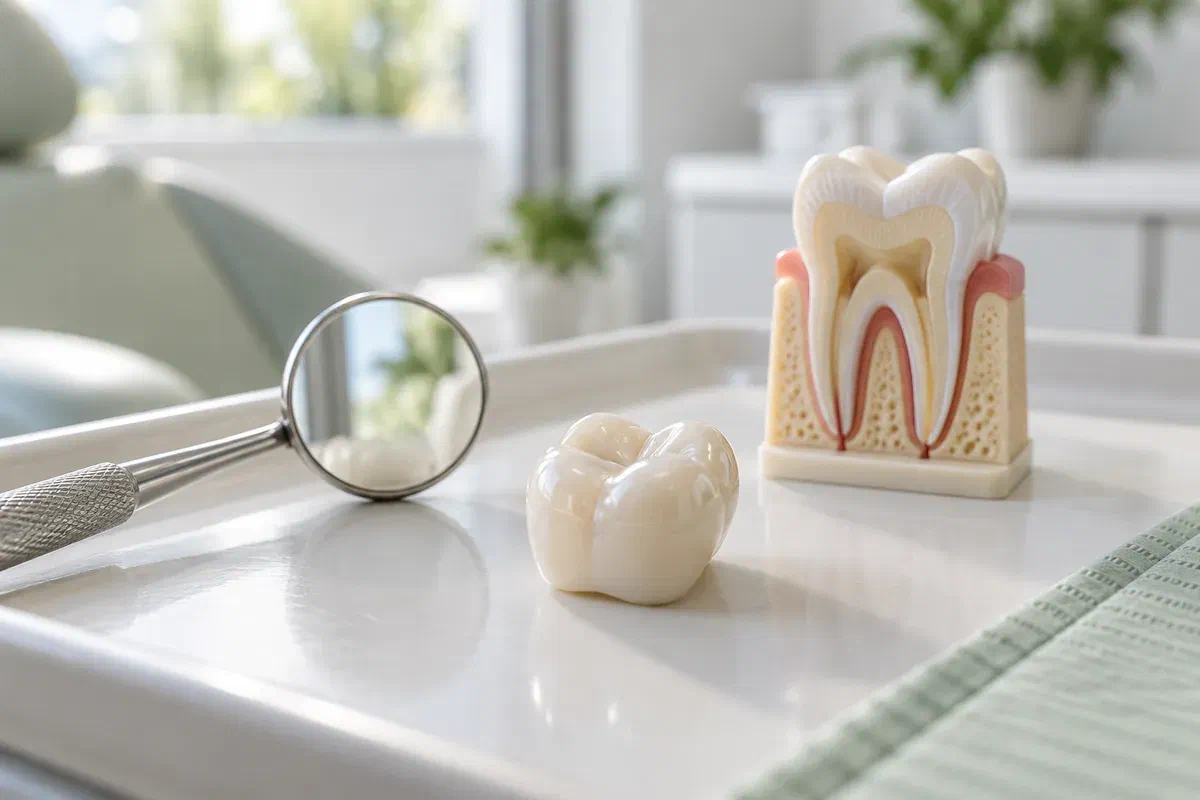
Even when nothing aches, describe what happened. The team will ask whether the crown came out completely, whether part of the tooth or filling is inside it and whether the molar has become sensitive.
Note what you were chewing, such as tough meat, nuts or chewy sweets, and whether you had felt a click beforehand. Keep the crown safe and dry, avoid pushing it back on and chew on the other side for now.
Tell the team whether the discomfort comes with pressure, cold or sweets and how long it lasts. Biting pain can suggest a crack or other issue, so the tooth must be examined in its own right.
Molar crowns that repeatedly let go are often under heavy or uneven forces. Mention any clenching, grinding or jaw tightness and when the crown was last put back on.
Crown still on but loose? Avoid working it off. Call for advice, and mention pain, swelling or a recent injury so the team understands the urgency.
If the crown is intact, seats well and the molar underneath remains strong, reattaching it can be a practical step. It may avoid the work and additional appointments involved in making a new crown, which matters when trips need planning. The examination decides whether it is suitable.
Securing a crown to a molar that has cracked or decayed beneath it tends to bring the problem back under chewing load. If something else is advised, ask what was found. The answer should be about the molar as it is now, not simply about the crown’s age.
With a good fit and a solid tooth, the crown may continue to protect the molar. Ask whether any preparation or repair should come first.
Examining the tooth, the crown and your bite can reveal causes a home repair would miss. Ask what the dentist thinks happened and how the plan responds.
A refit may be the finished treatment or a step to protect the molar while further work is scheduled. Clarify which, so visits can be grouped sensibly.
The appointment begins with whether reuse is appropriate. Findings may lead to another plan, so allow time to discuss them and any future visits before assuming the crown will be fixed that day.
The dentist looks at the crown, the remaining tooth, any material inside and signs of cracks or wear. Your history and symptoms shape whether imaging or further testing makes sense.
Fit, damage, support and bite forces are considered. If decay or a fracture changes the picture, you will hear what that means, what else could be done and what each choice would cost.
When the crown can be reused, old cement is cleared, both surfaces are prepared and a professional cement or bonding system matched to the crown is applied. Molars take strong forces, which is one more reason home adhesives are unsuitable.
The dentist checks how the crown meets the opposing teeth during chewing movements and removes excess cement. Ask when to return to normal meals, how to clean around it and whether follow-up is needed.
What you are told to do afterwards will reflect the material used, the state of the molar and any extra work at that visit. Ask for clear guidance before you go, particularly when the crown is on as a stopgap or your cheek and tongue are still numb.
Follow the waiting time and food precautions you are given. Hard or very chewy foods may need to wait longer. While numb, avoid eating so you do not bite your cheek.
Molar margins can be harder to reach, so use the method recommended for that spot. Floss that catches, sore gums or a changed feel are worth reporting rather than picking at.
A crown that moves again or makes contact before the rest of your teeth should be reviewed. Call and explain the change, and avoid testing it with hard bites.
Patient information: NHS Wales — lost filling or crown
A molar crown can look perfectly fine while the tooth beneath has changed. These answers explain what the dentist looks for before refitting it.
Has a back crown come loose or out? Phone our Bronte Street team and bring the crown along. We will check it together with the molar, let you know what we find and suggest a suitable way to restore the tooth so it can take on its share of the chewing again.
A painful bite, facial swelling, a crown that is moving or a recent blow to the jaw are reasons to call before coming in. We can then suggest how soon to book and what to do first.
