It dropped out without warning
Note when it happened and what you were eating, if anything. Mention whether it had seemed loose in the weeks before. Store the crown somewhere it cannot be lost or crushed, and do not try to wedge it back on.


No pain often feels like permission to wait. From Georgetown, it is still worth booking soon: an uncovered tooth is more exposed, and the sooner we see it, the better the chance that your crown can go back on as it is.
Plenty of people put a fallen crown in a drawer and carry on, because nothing hurts and the week is busy. That is understandable, but it can narrow your options. The tooth underneath is more exposed without its cover, and the teeth around the gap may drift slightly, which can make the original crown harder to reseat.
Recementation reattaches the same crown. It is a good fit for situations where the crown is intact, still seats accurately and the supporting tooth is sound. A lack of pain does not confirm any of those things, especially in a root-treated tooth that may no longer signal trouble.
So the practical step is a phone call, even on a day when the tooth feels normal. Keep the crown in a closed container, chew on the other side and tell us how long it has been out. We will check the crown and tooth and explain honestly whether refitting is still on the table.
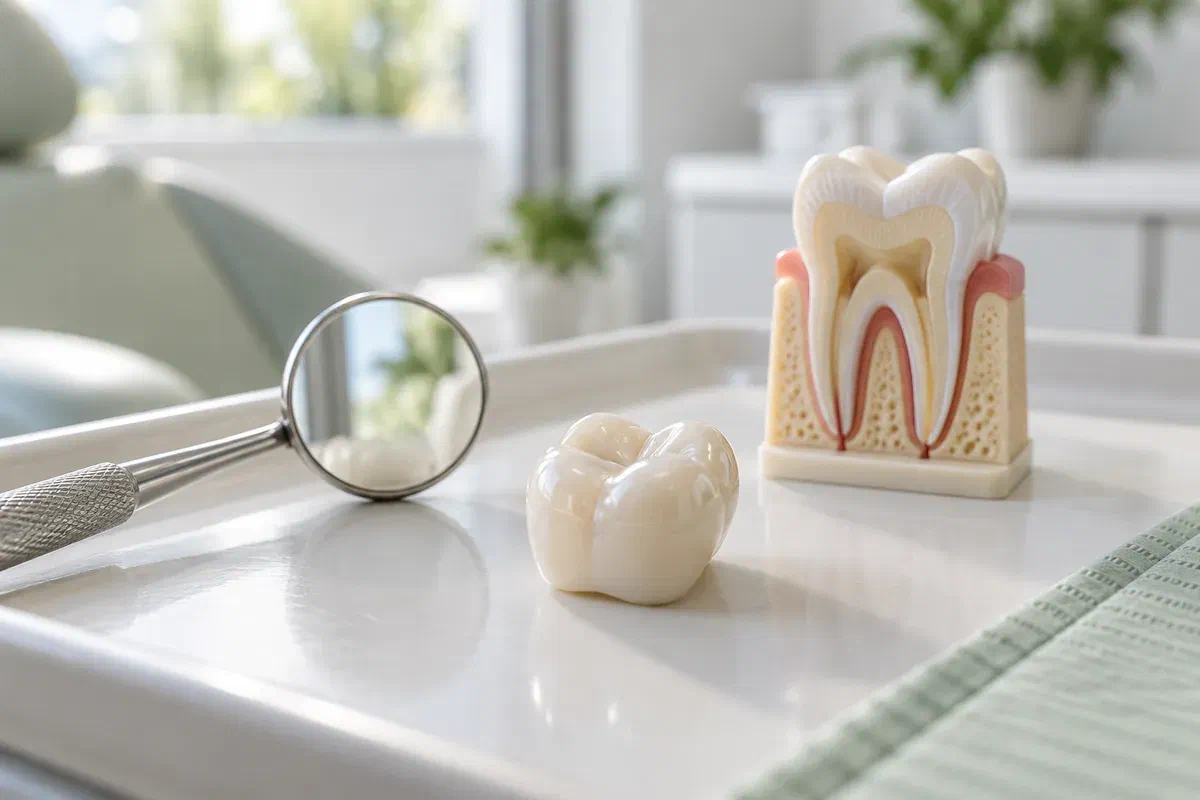
Comfort is not the full picture. The team will want to know if the crown is completely off, whether anything is attached inside it, how long it has been out and how the tooth feels.
Note when it happened and what you were eating, if anything. Mention whether it had seemed loose in the weeks before. Store the crown somewhere it cannot be lost or crushed, and do not try to wedge it back on.
Occasional sensitivity is still worth describing: what sets it off and how long it lasts. It may say something about the condition of the exposed tooth, which needs examining in its own right.
If weeks have passed, say so. Teeth can shift and the exposed surface can change over time, both of which affect whether the crown still fits. Also tell the team if it has come off before and when it was last put back.
Leave a loose but attached crown where it is and call for advice. Tell the team about any pain, swelling or recent injury when you phone.
When a crown is undamaged and the tooth beneath is in good shape, refitting it can be a straightforward choice that avoids making a new crown. Seeing it before the tooth or surrounding teeth change makes that outcome more likely, though the examination still decides.
Putting a crown back on a tooth that has developed decay or cracked underneath tends to delay the problem instead of solving it. If the dentist suggests a different approach, ask which finding is behind that. Their answer should describe the tooth today, not just the crown’s age.
If the fit and support are good, your crown can keep protecting the tooth. Ask whether a small repair or preparation is needed before it is secured again.
An examination can pick up decay or a weakening core before it becomes a larger problem. Ask what likely made the crown loosen and how the plan deals with it.
A refit may be intended as the final step or as protection while other treatment is planned. Make sure you know which, so you can plan any next visit.
The dentist’s first job is to decide whether the crown should be reused. That decision may lead to a different plan, so allow time to talk it through rather than expecting the crown to be refitted automatically.
The crown, the exposed tooth and anything inside the crown are examined. How long it has been out, your symptoms and your dental history help the dentist judge whether an X-ray or other tests are worthwhile.
Fit, damage and support are reviewed, including whether the crown still seats after time out of the mouth. If decay or a fracture changes things, you will hear about the alternatives and their costs.
If reuse is right, the tooth and the inside of the crown are cleaned and prepared, then the crown is fixed with a cement or bonding material appropriate for it. Each restoration is handled according to its material, which is why do-it-yourself products are unsafe.
The dentist looks at the crown’s position, its contacts and your bite, clearing away extra cement. Before leaving, ask about eating, cleaning around the crown and whether a follow-up is needed.
Instructions vary with the cement chosen, the tooth involved and anything else that was done. Ask for specifics before leaving, especially if the crown went back as a temporary step or the area is still numb.
Your dentist will tell you how long to wait and what to avoid. That advice may differ from what you were told about a previous crown. While numb, chew with care to protect your cheek and tongue.
Clean around the crown and between the teeth using the method recommended. Floss that keeps catching or gums that feel sore should be mentioned rather than scraped at.
Movement, or a crown that hits before your other teeth, deserves an early review. Call and describe the change, and resist checking it repeatedly with your tongue or fingers.
Patient information: NHS Wales — lost filling or crown
A painless tooth can still be changing under the surface. These answers explain why timing matters and what the examination looks for.
That crown deserves a check before too much time passes. Bring it to our Bronte Street practice, and we will examine it alongside the tooth, explain what has changed, if anything, and talk through how best to protect the tooth again.
Please phone ahead if you notice swelling, strong pain, a crown that is moving or any recent injury, so the team can talk about how soon to come and what to do first.
