It came off with a bite of something firm
Jot down the food involved and any shifting you felt in the days before. Keep it sealed and bring it in. Leave it off the tooth, and avoid chewing anything hard on that side while you wait.


Look inside the crown and you may find more than cement. For people travelling from Mississauga, we examine what came away and what stayed behind, then explain whether the same crown can be refitted.
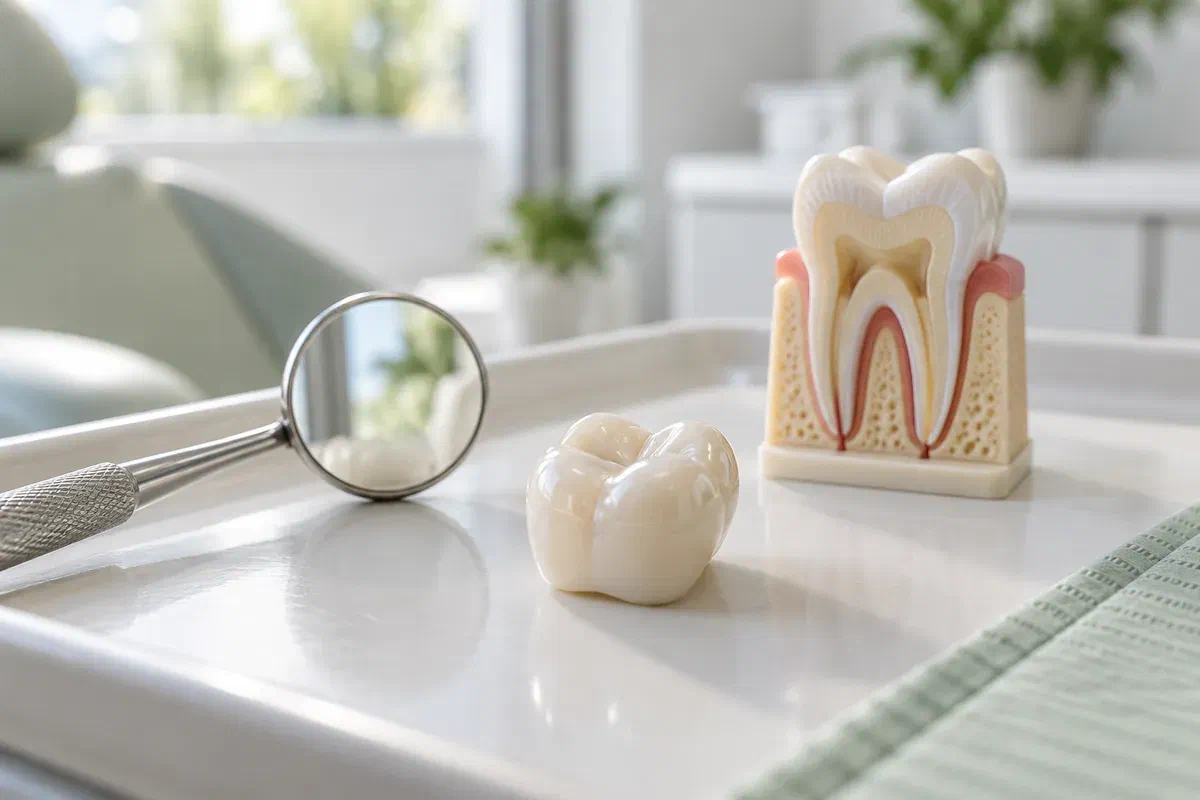
Turn a detached crown over and it tells part of the story. A clean, hollow shell is one thing. A chunk of tooth-coloured or metallic material wedged inside is another, because it may be a filling core, a post, or actual tooth that broke away with the crown.
That is why recementation is a decision rather than a reflex. The procedure reattaches an existing crown, and it suits situations where the crown is intact and the tooth beneath still offers enough support. When a piece of the foundation has come out with it, the tooth may need rebuilding before any crown can hold.
Please do not pick at or clean out whatever is inside. Seal the crown in a small container, note when and how it came off and bring it to the appointment. The dentist will match what is in the crown to what is left on the tooth and explain clearly whether refitting is realistic.
Pain may be absent, and the call is still worthwhile. Let the team know whether the crown is completely out, what you can see inside it and whether the tooth has been bothering you.
Jot down the food involved and any shifting you felt in the days before. Keep it sealed and bring it in. Leave it off the tooth, and avoid chewing anything hard on that side while you wait.
A rough edge or a sensitive spot is worth describing, including what triggers it and how long it lasts. The remaining tooth has to be examined in its own right, so do not assume the crown going back will cure it.
Repeated loosening calls for a broader look at the tooth, the crown and the forces from your bite. Share how many times it has happened and when it was last reattached.
If the crown is loose but still on, call rather than tugging it off. Mention pain, swelling or recent trauma when arranging your visit.
When the crown has no cracks, fits accurately and the tooth underneath is in good enough shape, reattaching it can be a sensible step. It may save the time and work of making a new crown. Only examining both parts together can confirm that.
Putting a crown back on a tooth that has lost part of its core, or developed decay, tends to leave the trouble in place. If the dentist recommends something other than recementation, ask which finding led there. The reasons should be about the tooth as it stands now.
Where fit and support are adequate, the crown may continue to protect the tooth. Ask whether any rebuilding is needed beneath it before it is secured.
The material inside the crown and the shape of the remaining tooth can reveal the cause. Ask what the dentist thinks happened and how the plan addresses it.
A refit can be the final treatment or a measure to protect the tooth while more care is organised. Make sure you know which applies to you.
The visit is built around deciding whether reuse is appropriate. Because the answer may lead to a different treatment, plan for a discussion before assuming the crown will be cemented that day.
The dentist examines the crown’s interior, the remaining tooth and whatever came away. Your history and symptoms help determine whether an X-ray or other tests should come first.
Fit, damage and how much support remains are reviewed. If a core has broken or decay is found, you will hear what that changes, what the alternatives are and what they would cost.
Where the crown can be reused, both surfaces are freed of old cement and conditioned, and the dentist applies a cement or bonding material chosen for that crown. The method varies with the restoration, which is why household glues are never appropriate.
Fit, contacts with neighbouring teeth and your bite are checked, and excess cement is removed. Ask when you can chew normally, how to keep it clean and whether more treatment is planned.
Your aftercare depends on the cement, the tooth and anything else carried out at the visit. Ask for clear guidance before leaving, especially when the crown is a temporary refit or you are still frozen.
Different materials set at different speeds, so stick to the timing your dentist gives. Earlier crowns may have come with other rules. Be careful not to bite your cheek or tongue while numb.
Brush and clean between the teeth using the approach recommended. If floss keeps catching, the gum is irritated or the edge feels changed, tell the team instead of scraping it.
Should the crown start to move again or feel as if it lands first, have it checked. Call and describe what changed, and avoid repeatedly testing it.
Patient information: NHS Wales — lost filling or crown
A crown can look fine while the tooth beneath has changed. These answers explain how the examination guides the decision.
Contact our Bronte Street practice about a crown that is loose or has come off. Bring it along so we can examine the crown with the tooth, explain our findings and discuss a suitable way to restore and protect it.
Some situations need a conversation before the visit: a crown that is moving, marked pain, swelling or a recent injury. Call so the team can discuss timing and next steps.
