

Illustrative consultation about replacing an existing dental bridge
Restorative Dentistry

Dental Bridge Replacement

An older bridge deserves a fresh assessment when its fit, comfort, or condition changes. Explore dental bridge replacement in Milton with a plan that considers the restoration, its supports, and your everyday needs.

A closer look at bridge replacement

A new bridge starts with a fresh look at its foundation.

A dental bridge replaces missing teeth by joining replacement teeth to supporting teeth or implants. When an existing bridge no longer serves the mouth well, replacement may be considered. The decision involves the bridge itself and the structures that will need to support the next restoration.

You may be noticing movement, repeated repairs, difficulty cleaning, or a change in appearance. Those concerns do not all have the same solution. An older bridge that remains comfortable and clinically sound is different from one with a failing support, so age alone should not decide the treatment.

At Milton Dental Clinic, tell us what has changed and what worked well about your current bridge. We can review its condition and discuss whether repair, replacement, or a different approach is appropriate. If removal is needed to assess the supporting teeth fully, that uncertainty should be explained before treatment begins.

Review an existing bridge
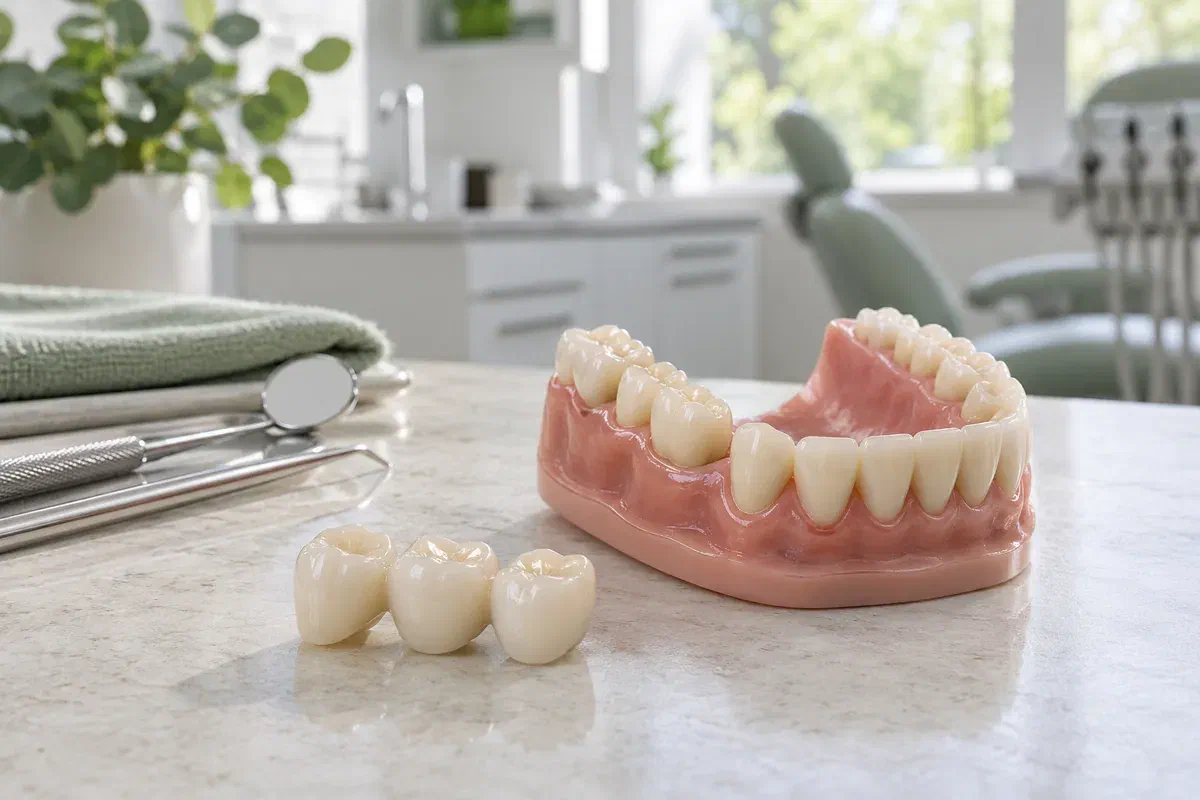
Ceramic three-unit bridge beside a dental teaching model
Reasons to have a bridge reviewed

Look beyond the visible replacement teeth.

A bridge can look acceptable while the surrounding mouth needs attention. Equally, an appearance concern may exist without a structural failure. An examination helps keep the recommendation proportionate to the actual findings.

Repeated loosening or breakage

If the same bridge has needed several repairs, bring the history to the appointment. The dentist can consider whether the problem is localized or whether its fit, design, supports, or loading make another repair a less suitable choice.

Changes around a supporting tooth

Sensitivity, tenderness, or a change near the gum can prompt a closer assessment. The supporting tooth may need care independently of the bridge, and the findings can affect whether a similar replacement is reasonable.

Cleaning has become difficult

Explain where food collects or where you struggle to pass a cleaning aid. This can help the dentist assess the current design and discuss how access for daily care should be considered in any proposed replacement.

Contact the clinic about a bridge that moves, causes pain, or has a sharp broken area. Avoid trying to detach or repair it yourself while waiting for advice.

What a replacement plan can address

Use the opportunity to review function and maintenance together.

Replacing a bridge can allow its fit, shape, and relationship to the bite to be reconsidered. That can be useful when the old restoration is no longer suitable, provided the supports and surrounding tissues are appropriate for the proposed design.

A new bridge does not automatically resolve disease beneath an old one. Any underlying problem needs its own diagnosis and treatment plan. Ask how the supporting teeth or implants have been assessed and what their outlook means for the replacement.

A design informed by your experience

Describe what felt natural and what was difficult about the previous bridge. Your experience can inform a discussion of contour, appearance, and access for cleaning without assuming that every feature should be copied.

A clearer understanding of the supports

Reviewing the foundation helps explain why the same type of bridge may still be appropriate or why a different solution is being considered. Ask which findings are most important to that recommendation.

A maintenance plan from the beginning

The replacement should come with a practical explanation of how to care for it. Discuss the cleaning tools you can use comfortably and the review arrangements needed to monitor both the bridge and its supports.

Planning the transition

Understand what happens before the old bridge comes away.

The sequence depends on the bridge type and the condition of its supports. Ask about temporary arrangements, possible findings after removal, and what would happen if the original replacement plan needs to change.

  1. Assess the current restoration and mouth

    The dentist reviews symptoms, previous repairs, the bite, and the surrounding tissues. Appropriate records help assess the supporting structures, while the limits of what can be established with the bridge in place are explained.

  2. Compare repair and replacement pathways

    Discuss whether the existing bridge can reasonably be maintained, repaired, or refitted. If replacement is recommended, ask why and review the proposed design, alternatives, stages, costs, and any uncertainties affecting the plan.

  3. Manage removal and prepare the next restoration

    If you choose replacement, removal and any necessary treatment are planned with suitable comfort measures. The supports are reassessed, records are taken as appropriate, and the team explains any temporary restoration needed between appointments.

  4. Fit the bridge and demonstrate care

    The new restoration is checked for fit, contacts, bite, and appearance before completion. Ask to see how to clean beneath and around it, and confirm when a review is needed and which changes should prompt a call.

Caring for the new bridge

Keep the supports as much in mind as the visible teeth.

Your daily routine needs to reach the areas around the bridge and beneath its replacement teeth. Ask for instructions specific to the design rather than assuming the method used for your previous bridge will be identical.

Practise the cleaning technique

The team can discuss suitable aids and demonstrate where they need to pass. Tell them if grip, dexterity, or limited access makes a method difficult so a realistic routine can be considered.

Notice changes in comfort and food trapping

Report a bite that feels uneven, persistent soreness, or a new area where food collects. A new bridge may feel unfamiliar, but continuing discomfort deserves assessment rather than an assumption that it must simply be tolerated.

Keep the planned reviews

The restoration and supporting structures need ongoing attention. Bring concerns about cleaning, gum changes, or any movement to review appointments, and contact the clinic sooner if a new problem appears.

Patient information: Cleveland Clinic — dental bridges

Choosing the next replacement

A previous bridge does not limit you to one future choice.

The suitable alternatives depend on the gap, the remaining teeth or implants, and your preferences. Compare complete plans, including preparation, temporary care, maintenance, and possible future treatment.

When the supporting teeth remain suitable

Another tooth-supported bridge

A new bridge may use appropriate existing supports, with any necessary treatment completed first. Ask how much additional work those teeth need and how their condition influences the expected usefulness of the restoration.

When a different foundation is worth assessing

An implant-based restoration

Implant treatment may be an alternative in a suitable mouth, but it requires its own assessment and may involve surgery and healing. Existing implant-supported bridges also need compatible components and assessment of their support.

When the overall plan needs to change

A removable or other suitable approach

A removable partial denture or another approach may be considered when the gap or remaining support makes a fixed bridge less suitable. Discuss comfort, handling, appearance, and maintenance as part of the comparison.

Questions about replacing a bridge

Plan the change with the practical details in view.

A replacement affects more than the fitting appointment. These questions can help you discuss the transition and understand what the dentist needs to establish before making the final restoration.

(905) 876-4488
Does a bridge need replacement just because it is old?
No. Its condition, fit, function, and supporting structures matter more than a birthday. An older bridge may remain useful, while a newer one may have a problem that needs attention. Ask which specific findings support replacement rather than relying on a fixed lifespan alone.
Can the dentist know everything about the supporting teeth before removing a bridge?
Not always. Examination and appropriate imaging provide useful information, but some details may become clearer only after removal. Ask what remains uncertain, how that could affect the replacement plan, and what temporary arrangement would be used if further treatment is needed.
Will I be left with an uncovered gap during bridge replacement?
Discuss that before treatment begins. A temporary restoration may be appropriate, but the arrangement depends on the bridge, supports, and planned procedures. Explain any important events or work concerns so the team can discuss realistic timing without promising an outcome before assessment.
Can a replacement bridge look different from my existing one?
Yes, appearance can be part of the planning discussion. Describe the changes you would like and bring a photograph if it helps. The proposed tooth shapes and positions still need to work with the available space, bite, supporting structures, and cleaning requirements.
What happens if one supporting tooth is no longer suitable?
The original bridge design may need to be reconsidered. The dentist can explain whether that tooth can be treated and retained or whether another replacement approach is appropriate. Ask how the changed support affects the gap, treatment sequence, and available alternatives.
Should I bring information about an implant-supported bridge made elsewhere?
Yes. Details of the implant system, previous clinicians, and available treatment records can help the assessment. Let the clinic know that implants support the bridge when booking. Replacement components and the health of the supporting implants require consideration before a new restoration is planned.
Dental bridge replacement in Milton

Let’s review the bridge and the plan behind it.

Bring your concerns about an older or damaged bridge to our Bronte Street clinic. We can assess the restoration and its supports, discuss what can be retained, and explain replacement options that take your comfort and daily care into account.

If the bridge is loose or causing significant discomfort, call to discuss the concern before arranging a routine online appointment.

Visit Milton Dental Clinic
Unit 1, 342 Bronte St. S, Milton, ON L9T 5B7
Get directions Clinic hours
Monday–Thursday
11am–7pm
Friday–Sunday
By appointment only

How can we help?

Milton Dental Clinic

Have a question about your smile? Choose the option that works best for you.

For urgent dental concerns, please call.
Messages are reviewed during clinic hours.