Porcelain that has chipped before
If this is the second or third break, list the earlier ones. Repeated chipping can reflect bite forces, grinding, the material or the design, and it affects whether one more repair is likely to hold.


A chip off the porcelain does not always mean a whole new bridge. For people in Acton, we check the break, the metal or ceramic beneath it and the teeth holding everything, then explain whether a repair is sensible or replacement is wiser.
You bite on an olive pit or a hard crust and feel something give. Your tongue finds a rough edge where the bridge used to be smooth. It is unsettling, but it is also a good moment to pause before assuming the worst. Plenty of chips are cosmetic; some point to a bigger structural problem.
A bridge carries replacement teeth on supports at either end, so a break can involve the surface porcelain, the framework beneath it or the crown on an anchoring tooth. Each has a different answer. A small chip on an otherwise stable bridge is not the same as a crack running through the structure.
Bring the piece if you found it, tell us what you were eating and mention anything else that has felt different. The dentist can examine the damage and the supports, then talk through polishing, repair or replacement. If the anchors can only be judged fully once the bridge is removed, you will know that beforehand.
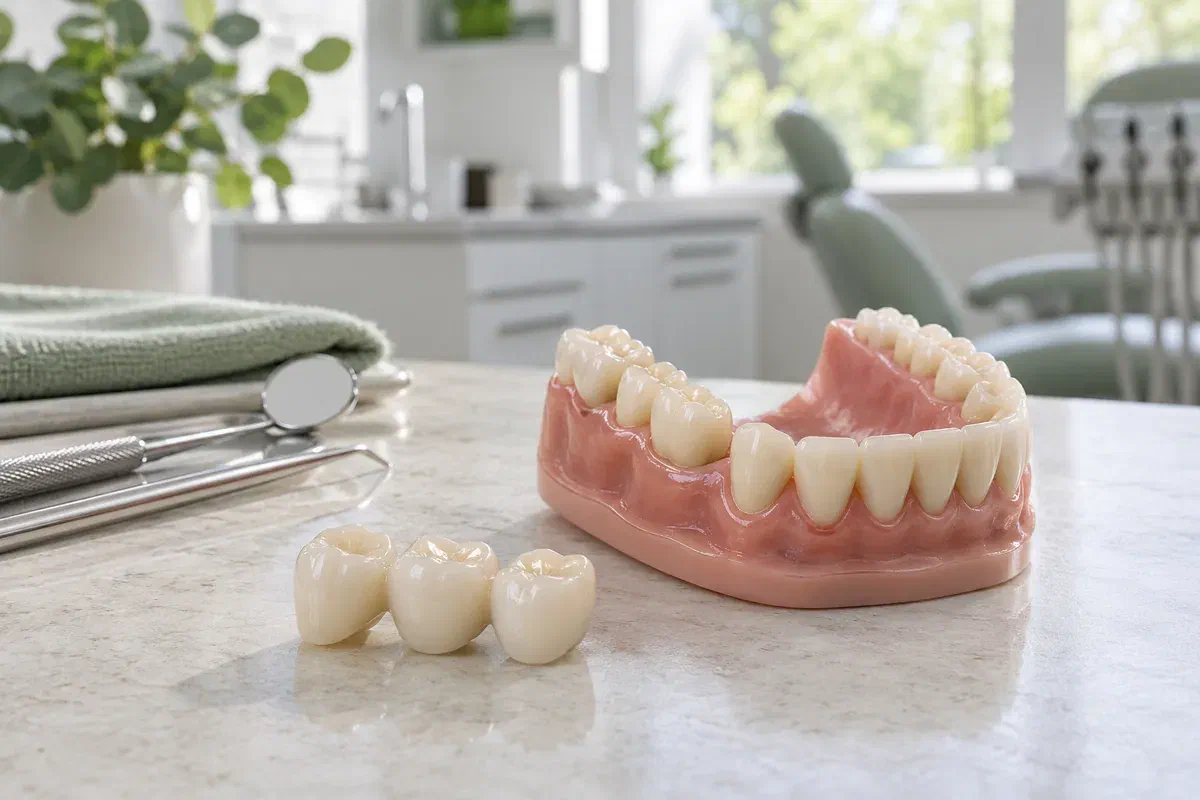
A minor chip may need only smoothing, while a hairline crack can be more significant than it looks. An examination keeps the recommendation proportionate to what has actually happened.
If this is the second or third break, list the earlier ones. Repeated chipping can reflect bite forces, grinding, the material or the design, and it affects whether one more repair is likely to hold.
A chip that exposes metal or an anchor’s margin may lead to sensitivity or tenderness. The supporting tooth may need attention of its own, and its condition affects what kind of fix is reasonable.
Jagged areas can catch floss and collect debris. Tell us where. Smoothing may help in the short term, and the dentist can consider cleaning access if a new design is discussed.
Call the clinic if a broken bridge is sharp enough to cut your tongue or cheek, hurts or has become loose. Avoid filing it down yourself or using household glue.
If the damage is too extensive to mend well, a replacement allows the material, thickness, shape and bite contacts to be reconsidered. That can make sense after repeated chips, as long as the anchors and the gum around them are healthy enough to hold a new one.
Keep one thing in mind: a stronger new bridge will not on its own resolve decay or gum disease that may have developed beneath the old one. Those need their own diagnosis and care. Ask how the anchors were evaluated and what that means for the replacement.
Knowing where and how the bridge failed can inform the next one. Your comments on comfort and appearance also help, though not every feature needs copying.
A break sometimes reveals that an anchor was already struggling. After the supports are reviewed, you will hear whether a comparable bridge still makes sense or whether a different approach deserves thought. Ask which observation mattered most.
Ask about chewing habits, grinding and whether protection at night is worth discussing. Agree on cleaning tools and a review schedule for the bridge and its supports.
The path depends on the extent of damage, the type of bridge and its supports. Ask about smoothing in the meantime, a temporary if needed and how the plan would change if removal reveals more.
The dentist looks at the fracture under magnification and light, runs floss along the broken edges, checks how your teeth come together and takes X-rays where they will help. You will hear what can be judged with the bridge still cemented and what will have to wait.
Polishing, bonding a repair or monitoring are compared with replacement. A repair that fails within months is rarely good value, so ask how long the dentist expects it to hold. If a new bridge is recommended instead, ask what tipped the balance, and talk through its design, the other choices, the number of visits, fees and anything still unknown.
Removal and any needed treatment are planned with suitable comfort measures. The anchors are re-examined, impressions or scans are made and the team explains any interim bridge.
The new restoration’s seating, contacts, bite and look are confirmed before it is fixed in place. Ask to practise cleaning beneath it and agree on when to return and what should prompt a call.
Porcelain is tough but not unbreakable, and the gum around each anchor still needs daily attention. Ask for a routine built for this design, since your earlier technique may need adjusting.
The team can suggest aids and show you where they need to reach. If dexterity or access is a challenge, mention it so the routine stays realistic.
Ice, hard candy and pits can stress any restoration. Report a bite that feels uneven, ongoing soreness or new food trapping, rather than assuming it will settle on its own.
The bridge and its supports need regular checks. Bring up cleaning trouble, gum changes or any looseness at reviews, and contact us earlier if a new chip or symptom appears.
Patient information: Cleveland Clinic — dental bridges
These questions cover what to do right after a break, how repair decisions are made and what has to be confirmed before a new bridge is made.
At our Bronte Street practice, the dentist will examine the damage and the supporting teeth or implants, explain whether a repair is reasonable and, if replacement is the better path, set out options that suit your comfort and daily routine.
A sharp, painful or loose break is best discussed by phone before you book a routine appointment online.
