The same bridge, repaired again and again
Bring dates or rough recollections of earlier repairs. A repeating pattern can show whether the issue is local or whether fit, design, the supports or heavy chewing make yet another fix a poor bet.


A bridge that keeps coming unstuck is telling you something. If you are travelling from Burlington, we look for the reason behind each loosening, examine the anchors and explain when one more repair is sensible and when it is not.
One loosening may just need to be cleaned and cemented back. When it happens repeatedly, the question changes from how to reattach it to why it will not stay. Because a bridge relies on teeth or implants at each end, the answer is often found in those supports rather than in the false tooth itself.
Possible reasons include decay under a crown, a support tooth that has fractured, a design that takes too much force, or a bite that loads the bridge unevenly. Each one leads somewhere different. A sound bridge that simply lost its seal is a separate case from one with a failing anchor, regardless of age.
Tell us how many times it has come loose and what you were doing when it happened. Mention, too, what you have liked about it. We can then discuss recementing, repair, replacement or a different approach, and explain in advance if the supports can only be fully assessed once the bridge is removed.
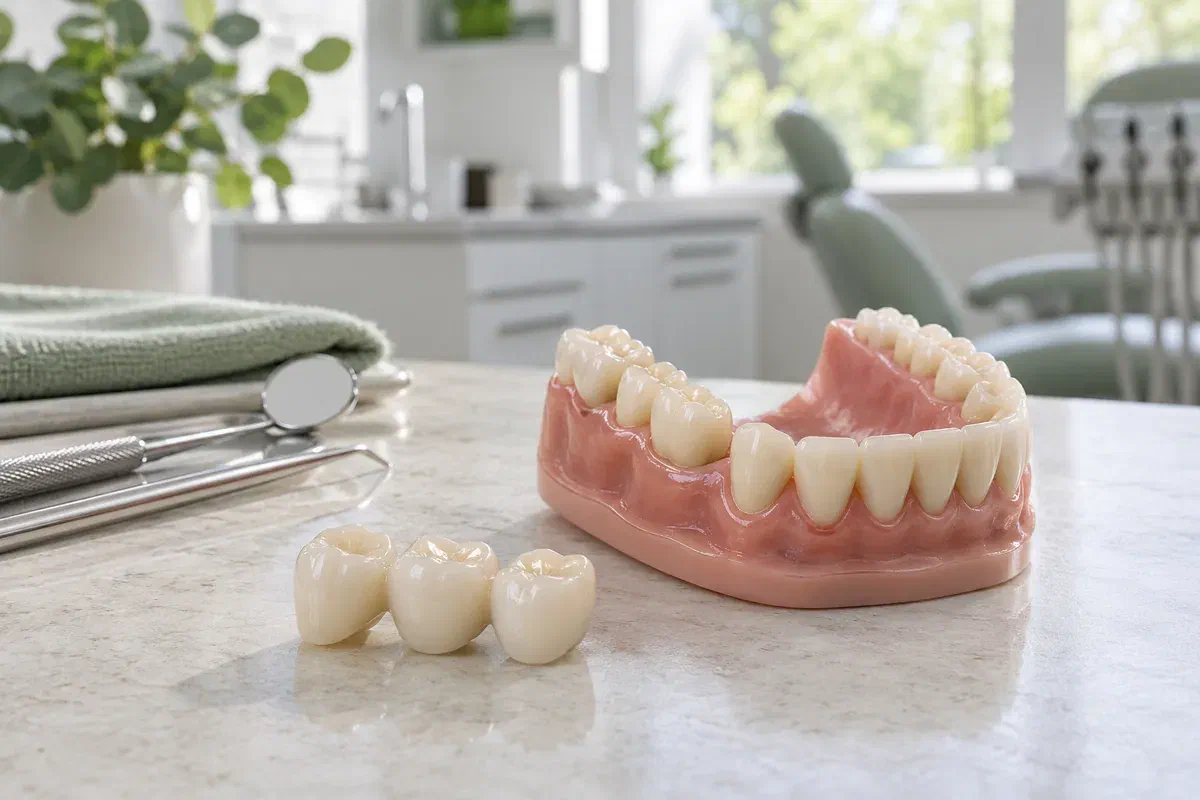
One event can be bad luck; a sequence usually has a cause. At the same time, not every complaint signals failure. The examination is how the recommendation stays matched to what is actually going on.
Bring dates or rough recollections of earlier repairs. A repeating pattern can show whether the issue is local or whether fit, design, the supports or heavy chewing make yet another fix a poor bet.
Biting pain, sensitivity or gum swelling at one end can mean that tooth needs attention in its own right. Its condition also feeds directly into whether a similar replacement remains a reasonable plan.
If you wake with tight jaw muscles or have been told you grind, say so. Heavy forces can stress restorations, and the dentist may consider your bite, cleaning access and possible protection when discussing the next design.
Contact the clinic when a bridge is moving, painful or broken with a sharp edge. Keep household glues away from it and avoid forcing it off while you wait.
Replacing a bridge that keeps failing allows its design, its fit on the supports and how it meets your bite to be reconsidered. That can reduce the strain that led to repeated loosening, provided the teeth or implants and gums beneath it are suitable.
Fresh porcelain does not repair decay or a cracked anchor on its own. Those problems need diagnosis and treatment of their own before any new restoration is placed. Ask how each support was assessed and what its outlook means for the replacement.
Knowing when and how the old bridge failed helps inform the shape and structure of the next one. Your account of comfort and appearance also counts, though some old features may be better left behind.
After the foundation is evaluated, the dentist can explain why the same style of bridge still fits or why a change is proposed. Ask which findings were most decisive.
Expect practical advice on daily cleaning and, where relevant, on protecting the bridge from heavy forces. Agree on cleaning tools you can manage and a review schedule for the bridge and its supports.
The sequence depends on your type of bridge and the state of its anchors. Ask beforehand about the temporary, about findings that may appear on removal and about how the plan could adapt.
The dentist reviews your history of repairs, checks the bite and gums and takes suitable images of the supports. The limits of what can be seen with the bridge still cemented are explained.
Recementing, repair and continued monitoring are weighed against replacement. If a new bridge is advised, ask why, and go through the design, alternatives, stages, fees and remaining uncertainties.
If you choose to proceed, the old bridge is removed and necessary treatment completed with appropriate comfort measures. The anchors are re-examined, records are taken and a temporary is explained if needed.
The finished bridge is checked for fit, contacts, bite and appearance before cementation. Ask for a demonstration of cleaning beneath it and confirm your review timing and the signs that should prompt a call.
Daily cleaning needs to reach under the replacement teeth and around each anchor. Ask for directions specific to the new design, since the method for your old bridge may not be identical.
The team can show you which aids to use and exactly where to guide them. Mention any difficulty with grip, dexterity or reach so a routine you can sustain is planned.
An uneven bite, soreness that persists or a new food trap should be reported. A fresh bridge can feel unfamiliar briefly, but continuing discomfort should be assessed rather than tolerated.
The bridge and its supports benefit from ongoing monitoring. Raise any cleaning concerns, gum changes or sense of movement at your reviews, and call sooner if a new problem arises.
Patient information: Cleveland Clinic — dental bridges
For people weighing a visit from Burlington, these answers address common worries about repeated loosening and the changeover to a new restoration, along with what must be confirmed before the final bridge is made.
Visit our Bronte Street practice to have a bridge that keeps loosening properly examined. We will check the restoration and the teeth or implants behind it, explain what can be retained and describe replacement options with your comfort and daily care in mind.
If the bridge has come out or is causing real discomfort, phone us before booking a routine time online.
