Loosening that keeps returning
Several episodes of the bridge lifting or needing cement often point beneath it. Share the dates if you can. The dentist can weigh whether design, fit, an anchor or bite forces make another repair worthwhile.


The hardest part of replacing a bridge is often not knowing what lies beneath it. For rural households around Campbellville, we explain what can be seen beforehand, what may only show after removal and how a plan adapts.
It is a fair worry. You agree to replace a bridge, it comes off, and the dentist finds something nobody could see before. Knowing how that scenario is handled ahead of time makes the whole process calmer. A bridge sits on crowned teeth or implants, and those anchors are partly hidden while it is cemented.
Examination and X-rays reveal a great deal, including many cases of decay, bone changes and gum problems. They do not always show everything beneath a crown margin or inside a cracked tooth. That is why the dentist talks in terms of likely findings and possible ones, and why the age of the bridge is not the deciding factor.
Out on rural Milton properties, people often prefer to know the full range of outcomes before setting aside time for treatment. Tell us what has changed and what you have liked about the bridge. We can then discuss keeping, repairing or replacing it, with the what-ifs explained clearly before anything is removed.
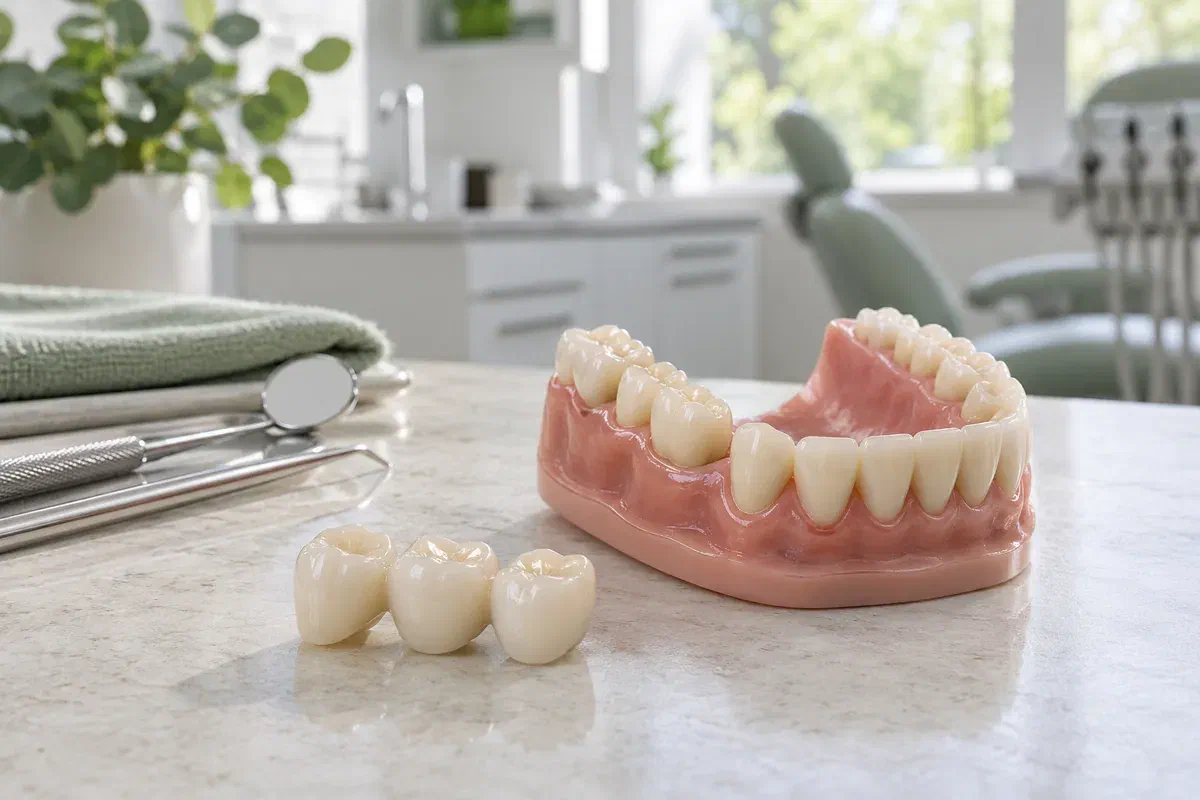
A bridge can look fine while its foundation is changing, and an appearance worry can exist with no failure at all. Careful assessment means the advice reflects your actual situation rather than a guess.
Several episodes of the bridge lifting or needing cement often point beneath it. Share the dates if you can. The dentist can weigh whether design, fit, an anchor or bite forces make another repair worthwhile.
A support that has turned tender or sensitive may need treatment regardless of the bridge. It is also one of the places where removal may reveal more than X-rays could, so it shapes the contingency plan.
New food traps can follow gum changes or a gap at an edge. Describe the spot. It helps the dentist read the current design and keep cleaning access in mind for whatever comes next.
Phone the clinic if the bridge moves, aches or has broken to a sharp edge. Until you have spoken with someone, leave it where it is and avoid home remedies or glues.
A replacement allows the dentist to reconsider contour, contacts and the way the bridge meets your bite. Planning for possible findings means that, if an anchor needs extra care, the sequence can shift without leaving you unsure what happens next.
Even a well-made new bridge does not fix decay or gum disease found under the old one. Anything discovered is diagnosed and treated in its own right, sometimes before the final bridge can be made. Ask how each support was evaluated and what its outlook suggests.
What did the old bridge do well, and what frustrated you? That insight helps with shape, appearance and cleaning space, without automatically repeating every feature.
Ask the dentist to explain plan A and the most likely plan B. Knowing why a similar bridge is expected to work, or why another option might be needed, removes much of the uncertainty.
Expect practical guidance on daily cleaning and a review schedule that works with your routine. Talk about which tools you can use comfortably at home.
The order depends on your bridge type and the anchors. Ask in advance about the temporary, about likely and possible findings after removal and about how the timeline would shift.
Your symptoms and previous repairs are discussed, the bite and gum health are checked and appropriate X-rays are taken. The dentist also tells you plainly which questions will stay open until the bridge is off.
Maintenance, repair or recementing are weighed against replacement. If a new bridge is advised, review its design, the alternatives, likely visits, fees and the main uncertainty, along with what would happen if that uncertainty turned out badly.
On the day, comfort measures suited to you are used while the bridge is taken off. The anchors are examined directly, any treatment is carried out or scheduled, and the team explains the temporary you will wear.
When the permanent bridge arrives from the laboratory, its seating, bite, contacts and appearance are reviewed before it is cemented. Ask to practise cleaning around it and confirm when you should return.
Your routine should reach beneath the false teeth and along the gum line at each anchor. Ask for a method suited to this design; the habits from your old bridge may need tweaking.
The team can recommend aids and guide you through using them in the chair. Mention any difficulty with grip or reach so the plan is something you can keep doing at home.
A high spot on the bite, soreness that lingers or a new food trap should be reported. Short-lived unfamiliarity is common; lasting discomfort deserves an assessment.
Monitoring the bridge and its supports is ongoing. Where it suits, reviews can sit alongside hygiene visits to save trips. Call sooner if something new appears.
Patient information: Cleveland Clinic — dental bridges
Written with Campbellville households in mind, these answers address uncertainty during replacement, the temporary stage and how the dentist confirms what the final bridge will need.
Bring your bridge, your questions and your worries about the unknown to our Bronte Street practice. The dentist will examine what can be seen, explain what cannot and lay out replacement options and contingencies with your comfort and routine in mind.
If the bridge is loose or sore, call before booking online so we can suggest how soon you should be seen.
