

Illustrative consultation about replacing an existing dental bridge
Restorative Dentistry

Dental Bridge Replacement in Etobicoke

Coming from Etobicoke for a new bridge makes sense only with a clear plan. We start by examining the old bridge and its anchors, then lay out how many visits are likely, what each one involves and what to do if trouble starts between them.

Worth the trip, with a plan

Fewer appointments, each one doing more

From the west end of Toronto, every dental visit takes a real slice of the day. So before anyone suggests replacing a bridge, it helps to know exactly what the problem is and how much treatment is really involved. A bridge relies on supporting teeth or implants at each end, and the condition of those supports drives most of the planning.

Mobility, a cracked porcelain edge, a sore anchor tooth or constant food trapping are different problems with different solutions. Some can be monitored for a while; others need attention soon. A sound bridge that is merely older can often stay, while a newer one with a failing support may not.

At your first appointment, describe what has changed and what has worked well. We aim to gather the records needed in that visit, explain whether repair, replacement or another approach suits you, and set out the likely number of trips. If the supports can only be fully judged after removal, that is explained up front.

Start with a bridge assessment
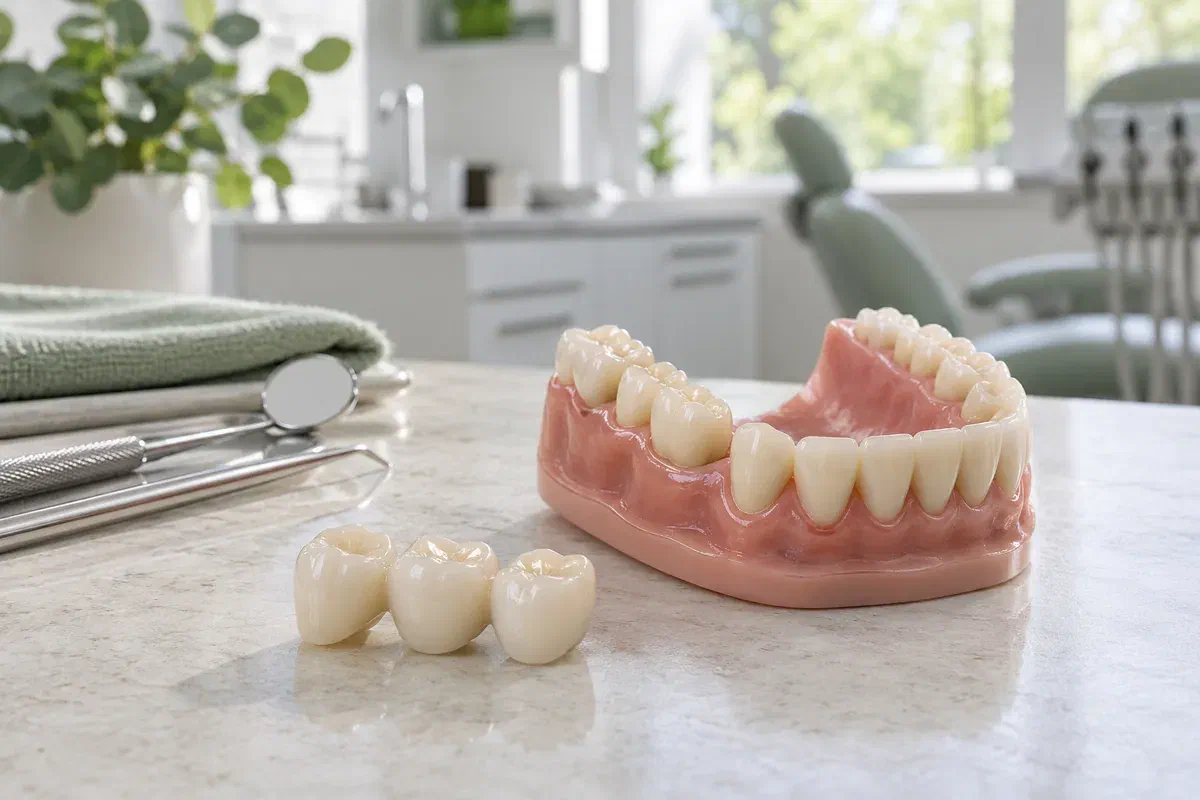
Ceramic three-unit bridge beside a dental teaching model
Deciding how soon to come in

Signs that shift a visit up the list

Some bridge problems can wait for a planned appointment; others are better seen sooner, possibly closer to home. An examination ties the recommendation to what is actually happening.

A bridge that rocks or has needed regluing

Movement or a history of repeated repairs suggests something beneath may be changing. Note when each episode happened. The dentist can assess whether fit, design, the anchors or bite forces make another repair unwise.

Throbbing, swelling or a bad taste near a support

These can signal a problem in an anchoring tooth that may need prompt care. If symptoms are severe, an urgent visit nearer to home may be the sensible first step, with records shared afterwards.

A design you can no longer clean

Food packing or a threader that won’t pass is usually something to plan for rather than rush. Mention it so the current shape can be judged and cleaning access built into any future design.

If the bridge is causing significant pain, swelling or has broken sharply, call us first. When the trip is not practical, seek urgent dental care closer to home, and avoid removing or gluing it yourself.

Making each visit count

One plan covering fit, bite and daily upkeep

Replacing a bridge gives the opportunity to reconsider its shape, how it sits against neighbouring teeth and how it meets your bite. That is worthwhile when the supports and gums are suitable, and it is part of what the first assessment is meant to establish.

A new restoration cannot correct decay or gum disease that has developed under the old one. Those need separate diagnosis and care, which may affect the number of visits. Ask how the supports have been checked and what their outlook means.

Your feedback built in

Tell us what you liked and disliked about the old bridge. It can inform contour, appearance and cleaning space in the new one, without copying features that caused problems.

The foundation explained

Once the anchors are reviewed, the dentist can explain why a similar bridge is still reasonable or why an alternative is raised. Ask which findings shaped the advice most.

Care you can manage at home

Because you may not drop in easily, a solid home routine matters. Discuss cleaning tools that suit you and a review schedule that keeps trips practical.

An organised sequence

What happens at each visit, and why

The number and order of appointments depend on the bridge type and the supports. Ask about the temporary, possible findings after removal and how the plan would adapt, so you can book time off sensibly.

  1. A thorough first visit

    Symptoms, previous repairs, the bite and the gums are reviewed, and suitable images are taken where possible in the same appointment. The dentist also explains what cannot be confirmed with the bridge in place.

  2. A clear comparison

    Keeping, repairing or recementing are compared with replacement. If a new bridge is proposed, go over the design, alternatives, stages, fees and uncertainties, and ask which steps can be combined.

  3. Removal and preparation

    With your consent, the bridge is removed and treatment completed using appropriate comfort measures. The supports are rechecked, records are taken and the temporary is explained, including what to do if it fails between visits.

  4. Final fit and handover

    Fit, contacts, bite and appearance are confirmed before cementation. Ask for a cleaning demonstration you can repeat at home, and agree on your review timing and the changes that should prompt a call.

Looking after it from a distance

Your routine at home does most of the work

Cleaning must reach under the replacement teeth and around each anchor. Ask for steps written for this particular bridge, since your old method may not suit the new design.

Leave confident with the technique

The team can recommend aids and have you practise in the chair. If grip or access makes a method hard, say so now rather than discovering it at home.

Know what to report

A high bite, lingering soreness or a new food trap should be mentioned. Some unfamiliarity settles, but persistent discomfort deserves assessment, and we can advise by phone whether a visit is needed.

Plan reviews ahead

The bridge and its supports need ongoing monitoring. Book reviews in advance, raise cleaning or gum concerns at each one and contact us sooner if something new develops.

Patient information: Cleveland Clinic — dental bridges

Comparing paths

Different routes involve different numbers of visits

For someone travelling in from Etobicoke, the number of visits is a fair part of the comparison. Look at whole plans side by side: preparation, temporaries, upkeep and the treatment each might need years from now.

If the supports remain suitable

A tooth-supported replacement

A new bridge can often use the same anchors after any necessary care. Ask how much work they need, how many appointments that adds and how their condition affects the outlook.

If a new foundation is worth a look

Implant treatment

In a suitable mouth, implants may be an alternative, but they need their own assessment and involve surgery and healing over months. Existing implant bridges need compatible components and an implant review.

If fixed work no longer fits the situation

Removable and other approaches

When the gap or support makes a fixed bridge less suitable, a removable partial or a different plan may be discussed. Weigh comfort, handling, appearance and upkeep, along with the visits each requires.

Travel and treatment questions

Practical answers for a longer trip

These cover visit planning, the in-between stage and what must be confirmed before the final restoration is made.

(905) 876-4488
How can I keep the number of trips down when travelling from Etobicoke?
Mention travel when booking. Where clinically appropriate, we try to combine assessment and records, and we will outline which stages need separate visits. Some steps, such as healing or lab time, cannot be shortened.
What should I do if the bridge breaks on a weekend?
Our weekend hours are by appointment, so call and leave a message. If you have severe pain, swelling or a sharp edge causing injury, seek urgent dental care nearer to you.
Can X-rays from my previous dentist reduce what needs to be repeated?
Recent, good-quality images can be helpful. With your permission we can request them. The dentist will decide whether new images are still needed for the assessment.
Is it possible that the plan changes after the old bridge comes off?
Yes. Some issues only become visible after removal. Ask beforehand what is uncertain and what the temporary arrangement would be if extra treatment were required.
How do I know whether a symptom can wait until my next appointment?
Call us and describe it. Mild unfamiliarity often settles, while increasing pain, swelling or a loose bridge needs earlier attention. We can advise whether to come in or seek care locally.
Will my temporary hold up until the next visit?
Temporaries are designed for the short term and need gentle care. Avoid hard or sticky foods on that side and follow the instructions given. If it loosens, call us for advice.
Planning from Etobicoke

A clear map before the first step

Your first appointment at our Bronte Street practice is meant to answer as much as possible in one sitting. Expect an examination of the old bridge and its anchors, a frank view of what can stay, and replacement options with a visit plan that respects your comfort, routine and travel.

A loose or painful bridge calls for a phone call first. We can help you decide whether to come in or seek urgent care closer to home.

Visit Milton Dental Clinic
Unit 1, 342 Bronte St. S, Milton, ON L9T 5B7
Get directions Clinic hours
Monday–Thursday
11am–7pm
Friday–Sunday
By appointment only

Areas we serve

  • Milton
  • Oakville
  • Mississauga
  • Georgetown
  • Halton Hills
  • Acton
  • Campbellville
  • Brampton
  • Burlington
  • Puslinch
  • Rockwood
  • Erin
  • Caledon
  • Etobicoke
  • Old Milton
  • Bronte Meadows
  • Timberlea
  • Dorset Park
  • Dempsey
  • Clarke
  • Beaty
  • Coates
  • Harrison
  • Scott
  • Willmott
  • Ford
  • Bowes
  • Cobden
  • Walker
  • Mountain View
  • Milton Heights
  • Hawthorne Village
  • Valley View
  • Fallingbrook
  • Nassagaweya
  • Trafalgar
  • Esquesing
  • Nelson
  • Brookville
  • Moffat
  • Glen Williams
  • Norval
  • Limehouse
  • Stewarttown
  • Ashgrove
  • Hornby
  • Silver Creek
  • Speyside
  • Scotch Block
  • North Oakville
  • River Oaks
  • Glen Abbey
  • West Oak Trails
  • Palermo
  • Bronte Creek
  • College Park
  • Joshua Creek
  • Uptown Core
  • Preserve
  • Iroquois Ridge
  • Lisgar
  • Meadowvale
  • Meadowvale Village
  • Churchill Meadows
  • Erin Mills
  • Central Erin Mills
  • Streetsville
  • East Credit
  • Creditview
  • Heartland
  • Sheridan
  • Mount Pleasant
  • Credit Valley
  • Huttonville
  • Churchville
  • Springbrook
  • Northwest Brampton
  • Bram West
  • Fletcher's Meadow
  • Fletcher's Creek South
  • Alton Village
  • Orchard
  • Millcroft
  • Headon Forest
  • Tansley
  • Brant Hills
  • Tyandaga
  • Kilbride
  • Lowville
  • Aberfoyle
  • Morriston
  • Arkell
  • Hillsburgh
  • Freelton
  • Carlisle
  • Waterdown
  • Flamborough
  • Mountsberg

How can we help?

Milton Dental Clinic

Have a question about your smile? Choose the option that works best for you.

For urgent dental concerns, please call.
Messages are reviewed during clinic hours.