A bridge that keeps failing
Several repairs on one bridge can hint that its design or the forces on it were not ideal. Describe that history. It may steer the discussion toward a different structure rather than a straight copy.


Your bridge needs replacing, and now someone has mentioned implants or a partial denture. From Georgetown, you can sit down with our dentist, have the supports examined and compare each choice on its real merits.
Once replacement comes up, the natural next thought is whether to repeat what you had. Sometimes that is exactly right. A conventional bridge fastens replacement teeth to crowned neighbours, and if those neighbours are still strong, a similar design may suit you well. If they are not, the conversation widens.
The choice is rarely about which option is best in general. It is about your gap, the health of the teeth around it, your bone and gums, your medical history and what you are comfortable taking on. Age of the existing bridge is a weak guide on its own; findings are a much better one.
Tell us what you have heard, what worries you and what you valued about the old bridge. Our dentist can examine the supports, explain which approaches are realistic and set out the trade-offs plainly. Where some answers depend on what is found after removal, that will be said before you decide.
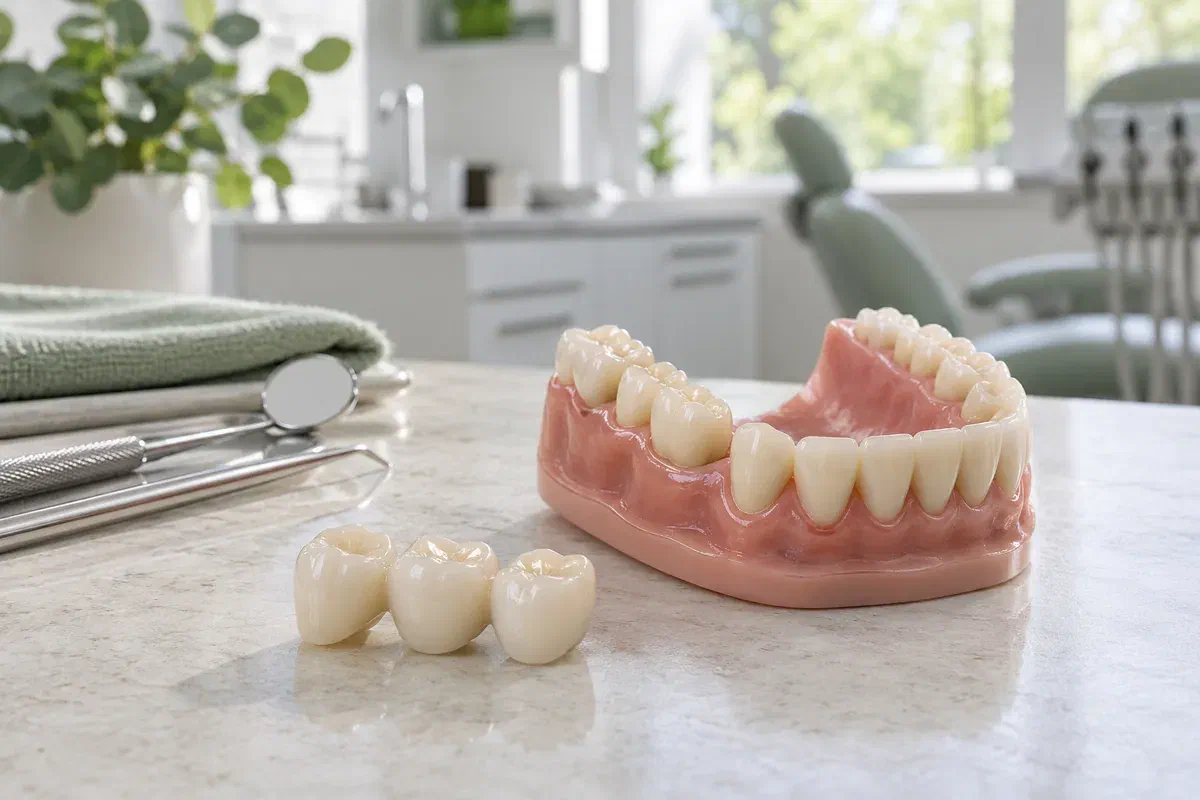
A problem with the supports may rule some choices in or out, while a purely cosmetic concern may leave more open. Examination keeps the advice tied to your mouth rather than to a general preference.
Several repairs on one bridge can hint that its design or the forces on it were not ideal. Describe that history. It may steer the discussion toward a different structure rather than a straight copy.
Decay, a crack or gum problems at an anchor may need treatment first. If that tooth has a doubtful outlook, a bridge resting on it again may be less suitable, and other routes deserve a look.
If you have struggled for years to clean under the bridge, say so. Ease of daily care is one of the honest differences between options, and it belongs in the comparison.
Before you have weighed any options, a bridge that is moving, painful or sharply broken needs a call to the clinic. Please leave it in place rather than attempting a repair.
Whatever comes next can be planned around current findings: the shape you need, how your teeth meet and how you will keep it clean. Each option depends on supports or bone and gum that are suitable for it, which is what the assessment sets out to show.
No option erases existing disease. Decay or gum problems found under the old bridge are diagnosed and treated separately, whichever replacement you choose. Ask how the supports were assessed and how that shapes each choice’s outlook.
Some people value a fixed result above all; others want the least invasive path or the simplest cleaning. Saying what matters helps the dentist frame the options honestly.
Knowing the state of each anchor explains why a similar bridge remains reasonable or why an alternative is being raised. Ask which findings weigh most.
Every option needs care. Ask how daily cleaning and reviews differ between them, and which routine you would realistically keep up.
The steps depend on which option you choose and how the supports look. Ask about temporary arrangements, what removal might show and how a decision could change once more is known.
Your symptoms and repair history come first, followed by a look at how your teeth meet and how healthy the gums are, with whatever X-rays are appropriate. Some options, such as implants, may need additional records. The dentist is also upfront about which details stay hidden until the bridge is out.
Keeping or repairing the bridge, a new bridge, implants and removable choices are compared where relevant. For each one, ask how many stages it involves, what it is likely to cost, what could go differently than planned and what it would ask of you at home. Then take time to think.
Once you have decided, the old bridge comes off and any groundwork, such as fillings, gum care or implant surgery, is planned with comfort in mind. With the bridge gone, the dentist looks again at what is underneath, takes the impressions or scans the laboratory needs and explains what you will wear in the meantime.
Whatever the final restoration, its fit, bite and appearance are checked before completion. Ask for a cleaning demonstration and confirm your review timing and the changes that should prompt a call.
Fixed bridges, implants and removable options are cleaned differently. Ask for instructions that match what you chose rather than carrying over habits from the old bridge.
Aids and techniques will be suggested for your new restoration, with a demonstration of where they go. Mention any limits on dexterity or reach so the plan is one you can follow.
A bite that feels off, persistent soreness or a new place where food catches should be checked. Some adjustment is expected at first, but continuing discomfort is worth an appointment.
Whatever you choose, the restoration and the tissues supporting it need monitoring. Bring concerns about cleaning, gums or movement to each review, and call sooner if something changes.
Patient information: Cleveland Clinic — dental bridges
These questions come up when people are deciding what should replace an old bridge, and what the dentist needs to know first.
Come to our Bronte Street practice with your questions about replacing an older bridge. The dentist will look closely at the supports, explain which options are realistic and walk you through the trade-offs so you can choose with your comfort and daily care in mind.
Phone ahead if your bridge is loose or causing pain, rather than booking a routine online appointment straight away.
