Recurring loosening or cracks
A bridge that has been reglued or patched several times may be under strain. Tell us about each episode so the dentist can consider whether fit, design, the anchors or bite forces are involved.


When the tooth holding one end of your bridge starts to ache, the bridge itself may not be the main concern. For people across Halton Hills, we examine that anchor first and explain how its health shapes any repair or replacement.
Biting into toast and feeling a twinge under one crown. A dull throb after cold water. Gum that looks puffy at one side. These are often signs from a supporting tooth, the natural tooth or implant that holds a bridge in place, rather than from the false tooth in the middle.
Possible causes range from decay at a crown margin to gum inflammation, a crack or a nerve problem, and each needs a different response. Sometimes the anchor can be treated and the bridge kept; sometimes the plan has to change. How long the bridge has been there tells you surprisingly little.
Describe where it hurts, when it started and what eases or worsens it. Share what you like about the bridge as well. Our dentist can examine the anchor, take suitable images and discuss treatment, repair or replacement. If the tooth can only be fully assessed once the bridge is off, you will hear that first.
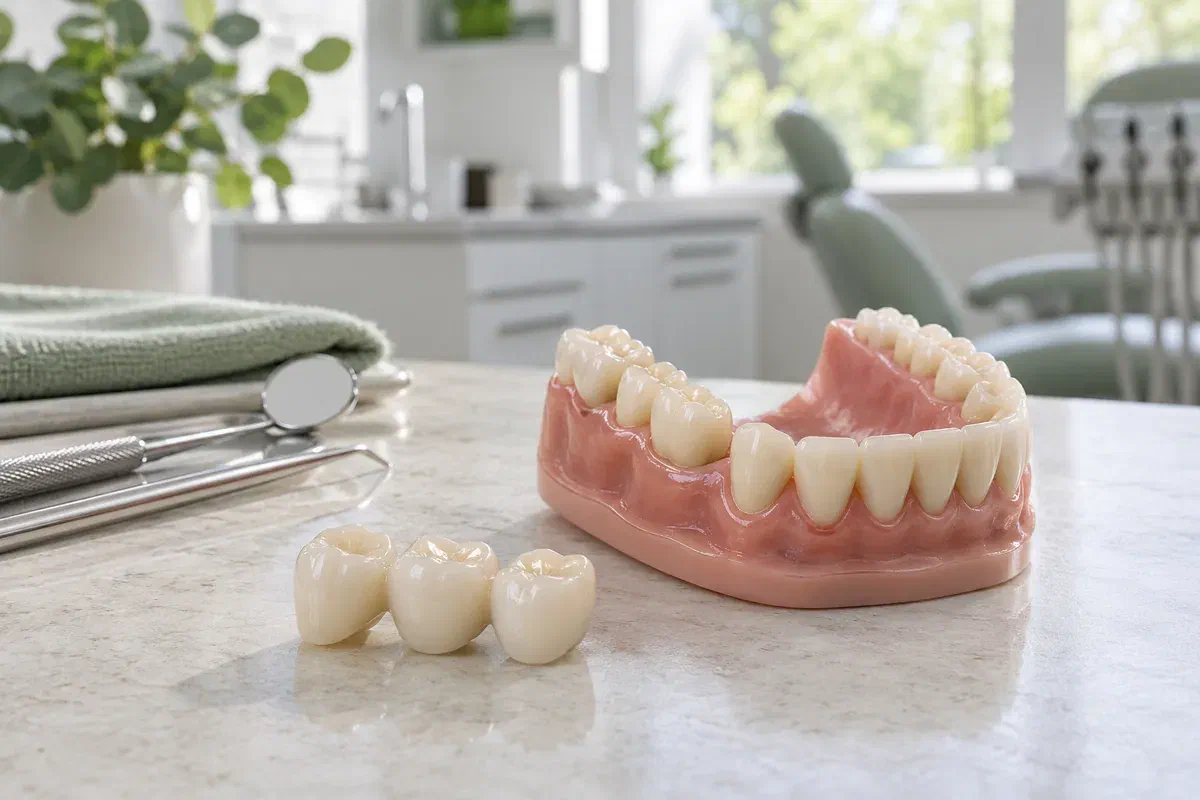
Symptoms near a bridge can come from several places, and an appearance concern can exist without any failure at all. Examination helps make sure the response fits what is found.
A bridge that has been reglued or patched several times may be under strain. Tell us about each episode so the dentist can consider whether fit, design, the anchors or bite forces are involved.
This is the most common reason a bridge is reviewed sooner than planned. The anchoring tooth may need its own care, such as a filling, gum treatment or root canal therapy, and what is found affects the next step.
Areas that are hard to clean can lead to gum irritation around an anchor. Point them out so the dentist can judge the shape and think about cleaning access in any future design.
Call the clinic about a bridge that is moving, painful or broken with a sharp edge. Swelling or a fever needs prompt attention. Please don’t remove or glue the bridge yourself.
If replacement is chosen, the new bridge can be designed with an updated shape, better contacts and a bite that spreads load sensibly. None of that helps, though, until the anchors and the gum around them are healthy again.
This matters especially when an anchor hurts: a new bridge will not cure decay, infection or gum disease underneath it. Those conditions need their own diagnosis and treatment, which may come first. Ask what the anchor’s outlook means for the replacement.
Your experience with the bridge, including where it felt tender or was hard to clean, helps guide the next design. Some of the old features may be kept; others are better changed.
Once the anchor is assessed, the dentist can explain whether it can reliably support a new bridge or whether another approach is wiser. Ask which findings are most important.
Expect specific guidance on cleaning around each anchor. Discuss aids you find comfortable and how often the bridge and supports should be checked.
The sequence depends on what the anchor needs and on the type of bridge. Ask about the temporary, possible findings after removal and how the plan would change if a support needs more care.
The dentist reviews your symptoms, tests the anchor teeth, checks the bite and gums and takes suitable X-rays. The limits of what can be seen with the bridge cemented are explained.
Can the anchor be treated and kept? Could the bridge be repaired or recemented? If replacement is recommended, ask what each plan would cost, how many visits it needs and what is still uncertain.
If you go ahead, the bridge is removed and the anchor treated with appropriate comfort measures. Seeing the tooth uncovered often answers lingering questions; after that, impressions or scans are made and, where suitable, a temporary is fitted and explained.
The new bridge is checked for seating, contacts, bite and appearance before it is cemented. Ask to practise cleaning beneath it and confirm when to return and which symptoms should prompt a call.
Cleaning must reach the gum line of every support and the area under the false teeth. Ask for instructions that fit this bridge rather than reusing your old method without checking.
The team can suggest aids such as threaders or interdental brushes and show you where they go. Mention any difficulty with grip or reach so the routine is realistic.
Report soreness that persists, a bite that feels uneven or new food trapping. Some unfamiliarity is common, but ongoing discomfort, particularly at a treated anchor, should be assessed.
Regular checks monitor both the bridge and the supporting teeth or implants. Raise gum changes, cleaning trouble or any movement, and call sooner if a new symptom appears.
Patient information: Cleveland Clinic — dental bridges
A sore support tooth raises its own questions. These answers focus on painful anchors, what happens while one is being treated and what must be confirmed before a final bridge is planned.
A painful or changing bridge is worth a proper look. At our Bronte Street practice, the dentist examines the anchors before the restoration itself, tells you what can reasonably be kept and talks through treatment and replacement choices that respect your comfort and daily care.
Pain or swelling near a bridge is best discussed by phone before booking a routine online appointment.
