Loosening or a history of fixes
Several repairs on one bridge may hint at an issue with fit, design, an anchor or bite forces. Describe what happened each time so the dentist can judge whether another repair is reasonable.


You have grown used to the old bridge, odd edges and all. For anyone travelling from Rockwood, we explain how a replacement is likely to feel in the first weeks, how the bite is checked and when a follow-up adjustment makes sense.
After years with one bridge, it can feel like part of you. That familiarity is one reason people hesitate when replacement is suggested: will the new one sit differently, change how words sound, make chewing awkward? Those are reasonable questions, and they deserve answers before any work begins.
Start with why replacement is being considered at all. A bridge holds artificial teeth on anchors at either side, natural teeth or implants, and trouble can come from wear, a lost seal, a weakened anchor or gum changes. If the bridge is comfortable and its supports are healthy, its age alone is not a reason to change it.
Tell us what you would miss about the current bridge and what you would happily lose. The dentist can then examine it and its supports and explain whether keeping, repairing or replacing it fits best. Where the anchors can only be fully judged with the bridge removed, you will hear about that, and what it could mean, ahead of time.
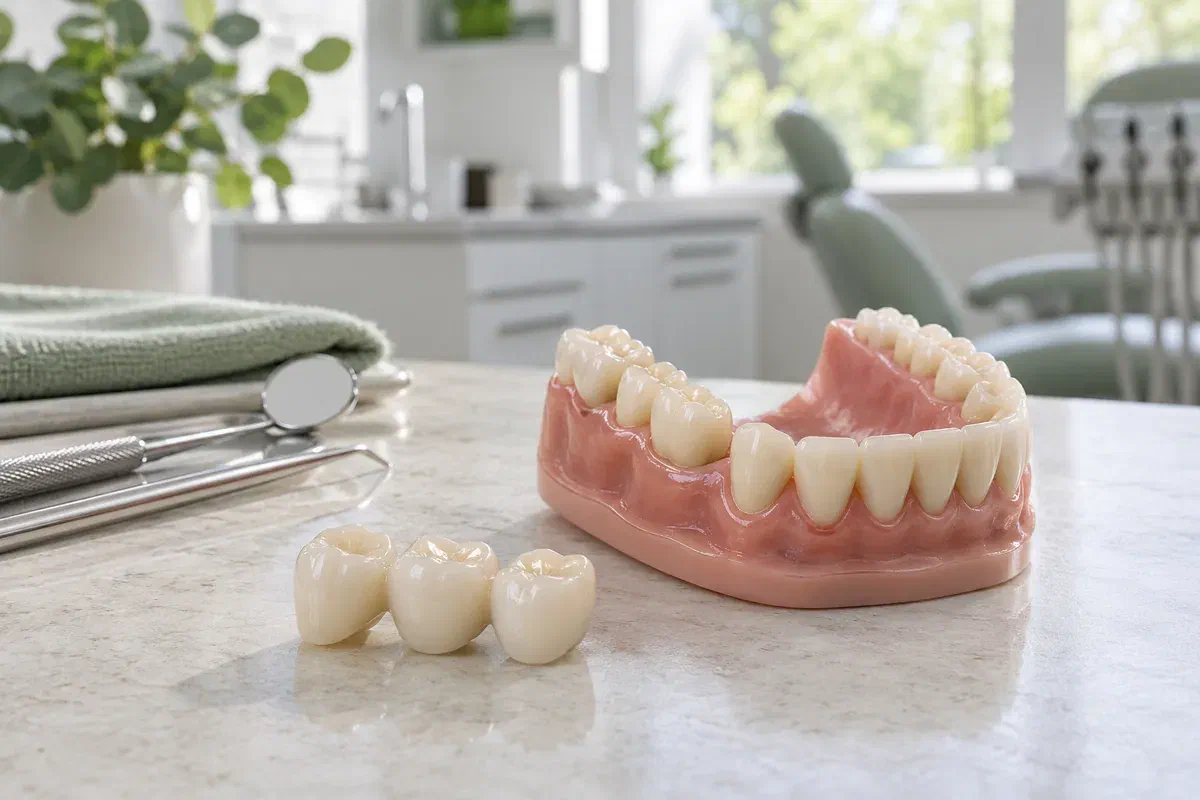
Subtle changes in bite or feel can be early clues, while some visual concerns turn out to be harmless. An examination makes sure the response is in proportion to the findings.
Several repairs on one bridge may hint at an issue with fit, design, an anchor or bite forces. Describe what happened each time so the dentist can judge whether another repair is reasonable.
A sense that the bridge hits first, or tenderness at an anchor when chewing, can come from a support tooth or a change in how your teeth meet. That tooth may need its own care, which then shapes the plan.
Gum changes over time can open spaces under or beside a bridge. Point them out. They help the dentist understand the current design and consider cleaning access in a future one.
If the bridge shifts, causes pain or has cracked into a sharp edge, phone the clinic. Leave it alone in the meantime rather than trying to file, lift or reattach it.
With a replacement, the dentist can refine the shape against your tongue and cheek, the tightness of contacts with neighbouring teeth and how the bridge meets your opposing teeth. These details affect comfort, and they can be planned once the anchors and gums are confirmed as suitable.
However comfortable the new bridge feels, it does not by itself correct decay or gum disease that developed under the old one. Those need diagnosis and treatment of their own. Ask how the anchors were assessed and how that affects the outlook.
Describe which edges, bulk or contours bother you now. The dentist can take that into account, while explaining which features have to stay for strength or cleaning.
After the supports are reviewed, you will understand why a similar bridge still suits your mouth or why something else is being proposed. Ask which findings were most influential.
Agree on what is normal in the first days, which cleaning tools you will use and when a check of the bite and gums should happen.
The sequence depends on the bridge type and the state of its anchors. Ask about wearing a temporary, about what removal might reveal and about how adjustments are handled after fitting.
The dentist listens to your concerns, reviews previous repairs, assesses how your teeth meet and checks the gums, with X-rays where appropriate. A note of where your teeth touch now helps when shaping the replacement, and anything that cannot be judged until removal is pointed out.
Maintaining, repairing or recementing are compared with a new bridge. If replacement is advised, ask why, and look at the proposed shape, the alternatives, how many visits it takes, fees and any open questions.
With your consent, the bridge comes off using comfort measures suited to you. The anchors are re-examined, needed treatment is completed, impressions or scans are taken and a temporary is fitted and explained.
The new bridge is tried in so that fit, contacts, bite and appearance can be refined before it is cemented. Ask to practise cleaning under it, and agree on a follow-up if the bite needs a small adjustment.
Most people adapt to a new bridge, but a short period of noticing it is common. Home care also needs to reach underneath and around each anchor, so ask for steps specific to this design.
The team can show you how to pass threaders or small brushes under the bridge. If your hands or reach make that hard, say so, and an easier method can be suggested.
Feeling the bridge with your tongue for a few days is normal. A bite that stays high, soreness that keeps returning or food packing in a new spot is not something to put up with, so call for a check.
Ongoing checks look after both the bridge and its anchors. Mention cleaning trouble, gum changes or any movement, and contact us between visits if something new develops.
Patient information: Cleveland Clinic — dental bridges
Settling in is the part people from Rockwood ask about most. Below, find answers on comfort after fitting, life with a temporary and the checks made before the final bridge is cemented.
Visit our Bronte Street practice to discuss an older bridge and how a replacement would feel. The dentist will examine it and its anchors, tell you what can be kept and explain replacement options, with your comfort and daily care guiding the conversation.
Please phone first if the bridge is loose or sore, rather than going straight to online booking.
