A sharp corner you keep noticing
An irritating edge can become a real nuisance over a long trip. The dentist checks whether it can be safely polished, or whether smoothing would weaken the crown, change its profile or overlook a crack below.


Spotted a chip on your crown a couple of weeks before a trip? From Bolton or elsewhere in Caledon, an early check can show whether the damage is minor, which material you are dealing with and how the tooth beneath is doing before you leave.
Packing lists rarely include a dental check, but a chipped crown can change that. Crowns can flake, wear or crack, and finding out whether the damage is small and stable is far easier at home than in an unfamiliar place. Sometimes a limited repair is all that is needed.
The real question is what sits beyond the visible chip. If the crown is still firm and sealed, the defect may be minor. If it is cracked through, slightly loose or hiding decay at the edge, it could worsen while you are away. A surface repair should never mask those issues, which is why the whole crown and tooth are examined.
Coming from Caledon, mention your departure date when you call. Let us know when you noticed the chip, whether it affects eating or comfort and how much its appearance bothers you. We will explain whether polishing, a localized repair, an interim measure or a new crown makes sense, and what can realistically be done before you go.
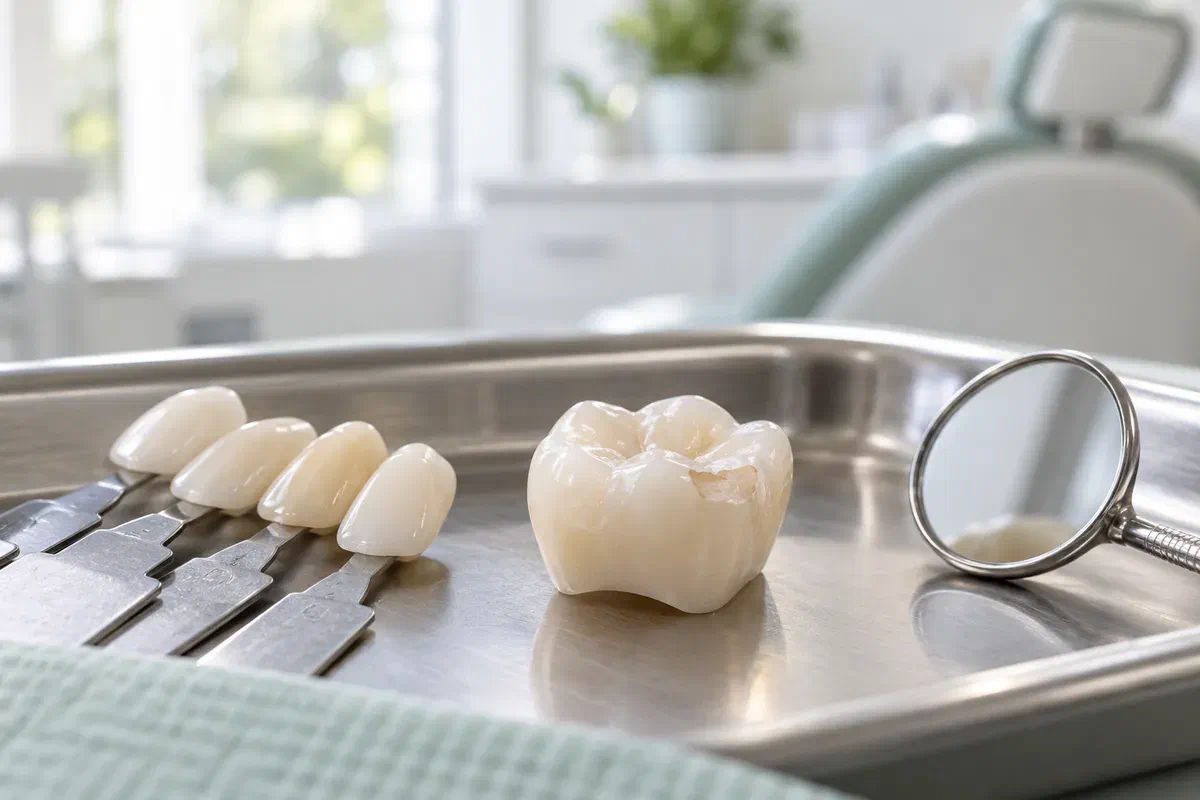
Describe the damage and any symptoms as precisely as you can. A small chip may still matter if it scratches your tongue, unsettles your bite or is the visible edge of a crack that could spread with chewing.
An irritating edge can become a real nuisance over a long trip. The dentist checks whether it can be safely polished, or whether smoothing would weaken the crown, change its profile or overlook a crack below.
If a front crown has chipped, you may want it improved before the camera comes out. Ask how much a repair could help, how well it might blend with the crown and whether the timing is realistic.
Travel often means new foods and less control over what you bite into. The dentist examines how your bite meets the damaged area, since heavy force may make a quick repair less dependable.
If the crown moves, aches, the gum swells or you recently knocked the tooth, call promptly. Crown damage and a problem in the supporting tooth can occur together and are better addressed before you leave.
When the defect is limited and the crown remains secure, repairing or smoothing it may let you travel comfortably with a crown that still works well. This is appropriate when the tooth underneath is healthy enough that it would not need treatment a repair would only postpone.
Bonded material does not always age at the same pace as the crown it sits on, and its lifespan varies from one situation to another. Sometimes the sensible choice is an interim repair now and a fuller plan once you are back. Ask which approach the dentist recommends and why.
A minor chip does not have to mean starting a new crown days before you leave. Assessment shows when a limited fix is reasonable and when the damage is too significant to treat that way.
A sharp edge and a visible chip are different worries. Ask how the proposed repair would deal with yours and whether any small difference in finish or shade may remain afterwards.
If a longer-term fix is needed, the dentist can explain what to expect and when to book. That way the short-term repair is a deliberate step rather than an open question.
The method depends on the crown, the damage and how much time you have. The appointment opens with an examination and an honest outline of options, including whether a new crown should wait until after your trip.
Expect the dentist to test whether the crown is firm, look over its surface and the gum beside it, and ask how the tooth has felt. Records about the crown help, but what the examination shows today guides the advice.
Polishing, a bonded repair, an interim measure and replacement are discussed. Ask how each would hold up while you are away, how to care for it and what to do if something changes during the trip.
If a repair fits, the chipped surface is readied in a manner that suits the crown, then rebuilt and polished. When a rough edge simply needs refining, no material is added.
Your teeth are brought together on the repaired crown so any high spot can be adjusted. Ask about precautions while you travel and book any follow-up for after your return.
Follow the instructions for the treatment you received. A polished edge needs little extra care, while bonded material or an interim repair may have specific precautions, so confirm them before you set off.
Hard nuts, ice, crusty breads and opening packages with your teeth can strain a repaired area. Long flights and unfamiliar beds can bring out clenching, so tell the dentist if that is a habit of yours.
Bring your toothbrush, floss or interdental brushes and keep up your routine. The crown margin and the gum around it still need attention after a repair. Ask before you leave if cleaning feels awkward.
If the repair chips or the crown loosens while you are away, avoid chewing on it and keep any piece. Seek local dental care for pain or swelling, then contact us when you return.
Patient information: Cleveland Clinic — dental crowns
These answers relate the type of damage to how much can be done before a trip. They may help you decide when to call and what to ask.
A few days before departure is a good moment to visit our Bronte Street clinic. We check the chipped crown and the tooth holding it, handle what can sensibly be done now, and pencil in anything bigger for after you unpack.
A piece that broke off can travel to the appointment in a small lidded container. Ring us without delay about strong pain, swelling or looseness, since that may move your visit up.
