

Illustrative patient consultation about damage to a dental crown
Restorative Dentistry

Dental Crown Repair in Campbellville

Cold drinks that suddenly sting a crowned tooth, or a chip you can feel near the gum, are worth a call. Out in Campbellville, phoning first helps us decide timing, then the visit sorts out the damage, the crown and the tooth beneath.

Something feels different

A crowned tooth that suddenly stings

Plenty of people assume a crowned tooth can no longer feel anything, so a twinge from iced tea comes as a surprise. Crowns can chip or wear, and when a defect forms near the edge, the tooth may react. Some of these defects are small enough that a localized repair is reasonable, as long as the rest of the crown is sound.

Sensitivity is a signal to investigate, though, not a diagnosis. It can come from a chipped margin, gum that has pulled back, a gap under the crown or decay forming beneath it. A surface repair is only suitable after those possibilities are checked, since sealing over a problem could let it continue unseen.

From Campbellville, a short phone call before you head into town helps us judge how soon to see you. Tell us when the sensitivity began, what triggers it and whether you can see or feel a chip. At the appointment we examine the crown and tooth, then discuss polishing, a localized repair, replacement or other treatment and what each can do.

Call about a sensitive crown
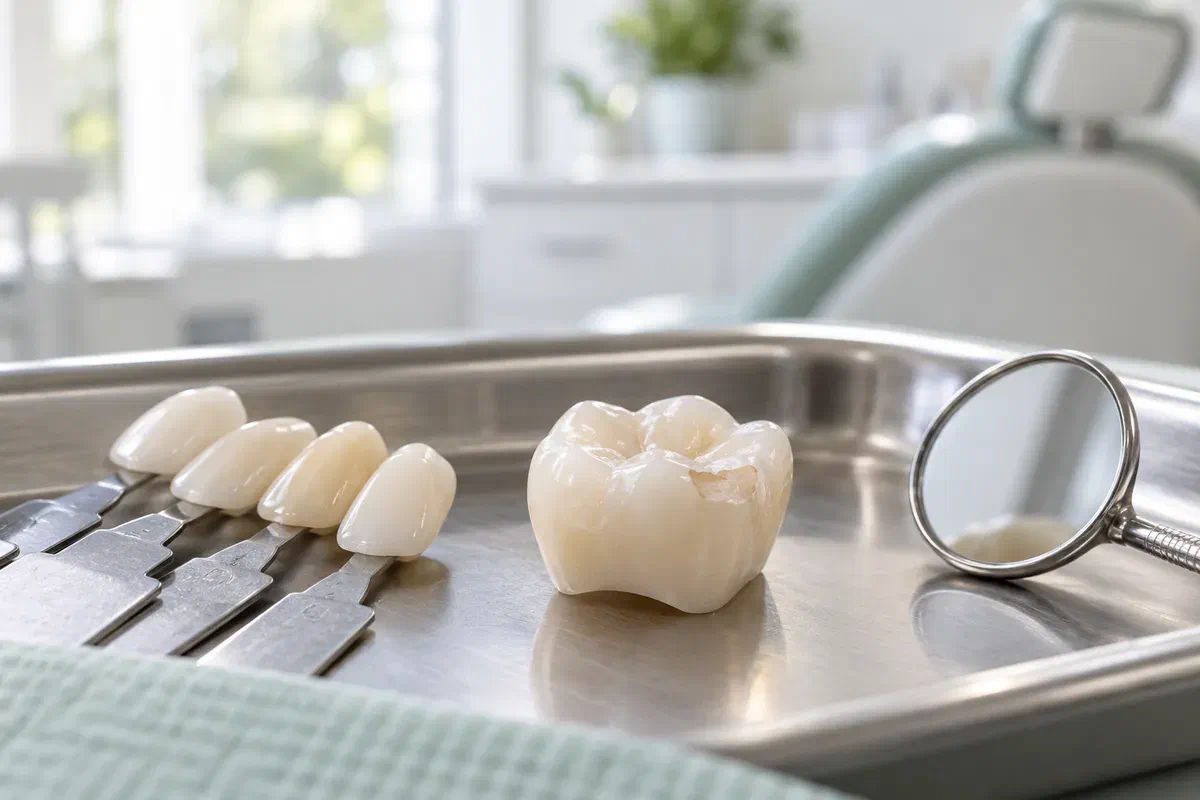
Ceramic crown with a small chipped area beside a shade guide
What you may be feeling

Twinges, ridges and changes in your bite

Describe what sets off the feeling and how long it lasts. A small change at the crown’s edge can matter if it causes sensitivity, irritates the gum, alters how you bite or turns out to be part of a larger problem.

A rough step near the gumline

You might feel a ledge with your fingernail or tongue where crown meets tooth. The dentist decides whether it is a chip that can be smoothed, or whether polishing would thin the crown, alter its shape or leave a gap or decay untreated.

A visible chip on a front crown

Damage on a crown you show when smiling may be your main concern. Explain what you would like improved, and ask how closely a repair is likely to match the existing material, and how it may look a few years on.

Discomfort when you bite down

Pain on biting can point to a crack, a high spot or a problem in the tooth. The dentist examines where your opposing teeth meet the crown before deciding whether a localized repair is appropriate.

Mention lingering pain, swelling, a crown that moves or any recent knock. A damaged crown surface and a problem in the supporting tooth can occur together.

When repair is an option

Seal the edge, keep the crown.

If the examination shows a small, contained defect and the crown is otherwise secure, repairing it may restore comfort while keeping a crown that still works well. It only makes sense, however, once the tooth beneath has been checked and found free of problems that a repair would simply cover.

A repaired area can look or wear a little differently from the original crown, and repairs close to the gum can be more demanding. Durability and colour match vary, and some repairs are meant as an interim measure. Ask whether yours is planned as lasting care or a step toward replacement.

A response suited to the defect

A small chip at the margin does not always mean replacing the crown. Assessment shows when a contained repair makes sense and when the damage is too large, or too far below the gum, for repair to help.

Comfort as well as appearance

For many people the goal is simply a tooth that stops reacting to cold. Ask how the proposed repair addresses that, and whether a slight difference in finish or shade may remain.

Looking at the bigger pattern

If the crown has chipped or become sensitive before, the dentist can look at why. Gum changes, your bite or the age of the crown may all play a role, and understanding that helps a repair last.

How your visit works

Find the source before choosing a fix.

Repair methods depend on the crown, the damage and the cause of any sensitivity. The appointment starts with an examination and an explanation of your choices, including the chance that replacement or other care is more appropriate.

  1. Examine the crown edge and tooth

    The dentist checks the crown’s fit and condition, the gum and surrounding tissues and what triggers your symptoms. Records about the crown may help, though the examination is what guides the recommendation.

  2. Agree on the scope of care

    The findings point toward polishing, bonding new material or replacing the crown, and you talk that through together. Ask how each option would address the sensitivity, what the repair is meant to achieve and what happens if it fails.

  3. Treat the affected surface

    If repair is suitable, the area is prepared in a way that matches the crown material and location, then rebuilt and finished. Where an edge only needs refining, the dentist polishes it without adding material.

  4. Check your bite and how it feels

    The dentist confirms your teeth meet comfortably on the treated crown. Ask what to expect in the next few days, which precautions apply and whether a review is planned, particularly if the repair is temporary.

After the appointment

Gentle habits, steady cleaning

Your aftercare should reflect the treatment you had. A polished edge, a bonded addition and a temporary repair may each need slightly different early precautions, so confirm the details before going back to your normal routine.

Protect the repaired edge from heavy force

Avoid biting hard objects or opening packages with your teeth, as this concentrates stress on a small area. If you clench or grind, tell the dentist so further assessment or protection can be considered.

Brush gently along the gumline

Use a soft brush and continue cleaning between your teeth as advised. The crown margin and gum need daily care after a repair. Ask whether a toothpaste for sensitivity might help while the area settles.

Let us know if sensitivity persists

Call the clinic if sensitivity continues, the repair roughens or it breaks again. Do not attempt to file or smooth it at home. The team needs to assess whether the original plan still suits the tooth.

Patient information: Cleveland Clinic — dental crowns

Routes to consider

Polish, repair or rebuild from the tooth up

Ask what each route would correct and what it would leave unchanged. A sound recommendation reflects the condition of the whole crown and the tooth beneath, not just the fastest way to cover a chip.

If no material is missing

Polishing a small rough area

A slight irregularity may be polished away, provided there is material to spare and the outline stays easy to clean. The dentist checks that this will not leave an awkward edge or hide a gap that needs a different response.

If a small area needs rebuilding

Bonding a repair to the defect

Some chips can be restored with a suitable bonded material. The crown type, the surface available, the closeness to the gum and your bite all affect whether this suits you and what its limits are.

If the problem goes deeper

A new crown or treatment beneath

Decay under the crown, a poor seal, a large fracture or repeated damage may make replacement or other treatment the better choice. Any care the tooth needs is planned before a new crown is made.

Sensitivity and crown questions

What people ask when a crown starts to twinge

These answers connect common symptoms with what may be happening to the crown and tooth. They can help you describe the problem clearly when you call.

(905) 876-4488
Why would a tooth with a crown become sensitive to cold?
There are several possible reasons, including a chip near the edge, gum recession exposing part of the tooth, a gap at the margin or decay. The cause needs an examination to identify, so it is worth booking a check rather than waiting.
Can a chip expose the tooth underneath the crown?
Sometimes, particularly if the chip is at the edge of the crown. In other cases the chip only affects the crown material. The dentist examines how deep the damage goes before deciding whether repair is appropriate.
Is some sensitivity normal after a crown is repaired?
Some people notice mild sensitivity for a short time, while others notice none. Sensitivity that is strong, keeps getting worse or does not settle should be reported so the dentist can check the tooth.
Should I call before driving in from Campbellville?
Yes, please. A quick call lets the team understand your symptoms and decide how soon you should be seen. Weekday appointments run Monday to Thursday, and Friday to Sunday visits are arranged by appointment.
Can a repaired area match my crown exactly?
A perfect match is not guaranteed. The existing shade, translucency and location of the chip affect the result. Ask the dentist what is realistic, particularly if the crown is visible when you smile or speak.
What happens if the repair does not solve the sensitivity?
The dentist will reassess the tooth and crown to look for another cause. Persistent sensitivity does not automatically mean the tooth is lost, but it may mean a different approach, such as replacement or treatment of the tooth, is needed.
From Campbellville to our clinic

Call first. Then let’s find the cause.

After a quick call, book time at our Bronte Street clinic to have a sensitive, chipped or rough crown examined. We assess the restoration and the tooth that supports it, explain what a repair can realistically do, and help you compare sensible next steps.

Keep any broken piece in a sealed container. Call promptly about severe pain, swelling or a crown that feels loose so urgency can be discussed.

Visit Milton Dental Clinic
Unit 1, 342 Bronte St. S, Milton, ON L9T 5B7
Get directions Clinic hours
Monday–Thursday
11am–7pm
Friday–Sunday
By appointment only

Areas we serve

  • Milton
  • Oakville
  • Mississauga
  • Georgetown
  • Halton Hills
  • Acton
  • Campbellville
  • Brampton
  • Burlington
  • Puslinch
  • Rockwood
  • Erin
  • Caledon
  • Etobicoke
  • Old Milton
  • Bronte Meadows
  • Timberlea
  • Dorset Park
  • Dempsey
  • Clarke
  • Beaty
  • Coates
  • Harrison
  • Scott
  • Willmott
  • Ford
  • Bowes
  • Cobden
  • Walker
  • Mountain View
  • Milton Heights
  • Hawthorne Village
  • Valley View
  • Fallingbrook
  • Nassagaweya
  • Trafalgar
  • Esquesing
  • Nelson
  • Brookville
  • Moffat
  • Glen Williams
  • Norval
  • Limehouse
  • Stewarttown
  • Ashgrove
  • Hornby
  • Silver Creek
  • Speyside
  • Scotch Block
  • North Oakville
  • River Oaks
  • Glen Abbey
  • West Oak Trails
  • Palermo
  • Bronte Creek
  • College Park
  • Joshua Creek
  • Uptown Core
  • Preserve
  • Iroquois Ridge
  • Lisgar
  • Meadowvale
  • Meadowvale Village
  • Churchill Meadows
  • Erin Mills
  • Central Erin Mills
  • Streetsville
  • East Credit
  • Creditview
  • Heartland
  • Sheridan
  • Mount Pleasant
  • Credit Valley
  • Huttonville
  • Churchville
  • Springbrook
  • Northwest Brampton
  • Bram West
  • Fletcher's Meadow
  • Fletcher's Creek South
  • Alton Village
  • Orchard
  • Millcroft
  • Headon Forest
  • Tansley
  • Brant Hills
  • Tyandaga
  • Kilbride
  • Lowville
  • Aberfoyle
  • Morriston
  • Arkell
  • Hillsburgh
  • Freelton
  • Carlisle
  • Waterdown
  • Flamborough
  • Mountsberg

How can we help?

Milton Dental Clinic

Have a question about your smile? Choose the option that works best for you.

For urgent dental concerns, please call.
Messages are reviewed during clinic hours.