

Illustrative patient consultation about damage to a dental crown
Restorative Dentistry

Dental Crown Repair in Erin

Your mother mentions that a back tooth feels sharp, or your father has stopped chewing on one side. When a family member in Erin or Hillsburgh has a damaged crown, we can examine it, explain the choices and keep you both in the conversation.

Booking for someone you care for

A parent, an old crown and a new sharp edge

Often it is an adult child who makes the call. A parent has a sore spot on the tongue, or keeps avoiding a certain food, and a crown placed years ago turns out to be the cause. Crowns can chip, wear or fracture with time, and a small, contained defect may be suited to repair rather than replacement.

Just as important is what the chip might be hiding. A rough patch on a crown that still sits firmly is a different situation from one that is cracked through, loose or sitting over decay. The aim is never to cover those problems, so the crown and the supporting tooth are examined together.

Families in Erin and Hillsburgh often coordinate rides and appointments, so it helps to share what you have noticed when you book. Tell us when the problem started, how it affects eating or comfort and anything relevant about your parent’s health. We then explain polishing, a localized repair, replacement or other care in plain terms, with their limits.

Book for a family member
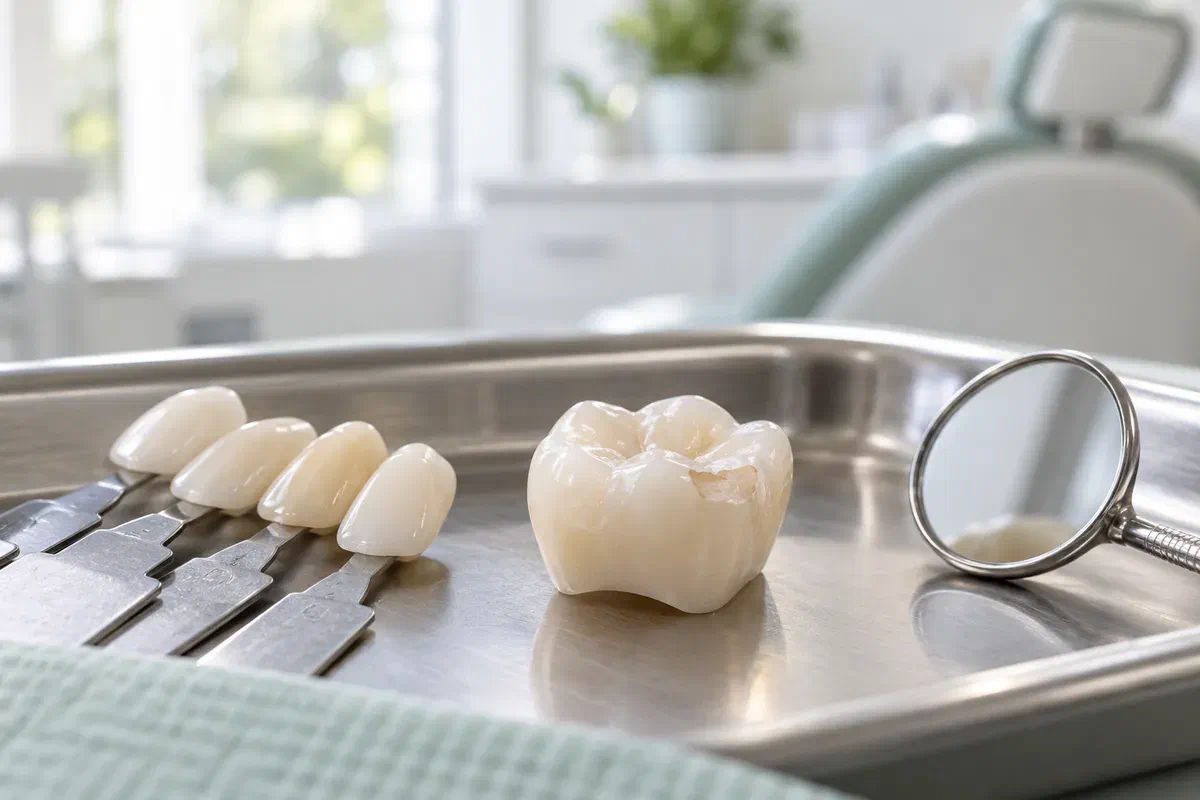
Ceramic crown with a small chipped area beside a shade guide
What families tend to notice

Small signs that something has changed

Older adults sometimes downplay discomfort, so the observations of a family member can help. A modest defect still matters if it rubs the tongue or cheek, changes how someone bites or turns out to be part of a larger problem.

A sore spot from a rough edge

A sharp corner on a crown can rub the tongue or cheek until it becomes tender. The dentist decides whether gentle smoothing is safe, or whether it would remove too much material, alter the crown’s shape or leave a hidden problem.

A chip that changes the smile

Appearance can matter a great deal, at any age. If a visible crown has chipped, ask how much a repair might improve the look and how closely added material is likely to blend with an older crown.

Chewing only on one side

Switching sides can be a quiet sign that a crown hurts or feels wrong when biting. The dentist checks how opposing teeth meet the crown, since chewing force affects whether a localized repair would hold.

A recent fall, a crown that wiggles, aching or swelling all deserve a mention when you call. Any of these can mean the tooth under the crown is involved too, which changes how soon your parent should be seen.

Why a repair may suit

Sometimes the simpler path is the right one.

For an older person, keeping a crown that still fits can mean fewer appointments and less time in the chair. When the chip is modest and the crown is firmly attached, a repair may bring back comfort without starting over, provided the tooth beneath is healthy enough not to need work of its own.

It helps to set expectations together. New material bonded onto an older crown may age at its own pace and catch the light a little differently, and some repairs are designed simply to keep things comfortable until a replacement is arranged. Ask the dentist which of those your parent is being offered.

Care in proportion to the problem

A small chip on an older crown does not automatically mean replacing it. Some flaws can be handled where they are, while others are too wide or sit too squarely in the bite, and the exam tells you which.

Comfort, eating and appearance

The goal may be to stop a sore tongue, make chewing easier or improve how the crown looks. Ask how the proposed repair addresses those goals and whether small differences in finish may remain.

Understanding why it happened

Older crowns can chip because of age, grinding or changes in the bite. Looking at the cause helps the dentist decide whether a repair is likely to last or whether a different plan would be wiser.

What the visit looks like

Unhurried, clear and shared

Methods depend on the crown and the damage. The appointment begins with an examination and a plain-language explanation of the options, including when replacement would be more appropriate, with time for questions from both of you.

  1. Review health history and examine the tooth

    The dentist asks about medical conditions and medications, examines the crown’s stability and surface and checks the gum and surrounding tissues. Records about the crown are helpful, but the examination guides the advice.

  2. Discuss the options together

    Polishing, a bonded repair and a new crown are compared. A family member is welcome to join with the patient’s agreement. Ask about appearance, purpose, care at home and what would happen if the area chipped again.

  3. Complete the chosen treatment

    If repair is appropriate, the area is prepared in a way that suits the crown material, then rebuilt and finished. When only a rough edge needs attention, the dentist refines it without adding material.

  4. Check comfort and explain aftercare

    The dentist confirms the bite feels comfortable on the treated crown. Ask for clear instructions on precautions and any planned review, and write them down if that helps at home.

Support at home

Simple steps that protect the repair

Instructions should match the treatment. Polishing usually needs little special care, while bonded material or a temporary repair may have specific early precautions. Ask the team to go over them with both of you.

Choose softer foods at first if advised

Very hard foods, ice and biting packaging put concentrated stress on a small repaired area. If your parent clenches or grinds, mention it so the dentist can consider whether further assessment or protection would help.

Keep brushing and cleaning between teeth

Daily brushing and interdental cleaning remain important around the crown margin and gum. If dexterity is a challenge, ask the team about tools such as soft interdental brushes that may make cleaning easier.

Watch for roughness or discomfort

Contact the clinic if the repair becomes rough, changes or breaks again, or if eating becomes uncomfortable. Please avoid filing it at home. The team will check whether the original approach still suits.

Patient information: Cleveland Clinic — dental crowns

Choices explained simply

Three levels of treatment

In plain words: a light polish, a small rebuild or a new crown. The dentist should explain how healthy the crown and tooth are first, so you and your parent can see why one level fits better than the others.

The gentlest step

Polishing a rough area

When a corner is only slightly rough, polishing can often settle it in a few minutes. It is skipped if the crown is already thin there or if smoothing would mask a crack that needs other care.

For a contained piece that broke away

A small bonded repair

Tooth-coloured or other repair material can sometimes rebuild a missing piece. Whether it bonds well depends on the crown type and the surface left, and the look and chewing load are part of the decision.

When an older crown has had its day

Replacement or treatment of the tooth

Wide cracks, a crown that no longer seals, repeated breaks or trouble underneath may mean a new crown is kinder in the long run. Any treatment the tooth needs comes first, planned with your parent’s general health in mind.

Questions from families

Helping someone else through a crown repair

These answers connect the damage to a crown with practical concerns that families often raise. They can help you prepare for the appointment together.

(905) 876-4488
Can I come into the appointment with my parent?
With your parent’s agreement, a family member is welcome to join the conversation. Having someone else hear the options and aftercare instructions can make decisions and home care easier afterwards.
Should we bring a list of medications to a crown repair visit?
Yes. A current list of medications and health conditions helps the dentist plan safely, especially if further treatment of the tooth is needed. If your parent sees other health providers, mention that too.
Can a rough crown cause a sore on the tongue or cheek?
It can. A sharp or chipped edge can rub soft tissues and leave them tender. Smoothing or repairing the crown may help, but a sore that does not heal should also be examined in its own right.
Is repairing an old crown easier than replacing it?
A repair can involve fewer steps when it is suitable. Whether it is appropriate depends on the extent of the damage, the crown’s fit and the health of the tooth underneath. The dentist will explain the trade-offs clearly.
We’re coming from Erin. Can the visit be arranged around a driver’s schedule?
Mention the timing that works when you book. Weekday hours run from late morning into the evening, Monday to Thursday, and Friday to Sunday visits are by appointment. Call promptly about pain, swelling or a loose crown.
Will the repaired crown match exactly?
An exact match cannot be promised. The existing material, shade and position of the chip affect the result. Ask the dentist what is realistic, particularly for a crown that shows when your parent smiles.
Crown repair for Erin families

Bring them in. We’ll explain it clearly.

Our Bronte Street clinic is happy to see a parent or relative whose crown has chipped, roughened or started to bother them. We take time over the exam, speak plainly about what a repair can offer, and make sure everyone leaves understanding the plan.

Pack the medication list and, if a fragment came off, a small lidded container holding it. Phone ahead about strong pain, swelling or looseness so the timing can be set.

Visit Milton Dental Clinic
Unit 1, 342 Bronte St. S, Milton, ON L9T 5B7
Get directions Clinic hours
Monday–Thursday
11am–7pm
Friday–Sunday
By appointment only

Areas we serve

  • Milton
  • Oakville
  • Mississauga
  • Georgetown
  • Halton Hills
  • Acton
  • Campbellville
  • Brampton
  • Burlington
  • Puslinch
  • Rockwood
  • Erin
  • Caledon
  • Etobicoke
  • Old Milton
  • Bronte Meadows
  • Timberlea
  • Dorset Park
  • Dempsey
  • Clarke
  • Beaty
  • Coates
  • Harrison
  • Scott
  • Willmott
  • Ford
  • Bowes
  • Cobden
  • Walker
  • Mountain View
  • Milton Heights
  • Hawthorne Village
  • Valley View
  • Fallingbrook
  • Nassagaweya
  • Trafalgar
  • Esquesing
  • Nelson
  • Brookville
  • Moffat
  • Glen Williams
  • Norval
  • Limehouse
  • Stewarttown
  • Ashgrove
  • Hornby
  • Silver Creek
  • Speyside
  • Scotch Block
  • North Oakville
  • River Oaks
  • Glen Abbey
  • West Oak Trails
  • Palermo
  • Bronte Creek
  • College Park
  • Joshua Creek
  • Uptown Core
  • Preserve
  • Iroquois Ridge
  • Lisgar
  • Meadowvale
  • Meadowvale Village
  • Churchill Meadows
  • Erin Mills
  • Central Erin Mills
  • Streetsville
  • East Credit
  • Creditview
  • Heartland
  • Sheridan
  • Mount Pleasant
  • Credit Valley
  • Huttonville
  • Churchville
  • Springbrook
  • Northwest Brampton
  • Bram West
  • Fletcher's Meadow
  • Fletcher's Creek South
  • Alton Village
  • Orchard
  • Millcroft
  • Headon Forest
  • Tansley
  • Brant Hills
  • Tyandaga
  • Kilbride
  • Lowville
  • Aberfoyle
  • Morriston
  • Arkell
  • Hillsburgh
  • Freelton
  • Carlisle
  • Waterdown
  • Flamborough
  • Mountsberg

How can we help?

Milton Dental Clinic

Have a question about your smile? Choose the option that works best for you.

For urgent dental concerns, please call.
Messages are reviewed during clinic hours.