A rough patch with no pain
This is often something that can be scheduled. The dentist will still want to examine it, because smoothing is only safe when it will not thin the crown excessively, change its shape or leave a hidden crack untreated.


Is the chip on your crown urgent, or can it wait for a planned visit? If you are coming from Etobicoke, a quick call and one well-organized appointment can sort out the damage, the crown material and the health of the tooth underneath.
Not every damaged crown is an emergency. A flake that leaves a slightly rough edge, with no pain and no movement, can usually be planned for. Crowns do chip, wear and crack, and a small defect on an otherwise healthy crown may be suitable for a contained repair.
Other signs change the timeline. A crown that rocks, a tooth that throbs, gum swelling or a break after a blow to the face all suggest the problem may reach beyond the surface. Those need prompt advice, and a repair should never be used to mask looseness, decay or damage to the tooth below.
Because this is a longer trip, call before you set out. Tell us when the damage happened, how the tooth feels and whether chewing or your appearance is affected. We will help you decide on timing, then use the visit to compare polishing, a localized repair, a new crown or other care, and their limits.
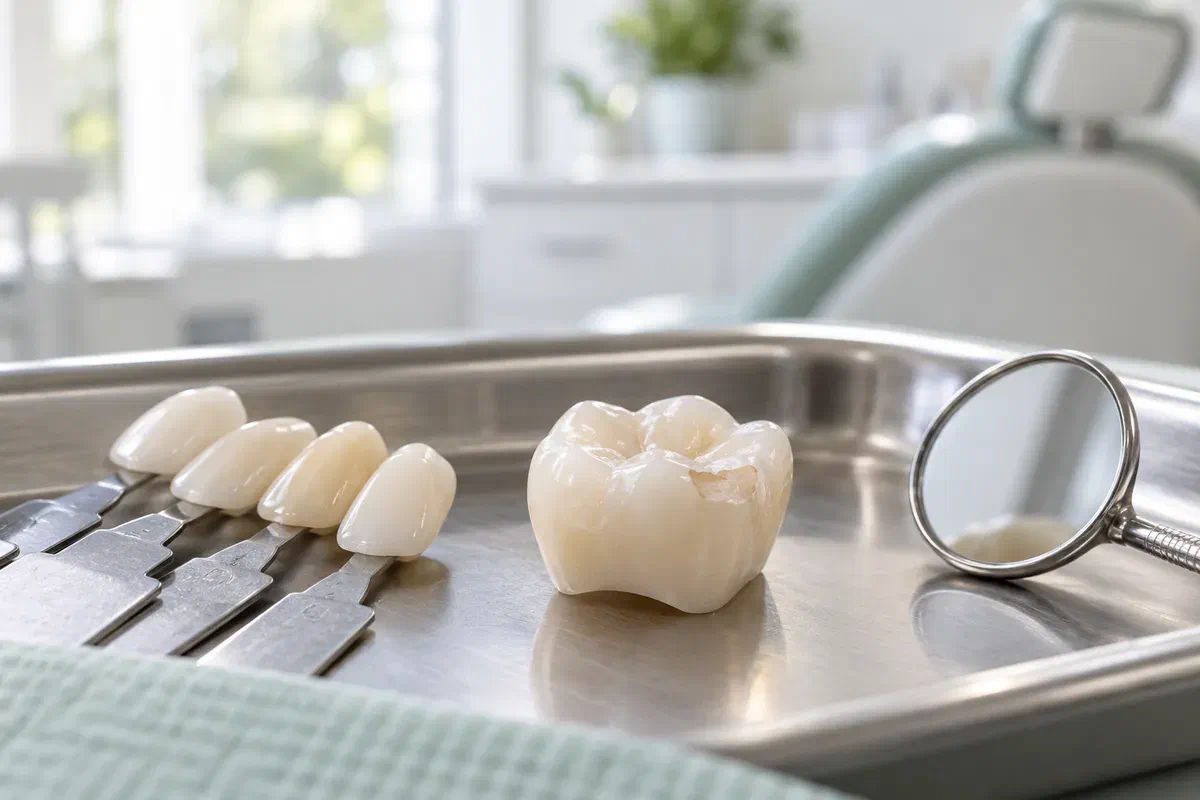
Most crown problems fall somewhere on a range. Describe what you see and feel as precisely as you can, since a chip that looks minor can still matter if it cuts soft tissue, affects your bite or hides a deeper fracture.
This is often something that can be scheduled. The dentist will still want to examine it, because smoothing is only safe when it will not thin the crown excessively, change its shape or leave a hidden crack untreated.
A front chip may feel pressing for appearance reasons, even if it is not painful. Explain what concerns you and ask how well a repair is likely to blend with the crown, now and as it ages.
Damage where the opposite teeth land tends to face more stress. The dentist checks the bite on that crown closely, since a repair under constant chewing force may behave differently from one in a protected area.
A loose crown, pain, swelling or a recent injury moves things up the list. Surface damage and trouble in the supporting tooth can appear together, so call promptly in those cases.
When the damage is small and the crown is still secure, repairing it may keep a restoration that otherwise serves you well and save the extra appointments a new crown involves. This works best when the tooth underneath needs no treatment that would make a surface repair inappropriate.
A repair may look or wear somewhat differently from the original crown. Its durability and colour match depend on the specifics, and some repairs are intended as an interim measure. Ask directly whether yours is meant as ongoing care or a step toward replacement, so you can plan future trips.
One chip rarely justifies starting from scratch. Still, some breaks are simply too large or sit right where the bite hits hardest, and an honest exam will tell you which kind you have.
Your goal may be comfort, appearance or both. Ask how the recommended repair addresses that goal and whether a slight difference in sheen or shade may remain visible afterwards.
If the crown has chipped before, the dentist can look at why. Understanding the cause, whether it is your bite, grinding or the crown’s age, helps reduce the chance of an unplanned return visit.
Your phone call settles the timing. Once you arrive, the dentist examines the crown, then walks you through what is realistic for that material and that break, and says so plainly if replacing the crown would serve you better.
The dentist examines the crown’s stability and condition, checks the gum and tissues around it and reviews your symptoms. Records from the dentist who placed the crown can help, but the examination drives the recommendation.
You discuss whether polishing, a bonded repair or replacement fits your situation. Ask about appearance, what the repair is meant to accomplish, upkeep and what would happen if it chipped again.
If a repair is appropriate and time allows, the dentist prepares the chipped surface in a way that suits that crown, then builds, shapes and finishes it. In some cases only careful refinement of the edge is needed.
Before you leave, the dentist tests how your teeth meet on the treated crown and asks whether anything feels high or sharp. Find out what to be careful with this week and whether a review is needed, so any return trip goes in your calendar early.
Get your instructions in writing or make a note before you head home, since you will not be popping back in to ask. Polishing, new bonded material and a stopgap repair can each come with different early precautions.
Hard candy, ice and stubborn packaging are the usual offenders, and a freshly repaired corner is a small target for that force. Clenching or night grinding is worth mentioning too, because the dentist may want to look into it or suggest protection.
Brush and clean between your teeth as advised. The margins of the crown and the gum around them still need daily attention after a repair. Ask for tips if the shape of the repair makes cleaning awkward.
Contact us if the repair roughens, changes or breaks again. Do not file it yourself. For severe pain, significant swelling or an injury outside our hours, seek urgent care closer to home rather than waiting.
Patient information: Cleveland Clinic — dental crowns
These answers connect the type of damage with how quickly you need care and what a repair can achieve. They can help you plan both the trip and the conversation.
Once we have talked about urgency by phone, book your time at our Bronte Street clinic. The visit covers the crown, the tooth holding it and the realistic repair choices, so you head home with a plan rather than a list of further trips.
Bring any broken piece in a sealed container. If pain, swelling or a loose crown develops, call first, and seek closer urgent care if symptoms are severe.
