A broken crown or core
Refitting may not hold for long when the crown is cracked or the build-up inside it has fractured. The dentist judges how much of the crown and tooth are still sound and whether a repair could restore proper function.


A crown that wobbles or lands in your hand mid-meal raises an immediate question: can it go back on? For people in western Mississauga and beyond, we find out why it came loose and what the tooth needs next.
Crowns usually come loose without warning, often on something sticky like toffee or chewing gum. The first instinct is to push it back and hope. A better plan is to keep the crown safe, call the clinic and let the dentist work out why the cement let go.
Sometimes the answer is simple and the same crown can be cleaned and recemented. Other times the reason it loosened is decay underneath, a broken core or a crown that no longer fits the tooth. In those cases, replacement, which means making a new restoration after the old one is off, may be the more reliable path.
A tooth left uncovered can be sensitive and more fragile than usual. The examination looks at what remains of it, the gum, any symptoms and its treatment history. Share anything you noticed before the crown came off, such as a bad taste or a rocking feeling, because those details help explain what happened.
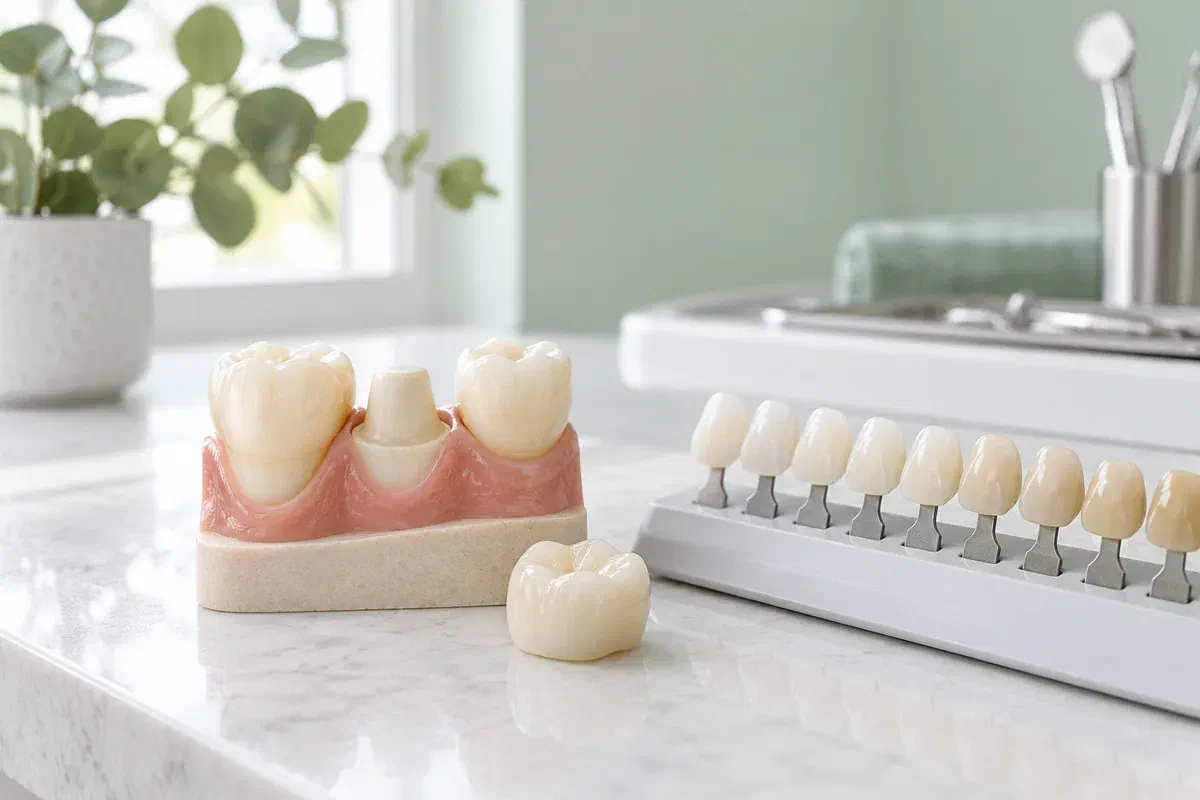
Cement can age, but loosening is often a sign of a change in the tooth or the crown. The assessment separates a crown that can be refitted from one that needs a different plan.
Refitting may not hold for long when the crown is cracked or the build-up inside it has fractured. The dentist judges how much of the crown and tooth are still sound and whether a repair could restore proper function.
Decay along the margin can undermine the tooth until the crown has little to grip. Examination clarifies the cause, and the decay must be treated before any crown, old or new, is fitted again.
If you never liked the shade or shape of the crown that came off, now is a natural time to mention it. Choosing a new crown when the old one could be refitted still involves weighing benefits against drawbacks.
Call promptly if the tooth is painful, the gum is swollen or you think you may have swallowed or inhaled the crown. These change how soon you should be seen.
When the old crown cannot be reused, a new one can be designed for the current shape of the tooth and your bite. Its material, contour and look are chosen together, with the amount of supporting tooth and your cleaning habits in view, so it has a sound base to hold onto.
A replacement crown does not guarantee the tooth will need no further work. Its remaining structure, the pulp or a past root canal, gum health and other factors still influence the outlook. Ask which of these are most relevant to you.
If decay, a fractured build-up or too little tooth structure caused the problem, the plan should correct it. Ask how that will be dealt with before the permanent crown is fitted.
Different crown materials suit different jobs. The tooth’s position and the forces it handles should shape the recommendation, explained for your mouth rather than as a single choice that suits everyone.
Shape, how the crown touches neighbouring teeth and how easily you can clean around it all affect daily comfort. If the old crown trapped food or felt high, tell us so the replacement can be planned differently.
The number of appointments depends on what the tooth needs. Ask in advance about temporary protection, comfort, fees and how the plan would change if extra treatment is required.
The dentist examines the exposed tooth, the crown itself if you brought it, the gum and your bite, and takes suitable records. You will hear whether recementing is realistic or whether replacement is the more reasonable option.
With your consent and appropriate comfort measures, any old cement and decay are removed. The tooth is examined closely, and findings that would change the plan are discussed before further work.
A new core or other supporting treatment is placed or arranged, and records are taken for the new crown. Shade and shape are discussed where relevant, and a temporary crown covers the tooth in the meantime.
The dentist checks fit, contacts and bite while you comment on appearance and comfort. After it is placed, you will get instructions on early care, cleaning and any follow-up visits.
A firmly fitted crown still depends on a healthy tooth and gum around it. Ask for instructions that take into account any rebuilding or other work done along the way.
Depending on the cement and on lingering numbness, you may be asked to wait before chewing on that side. Check before leaving, and avoid biting your lip or cheek while the freezing fades.
Keep up brushing at the gumline and cleaning between teeth. If floss catches on the crown or the area is awkward to reach, let us know so the contour can be checked and an easier method suggested.
Report renewed looseness, ongoing sensitivity, pain on biting or a bite that feels high. These need examination rather than repeated testing with hard or sticky foods.
Patient information: ADA MouthHealthy — dental crowns
These answers can help you manage the gap until your appointment. Bring any other questions about looks, timing or the temporary stage.
Contact our Bronte Street practice to arrange an assessment. We will look at the crown that came off, examine the tooth underneath and explain whether it can be refitted or should be replaced, and what each step involves.
If you are in pain, the gum is swollen or you think the crown was swallowed, tell us at the start of the call so we can guide you on timing.
