

Illustrative patient and dentist discussion about replacing an older crown
Restorative Dentistry

Dental Crown Replacement in Oakville

Floss that frays every night at the same crown is a small sign worth following up. For people coming from Oakville, we check the edge of the crown and the tooth inside before talking about a new one.

A catch at the crown edge

The floss keeps tearing in one spot

Most people notice it during an ordinary evening routine. The floss slides easily between most teeth, then snags or shreds beside one crown. It may be nothing more than a slightly rough contour. It can also mean the edge of the crown has lifted, chipped or developed decay beneath it.

Replacement is one possible answer, and it involves removing the existing crown and making a new restoration when that suits the tooth. Before it is suggested, the reason should be clear to you, whether that is damage, a poor seal, a problem hidden under the crown or an appearance that you would like to change.

The tooth inside a crown does not stay frozen in time. An examination looks at how much natural structure remains, the gum around it, any symptoms and earlier treatment. Bring your observations about that snagging floss, the colour or comfort, and we will explain which changes are practical and what the findings point toward.

Get a snagging crown checked
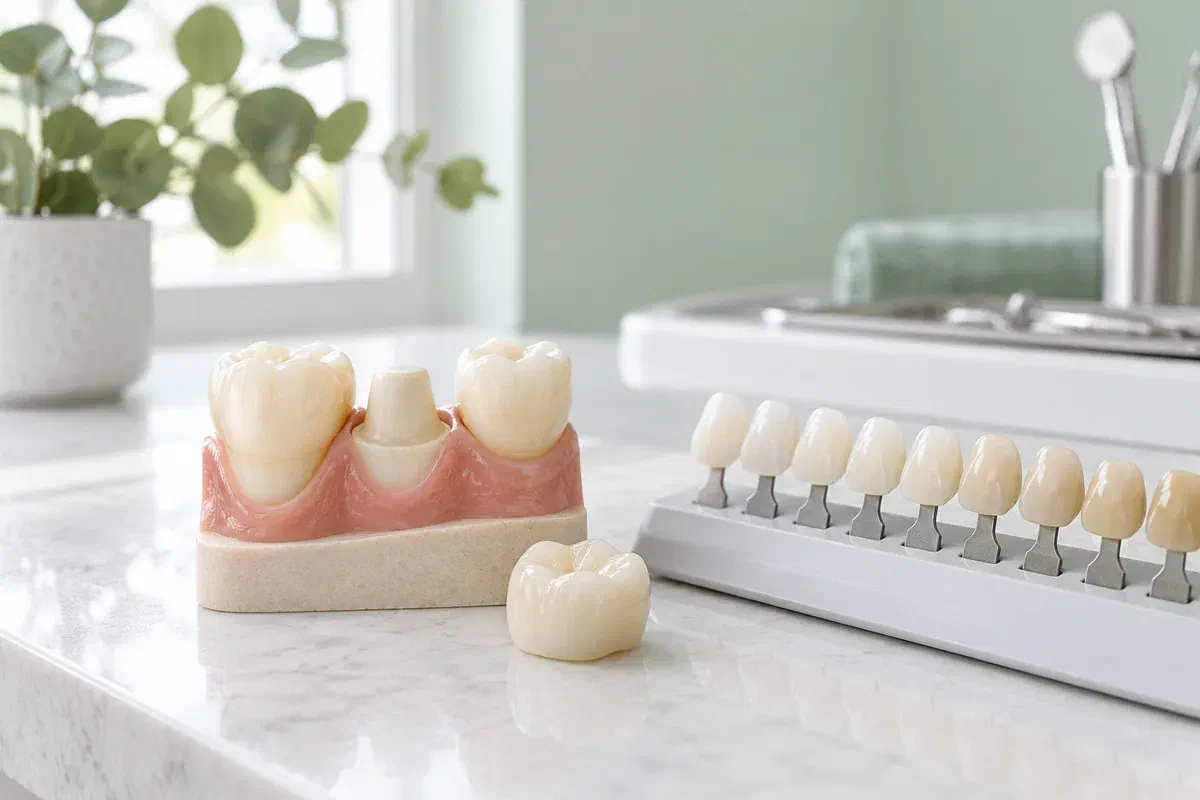
Prepared-tooth teaching model with a ceramic crown and shade guide
Clues that deserve attention

Small symptoms, specific causes

Crowns do not expire. A recommendation should rest on a real finding, and the assessment helps separate a restoration that can keep working from one where the crown or the tooth needs a new approach.

A break too large to smooth or patch

Minor roughness can sometimes be polished away. A bigger chip, a crack or a crown that keeps failing after repair is another matter, and the dentist considers whether any fix could restore the shape and function the tooth relies on.

An edge that traps floss or food

The margin, where crown and tooth meet, is where fit problems and decay tend to show up. Examination clarifies the cause of the catch and whether the crown has to be removed to reach and treat the area.

A colour or contour you have grown tired of

A visible crown can stand out next to natural teeth. We can discuss what you would like to change, while being honest that replacing a crown that still functions carries trade-offs as well as benefits.

Tell us about pain, swelling or any movement in the crown as well as the floss problem. Those details can affect both the assessment and how soon care is advised.

What a better-fitting crown offers

Smoother edges, easier cleaning, a considered look

If a new crown is the right choice, it can be designed around the tooth as it stands today and around the way your teeth meet. Material, contour and shade are decided together, alongside how much supporting tooth remains and how easily you can keep the edges clean.

A replacement does not mean the tooth will never need anything again. The remaining structure, the pulp or any previous root canal, the health of the gum and other factors still shape its future. Ask which of these limitations apply in your case.

Solve the cause, not just the symptom

The plan should answer the problem that was found. If decay at the margin or a weakened core is present, ask how that will be treated before the permanent crown goes on.

Choose a material for its role

Some materials prioritise appearance, others strength, and many balance both. Where the tooth sits and how hard it works should shape the recommendation, and it should be explained for your mouth rather than presented as universal.

Plan a contour that is easier to floss

Shape, contact points and access for cleaning all influence daily comfort. Describe exactly where floss caught on the old crown so the replacement can be designed with that in mind.

Step by step

What to expect across the appointments

How many visits you need depends on what the tooth requires, which helps when planning trips from Oakville. Before starting, ask about the temporary crown, comfort options, fees and what happens if the tooth under the old crown needs extra work.

  1. Evaluate the crown and surrounding area

    The dentist examines the crown, the gum and the rest of the mouth, asks about symptoms and uses appropriate records. You will learn why replacement is being considered and what can only be confirmed after removal.

  2. Remove the old crown and re-examine

    Once you consent and suitable comfort measures are in place, the crown is taken off with an appropriate technique. The tooth is then examined directly, and anything that would alter the agreed plan is discussed first.

  3. Restore the base and record the shape

    Needed supporting treatment is finished or scheduled, and records are made for the new crown. Shade and shape are reviewed if relevant, and you will hear how the temporary crown should be cared for.

  4. Confirm fit before the final step

    The dentist checks margins, contacts and bite, and you can give feedback on appearance and comfort. After placement, the team explains immediate care, cleaning and any follow-up visits.

Daily life with the new crown

Make the new edge part of your routine

The crown itself will not decay, but the tooth along its margin and the gum beside it still need regular care. Ask for instructions that account for any extra treatment done during the process.

Follow the fitting-day guidance

When you can eat normally may depend on the cement used and on lingering numbness. Ask before leaving, and avoid chewing on your cheek or tongue while the freezing wears off.

Floss and brush along the margin

Keep up the recommended routine at the gumline and between teeth. If floss still catches or tears at the new crown, let us know so we can check its contour and show you another option.

Tell us if discomfort persists

Ongoing sensitivity, pain when chewing or a crown that seems to meet the opposite tooth first should be examined. Avoid testing it repeatedly with hard food or assuming it will simply settle.

Patient information: ADA MouthHealthy — dental crowns

Choosing a response

Not every catch needs a new crown

Which options are realistic depends on what the examination finds in the restoration and underneath it. Understand what each choice is designed to do, and what it cannot do, before you decide.

When the crown is otherwise sound

Smooth, repair or monitor the crown

Sometimes a rough edge can be polished, a small defect repaired or a loose crown recemented. Ask whether that limited step suits your situation, and why or why not.

When the tooth can support a new one

Replace the crown

With underlying problems treated first, a new crown may be appropriate. Material, preparation, temporary care and the supporting tooth’s condition should be planned as a whole.

When the tooth’s future is uncertain

Consider wider treatment

A large fracture or another unfavourable finding can limit what a crown can achieve. The dentist will explain whether further care might keep the tooth or whether extraction and tooth-replacement options belong in the discussion.

Common crown questions

Before your consultation

Use these as a starting point for your appointment. Add your own questions about appearance, cleaning or how the visits will work around your week.

(905) 876-4488
Why does floss shred on my crown and not my other teeth?
A rough or overhanging edge, a small chip, a gap at the margin or decay can all catch floss. Sometimes the contact with the neighbouring tooth is simply very tight. The dentist examines the area to find which one applies.
Is a dark spot near the edge of my crown decay?
It might be, but staining, an exposed metal layer or receding gum can look similar. An examination and suitable records help tell the difference, and the answer decides whether the crown needs removal.
Can I switch from a metal crown to a tooth-coloured one?
Often that can be considered, though it depends on the tooth, the space available, your bite and other findings. Explain what you want to improve, and ask how the options compare for that particular tooth.
Is a different floss or brush worth trying first?
Sometimes a waxed floss, tape or interdental brush helps if the contour is simply tight. If the problem continues, or you see bleeding, a dark line or a gap, it is better to have the crown checked than to keep adjusting your tools.
What if removing the crown shows more damage?
The dentist should explain what was found and how it affects whether the tooth can be restored. Extra treatment may be needed before a final crown. Ask beforehand how unexpected findings, fee changes and temporary care would be discussed.
How can I reduce trips from Oakville for this treatment?
Ask at the first visit how many appointments the tooth is likely to need and what each involves. Booking the preparation and fitting visits together, at times that suit you, keeps the process organised.
Oakville crown replacement

Find out what is catching at that crown

During a visit to our Bronte Street practice, we will examine the crown, check the tooth that supports it and explain whether polishing, repair or replacement makes the most sense, along with each step.

If the crown feels loose, the gum is swollen or you have strong pain, mention it when you call so the team can suggest suitable timing.

Visit Milton Dental Clinic
Unit 1, 342 Bronte St. S, Milton, ON L9T 5B7
Get directions Clinic hours
Monday–Thursday
11am–7pm
Friday–Sunday
By appointment only

Areas we serve

  • Milton
  • Oakville
  • Mississauga
  • Georgetown
  • Halton Hills
  • Acton
  • Campbellville
  • Brampton
  • Burlington
  • Puslinch
  • Rockwood
  • Erin
  • Caledon
  • Etobicoke
  • Old Milton
  • Bronte Meadows
  • Timberlea
  • Dorset Park
  • Dempsey
  • Clarke
  • Beaty
  • Coates
  • Harrison
  • Scott
  • Willmott
  • Ford
  • Bowes
  • Cobden
  • Walker
  • Mountain View
  • Milton Heights
  • Hawthorne Village
  • Valley View
  • Fallingbrook
  • Nassagaweya
  • Trafalgar
  • Esquesing
  • Nelson
  • Brookville
  • Moffat
  • Glen Williams
  • Norval
  • Limehouse
  • Stewarttown
  • Ashgrove
  • Hornby
  • Silver Creek
  • Speyside
  • Scotch Block
  • North Oakville
  • River Oaks
  • Glen Abbey
  • West Oak Trails
  • Palermo
  • Bronte Creek
  • College Park
  • Joshua Creek
  • Uptown Core
  • Preserve
  • Iroquois Ridge
  • Lisgar
  • Meadowvale
  • Meadowvale Village
  • Churchill Meadows
  • Erin Mills
  • Central Erin Mills
  • Streetsville
  • East Credit
  • Creditview
  • Heartland
  • Sheridan
  • Mount Pleasant
  • Credit Valley
  • Huttonville
  • Churchville
  • Springbrook
  • Northwest Brampton
  • Bram West
  • Fletcher's Meadow
  • Fletcher's Creek South
  • Alton Village
  • Orchard
  • Millcroft
  • Headon Forest
  • Tansley
  • Brant Hills
  • Tyandaga
  • Kilbride
  • Lowville
  • Aberfoyle
  • Morriston
  • Arkell
  • Hillsburgh
  • Freelton
  • Carlisle
  • Waterdown
  • Flamborough
  • Mountsberg

How can we help?

Milton Dental Clinic

Have a question about your smile? Choose the option that works best for you.

For urgent dental concerns, please call.
Messages are reviewed during clinic hours.