

Illustrative patient and dentist discussion about replacing an older crown
Restorative Dentistry

Dental Crown Replacement in Old Milton

Some crowns in Old Milton have outlasted two or three dentists. If yours is decades old, the question is not its age but its condition, and the tooth it protects deserves a careful look first.

The long-serving crown

Twenty years in, is it still doing its job?

In Milton’s historic downtown, plenty of people carry crowns that were placed long before they moved to their current street. Records from the original dentist may be gone. What remains is a restoration that has worked for years and a quiet worry about whether it is overdue for something.

No calendar date sends a crown for replacement. A new one is worth making when the current crown is damaged, fits poorly, hides a problem that needs to be reached, or no longer looks the way you want. Without one of those reasons, an old crown that is sound may be left in place and simply watched.

What can shift over time is the tooth beneath. Gum may recede, the core can weaken and old decay can return at the margin. An examination weighs the remaining structure, the gum, your symptoms and any past treatment, so that a new outer shell is not mistaken for a complete answer when the foundation needs work.

Have an older crown assessed
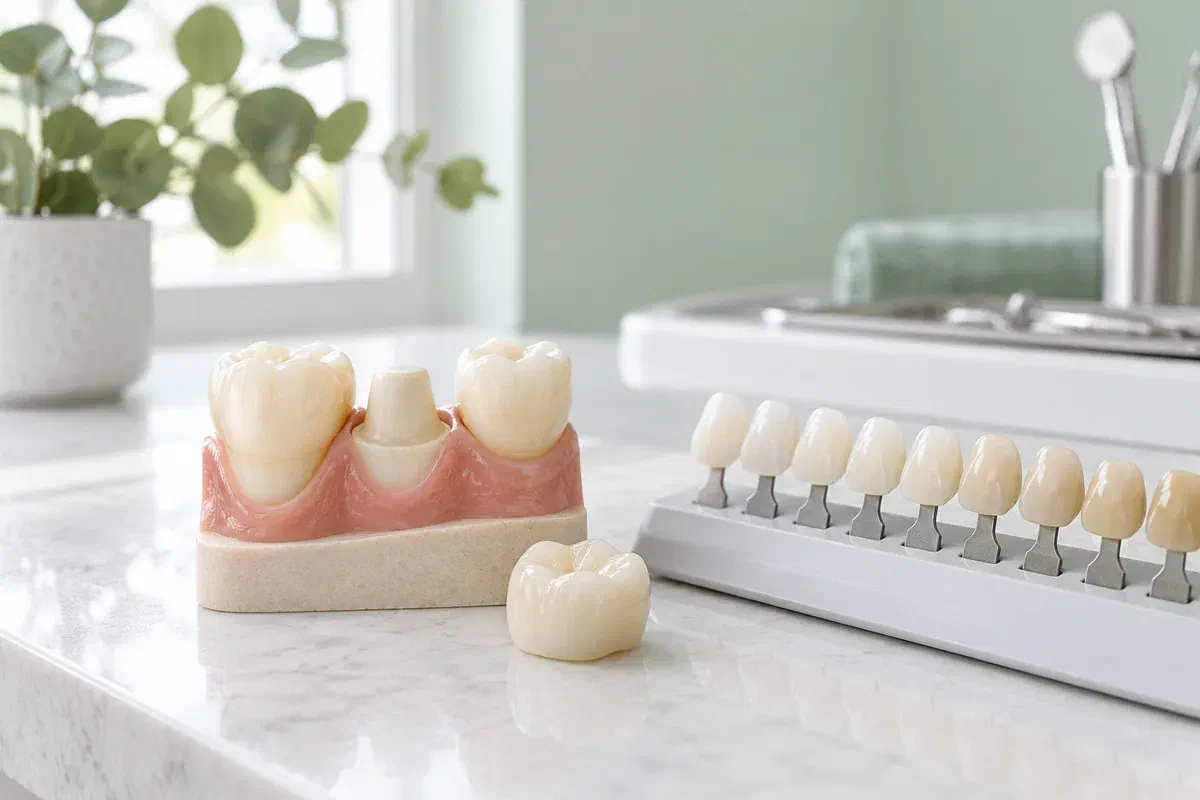
Prepared-tooth teaching model with a ceramic crown and shade guide
Signs a long-standing crown has changed

What would make us suggest a change

We look for a concrete reason rather than a birthday. These are the situations where a crown that has served well may now need a different plan for the tooth.

Wear or breakage beyond a simple fix

Porcelain can chip and metal can wear thin after many years of chewing. If the damage is extensive or earlier repairs keep failing, the dentist will consider whether a repair could still restore proper shape and function.

A margin that has opened or darkened

Receding gum can expose the edge of an older crown, and decay can begin where the seal has weakened. The examination aims to clarify what is happening there and whether removal is needed to treat it.

A crown that belongs to an earlier smile

Your other teeth may have changed shade or position since the crown was made. If its look bothers you, we can talk it through, keeping in mind that replacing a working crown has both advantages and trade-offs.

Pain, swelling or looseness are worth raising even if the crown seems fine to look at. They may change how urgent the next step is.

Why a replacement can help

Planned for the mouth you have now

A crown made years ago was designed around the bite and gum of that time. When replacement is warranted, the new one can be shaped for your current bite, the present gumline and the amount of tooth that remains, with material and shade chosen alongside your ability to clean it.

Even a well-made replacement cannot promise the tooth a trouble-free future. How much natural structure is left, the state of the pulp or an older root canal, gum health and other factors continue to matter. Ask which of them weigh most for your tooth.

Deal with what has gone wrong underneath

If the old crown is coming off because of decay or a crumbling build-up, ask how that will be corrected before a final crown covers it again. The treatment should match the problem found.

Revisit the material with fresh eyes

Crown materials have developed over the years, and each has its own balance of appearance and strength. The tooth’s position and the forces on it should guide the choice, rather than any single material being called the best.

Fix the habits the old crown forced on you

Perhaps you chew on the other side or avoid flossing one gap. Mention those workarounds, because contour, contacts and cleaning access can all be reconsidered while the new crown is planned.

How the replacement unfolds

Steps, with room for surprises

The visit count depends on the tooth and the work it needs. Before anything starts, talk through the temporary crown, comfort, fees and how the plan would shift if the supporting tooth needs more care than expected.

  1. Examine the crown and its history

    The dentist checks the restoration, the surrounding gum and your bite, asks about symptoms and takes suitable records. Some facts about an old crown can only be confirmed once it is off, and those unknowns are named up front.

  2. Remove the crown and see the tooth

    After you agree and appropriate comfort measures are in place, the old crown is taken off. The tooth is examined directly, and any findings that would change the plan are explained before further work goes ahead.

  3. Build the foundation and take records

    Supporting treatment is completed or arranged, then records are taken for the new crown. Where it matters, shade and shape are discussed, and a temporary crown protects the tooth while the final one is made.

  4. Try in, adjust and complete

    Before it is cemented, the dentist confirms fit and bite and you say how it looks and feels. Once placed, the team goes over immediate care, cleaning and any follow-up the tooth will need.

Keeping the new crown healthy

The edge is where care counts most

A new crown slots into your routine, yet the tooth and gum around it still need daily attention. Ask for guidance that reflects any extra work done during the replacement.

Take the fitting day slowly

Advice about eating can depend on the cement and on whether you are still numb. Check before you leave when normal chewing is fine, and be careful with your cheek and tongue until feeling returns.

Clean the gumline and the gaps

Keep up the brushing and between-teeth cleaning you have been shown. If floss catches each time or the spot is awkward to reach, tell us so the contour can be checked and a better aid suggested.

Report discomfort that lingers

Sensitivity that does not fade, pain when you bite or a crown that seems to touch first should be assessed. Avoid testing it on hard food or assuming every sensation is just part of settling in.

Patient information: ADA MouthHealthy — dental crowns

Paths for an aging crown

Three ways forward

The state of both the crown and the tooth decides which paths are open. Compare what each is meant to do, and its limits, before choosing.

When replacement is not needed

Keep it, with or without a repair

A sound older crown can sometimes be monitored, polished, repaired or recemented. Ask why that lighter approach does or does not fit the concern you came in with.

When the tooth can hold another crown

Have a new crown made

Replacement may suit the tooth once underlying problems are treated. Material, preparation, the temporary phase and the tooth’s own condition should all be discussed together.

When the outlook is less certain

Plan beyond a single crown

A serious fracture or another poor finding may limit what a new crown can do. The dentist will explain whether more treatment could save the tooth or whether extraction and replacement choices should be considered.

Asked about older crowns

What long-time crown wearers want to know

These questions come up often with restorations that have been in place for many years. Bring your own as well, especially about appearance and timing.

(905) 876-4488
How long do crowns usually last?
There is no fixed lifespan. Some crowns serve for many years, others need attention sooner, depending on the bite, cleaning, the tooth underneath and the material. Rather than counting years, the dentist looks at the crown’s actual condition.
I don’t know what my old crown is made of. Does that matter?
It can help, but it is not essential. The dentist can often tell from examination and records whether it contains metal, porcelain or both. That information may influence how it is removed and what the replacement options are.
Will the dentist need to cut my old crown off?
Often, yes, because many crowns cannot be lifted off intact without risking the tooth. That means the old crown usually cannot be saved for later use. The removal method and the temporary plan are explained before work begins.
Could my gums have shrunk away from the crown?
Gum recession over the years can expose the crown’s edge or the root surface. That may be cosmetic, or it may increase the risk of decay at the margin. The examination looks at whether it calls for treatment or just closer monitoring.
If a root canal was done long ago, does it need redoing now?
Not necessarily. Replacing a crown and treating the inside of the tooth are separate decisions. Symptoms, tests and the condition of the earlier treatment guide whether more care is needed, and you can ask what evidence supports any recommendation.
Can the visits fit around a workday in Old Milton?
Our Bronte Street practice is close by, and weekday hours run from 11am to 7pm Monday to Thursday, with Friday to Sunday by appointment. Let the team know your preferred times so the preparation and fitting appointments can be planned around them.
Old Milton crown replacement

Have that old crown looked at properly

Book a consultation at our Bronte Street practice. We will review the crown, examine the tooth supporting it and explain whether it can stay, needs a repair or would be better replaced, along with the steps involved.

If the crown has loosened, the gum is swollen or the pain is significant, mention it when you call so the team can arrange suitable timing.

Visit Milton Dental Clinic
Unit 1, 342 Bronte St. S, Milton, ON L9T 5B7
Get directions Clinic hours
Monday–Thursday
11am–7pm
Friday–Sunday
By appointment only

Areas we serve

  • Milton
  • Oakville
  • Mississauga
  • Georgetown
  • Halton Hills
  • Acton
  • Campbellville
  • Brampton
  • Burlington
  • Puslinch
  • Rockwood
  • Erin
  • Caledon
  • Etobicoke
  • Old Milton
  • Bronte Meadows
  • Timberlea
  • Dorset Park
  • Dempsey
  • Clarke
  • Beaty
  • Coates
  • Harrison
  • Scott
  • Willmott
  • Ford
  • Bowes
  • Cobden
  • Walker
  • Mountain View
  • Milton Heights
  • Hawthorne Village
  • Valley View
  • Fallingbrook
  • Nassagaweya
  • Trafalgar
  • Esquesing
  • Nelson
  • Brookville
  • Moffat
  • Glen Williams
  • Norval
  • Limehouse
  • Stewarttown
  • Ashgrove
  • Hornby
  • Silver Creek
  • Speyside
  • Scotch Block
  • North Oakville
  • River Oaks
  • Glen Abbey
  • West Oak Trails
  • Palermo
  • Bronte Creek
  • College Park
  • Joshua Creek
  • Uptown Core
  • Preserve
  • Iroquois Ridge
  • Lisgar
  • Meadowvale
  • Meadowvale Village
  • Churchill Meadows
  • Erin Mills
  • Central Erin Mills
  • Streetsville
  • East Credit
  • Creditview
  • Heartland
  • Sheridan
  • Mount Pleasant
  • Credit Valley
  • Huttonville
  • Churchville
  • Springbrook
  • Northwest Brampton
  • Bram West
  • Fletcher's Meadow
  • Fletcher's Creek South
  • Alton Village
  • Orchard
  • Millcroft
  • Headon Forest
  • Tansley
  • Brant Hills
  • Tyandaga
  • Kilbride
  • Lowville
  • Aberfoyle
  • Morriston
  • Arkell
  • Hillsburgh
  • Freelton
  • Carlisle
  • Waterdown
  • Flamborough
  • Mountsberg

How can we help?

Milton Dental Clinic

Have a question about your smile? Choose the option that works best for you.

For urgent dental concerns, please call.
Messages are reviewed during clinic hours.