

Illustrative consultation about suitability for a dental implant
Restorative Dentistry

Dental Implant Assessment

Considering an implant starts with understanding your mouth and your choices. Arrange a dental implant assessment in Milton to discuss the missing tooth, your health history, and what a suitable replacement plan could involve.

A closer look at implant assessment

Begin with the question of suitability.

A dental implant assessment considers whether an implant-supported replacement could suit your mouth and circumstances. It is an opportunity to discuss the gap you want to address, the condition of the surrounding teeth and tissues, and the work that may be needed before a replacement can be planned.

An implant is not the visible tooth alone. The treatment involves support in the jaw and a restoration attached above it, with assessment, healing, and maintenance forming parts of the overall pathway. Understanding that whole pathway helps you compare it fairly with other ways of replacing a missing tooth.

At Milton Dental Clinic, you do not need to arrive having decided on implant treatment. Bring your questions and tell us what you would like to improve. We can review the starting point, explain what further information may be needed, and discuss suitable alternatives before you make a commitment.

Arrange an implant assessment
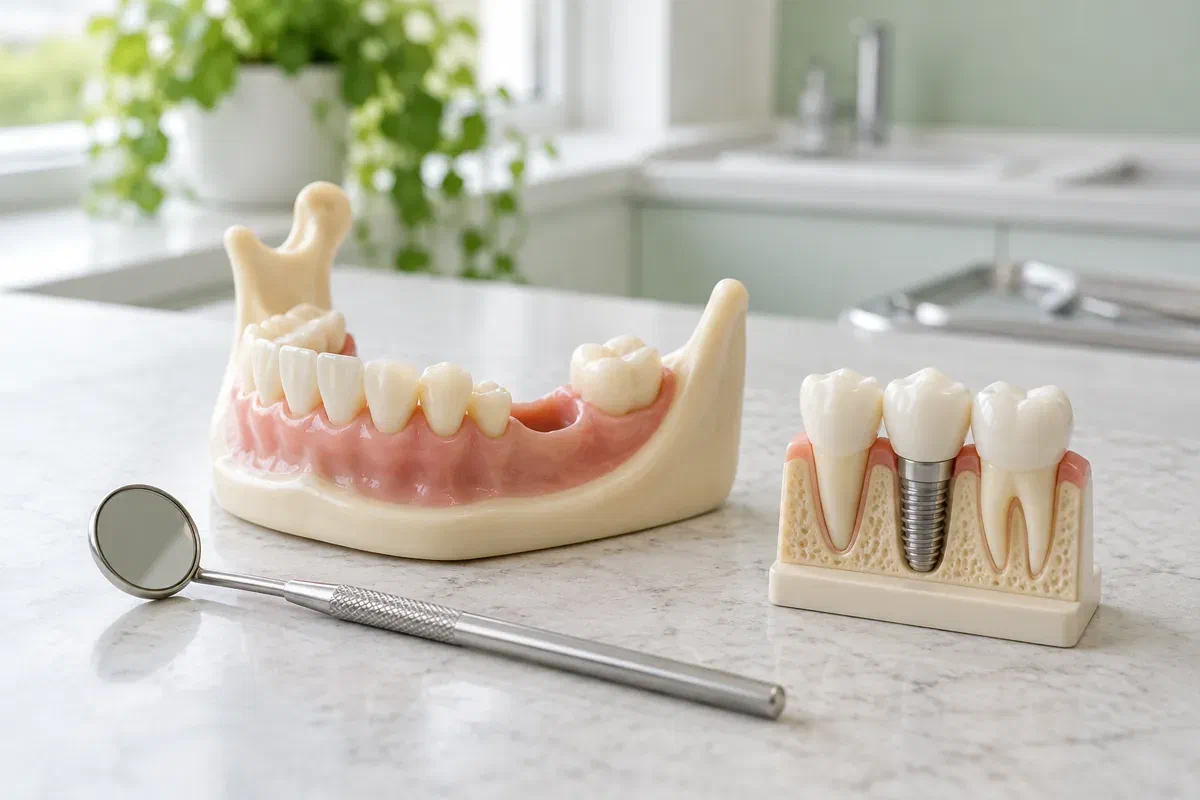
Dental teaching models showing a missing tooth and an implant-supported crown
What belongs in the first conversation

Your mouth, health, and priorities all matter.

A useful assessment looks beyond whether there is a visible gap. The proposed replacement needs appropriate support, a manageable cleaning routine, and a treatment sequence that makes sense for you.

A missing tooth or an uncertain existing tooth

Explain whether the tooth is already missing or whether removal has been suggested. If a natural tooth remains, its condition and reasonable retention options should be assessed before replacement is treated as the only path.

Medical conditions and current medicines

Bring an accurate health history and medication list, including supplements and previous significant treatments. These details help the clinician consider planning and healing factors and decide whether information from another healthcare professional is needed.

A replacement that fits your routine

Discuss cleaning ability, appointment availability, and what matters most about eating or appearance. A technically possible treatment still needs to be practical to maintain, so these everyday details belong in the assessment.

Do not stop or change prescribed medication in preparation for an implant consultation. Any medication-related plan should be discussed with the relevant treating clinicians.

What the assessment can give you

Leave with a clearer decision, not just a treatment name.

The assessment can identify what needs to be understood before implant care is considered further. That may include the condition of the gums, the proposed site, neighbouring teeth, or a health issue that affects the sequence.

Sometimes the next step is additional information rather than an immediate treatment recommendation. Ask which question a scan, further examination, or referral is intended to answer. You should understand how the result will contribute to the decision.

A realistic starting point

The discussion can distinguish what appears feasible from what still needs investigation. This helps avoid relying on an advertised timeline or a treatment someone else received as a prediction for your own mouth.

A comparison of complete options

Ask how implant care compares with a suitable bridge, removable appliance, or another approach. Include the preparation, maintenance, likely appointments, and limitations of each option when weighing the decision.

Clarity about who provides each stage

Some plans involve different clinicians for assessment, placement, restoration, or ongoing care. Establishing those responsibilities early helps you understand referrals, costs, and whom to contact with questions at each stage.

Your assessment appointment

Build the plan from the information your case needs.

The first appointment may not answer every question. The team should explain what can be assessed immediately, what records may be required, and when a more detailed recommendation can be made.

  1. Discuss the missing tooth and your goals

    Describe how long the gap has been present, any previous replacement, and what you want to change. Review your health history, medicines, dental experiences, and practical concerns about treatment or daily care.

  2. Examine the mouth and proposed site

    The dentist considers the teeth, gums, bite, available space, and other relevant findings. Existing dental problems may need attention before implant planning proceeds, and their role in the sequence should be explained.

  3. Identify the records or opinions needed

    Appropriate imaging and other records may be recommended to assess the site and nearby structures. Ask what is justified for your case, whether previous records can help, and whether another clinician should contribute to the assessment.

  4. Review options and an outline of care

    Discuss the available findings, remaining uncertainties, and possible next steps. Request a clear explanation of any proposed preparation, surgery, restoration, temporary tooth, costs, and maintenance before deciding whether to proceed.

After the consultation

Turn the discussion into an understandable next step.

An assessment does not automatically mean surgery has been arranged. Before leaving, clarify what you have agreed to, which appointments or records come next, and what you should do about any existing dental concern meanwhile.

Keep the proposed sequence together

Save the treatment outline, estimates, and referral information so you can review them calmly. If a term is unclear, ask for a plain-language explanation before consenting to the next stage.

Address preparation that has been recommended

The plan may include care for the gums or remaining teeth before further implant decisions. Ask how progress will be reviewed and what needs to be established before the site is considered ready.

Update the team about health changes

Let the clinic know if medicines, medical treatment, or your dental symptoms change while planning is underway. New information can affect the sequence, and an earlier assessment should not be treated as permanently current.

Comparing ways to replace the tooth

The best discussion includes the alternatives.

Implants are one category of tooth replacement. The condition of adjacent teeth, the gap, your health, and your priorities help determine which other choices deserve consideration.

When the overall assessment supports it

An implant-supported tooth or appliance

An implant may support a crown or another restoration in a suitable case. Discuss any preparation, surgery, healing, and long-term care needed, rather than considering only the final visible tooth.

A fixed replacement without implant placement

A bridge supported by suitable teeth

A bridge may be an option when the surrounding teeth and gap are appropriate. Ask what preparation those teeth would need and how the design would affect cleaning and future care.

When a different balance suits your needs

A removable appliance or another plan

A removable replacement may be worth assessing, especially when several teeth are missing or priorities differ. The implications of monitoring a gap without immediate replacement can also be discussed where clinically appropriate.

Questions before choosing an implant

Start with curiosity, not a commitment.

The assessment should give you room to ask basic questions and compare realistic plans. You do not need to understand the technical details before arranging the first conversation.

(905) 876-4488
Does booking an implant assessment commit me to having an implant?
No. The appointment is intended to assess the situation and discuss options. You can ask about alternatives, request clarification, and review the proposed stages before deciding. Clarify which assessment fees apply and what any additional investigations would cost before they are arranged.
Can an implant assessment take place before a tooth is removed?
Yes, planning may begin while the tooth is still present. The dentist should first consider whether it can reasonably be retained and, if removal is indicated, how that affects replacement planning. The timing of any implant procedure depends on the individual findings.
What records should I bring to my first implant discussion?
Bring an up-to-date medication list, relevant health information, and details of previous dental treatment or consultations. If imaging or records exist elsewhere, let the team know so appropriate transfer can be discussed. You do not need to arrange a new scan on your own.
Can I be assessed if the tooth has been missing for many years?
Yes. The length of time is useful history, but the current site and surrounding mouth need assessment. Ask whether the available support, tooth positions, or replacement space affect the options and whether any additional preparation would be required.
Will the initial assessment give me an exact completion date?
It may provide an outline, but a firm timeline can depend on records, preparation, healing, and later findings. Ask which stages are predictable and which are conditional. Important travel or personal dates should be discussed without assuming treatment can safely be compressed to fit them.
Why might an implant assessment lead to a referral?
A referral may help answer a diagnostic question or provide a particular part of care. Ask what the referral is for, what information will be shared, and who will coordinate the overall plan. Referral does not by itself establish that implant treatment is suitable or unsuitable.
Dental implant assessment in Milton

Let’s explore whether the plan fits you.

Visit our Bronte Street clinic to discuss a missing tooth and the assessment needed to compare replacement options. We can help you understand the starting point, the questions still to resolve, and the practical stages of a suitable plan.

Please share relevant medical and medication details directly with the clinical team during your assessment rather than including sensitive records in a general online enquiry.

Visit Milton Dental Clinic
Unit 1, 342 Bronte St. S, Milton, ON L9T 5B7
Get directions Clinic hours
Monday–Thursday
11am–7pm
Friday–Sunday
By appointment only

How can we help?

Milton Dental Clinic

Have a question about your smile? Choose the option that works best for you.

For urgent dental concerns, please call.
Messages are reviewed during clinic hours.