Where things stand with the tooth
Is the tooth already gone, or has someone suggested taking it out? If it is still there, its condition and any reasonable way of keeping it should be considered before replacement becomes the plan.


Work, school runs and family plans all compete with a missing tooth for attention. An implant assessment for households in Brampton sorts out what your mouth needs, how many stages are realistic and which replacement fits your life.
When a calendar is already full, a missing tooth can sit at the bottom of the list for a long time. The first useful question is simple: what would replacing it actually involve for you? An implant assessment answers that by looking at the gap, the gums and teeth around it, your health, and anything that should be treated beforehand.
Implants unfold over weeks or months, not in a single sitting. There is a step where support goes into the jaw, a pause for healing, a later visit for the crown or other restoration, and then home care and reviews. Seeing those stages laid out helps you judge whether an implant, a bridge or a removable tooth suits your season of life.
No decision is needed before you come in. Tell us what bothers you and what your weeks look like. We will explain what we find, what else may need checking, and which other options are realistic, then leave the choice with you.
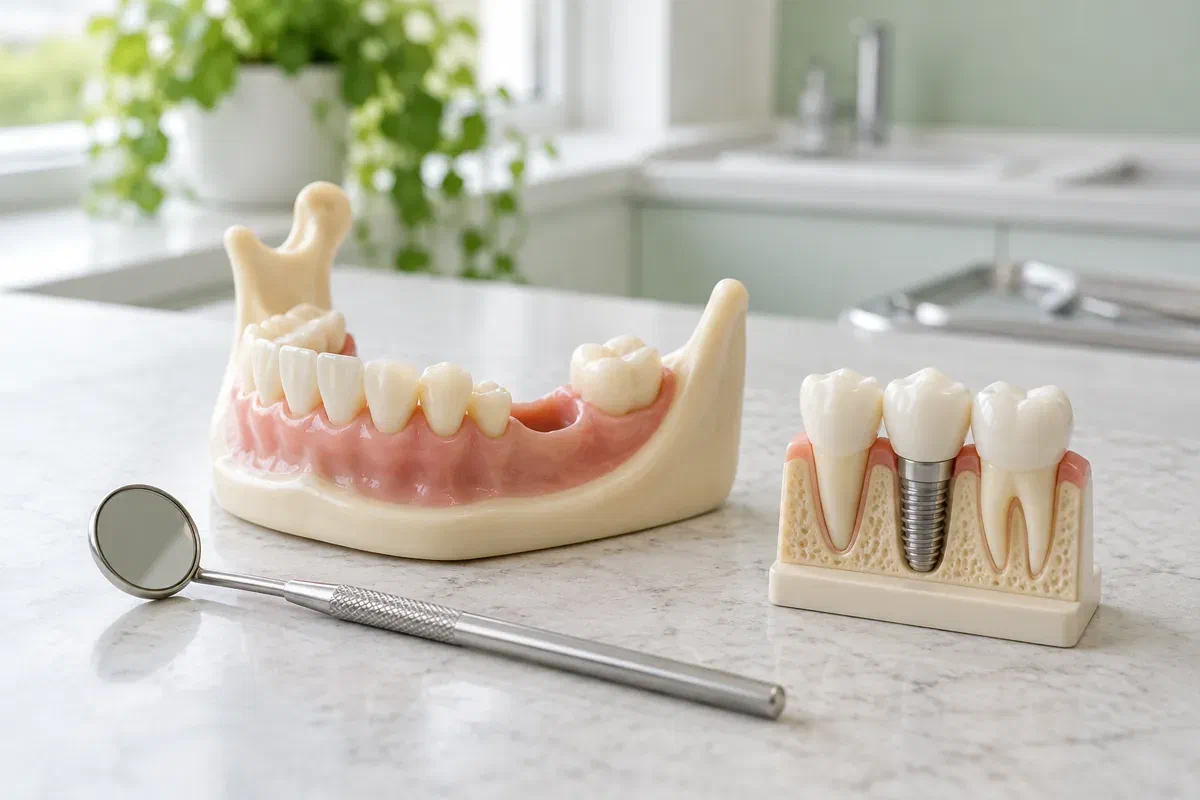
A suitable replacement needs good support, a cleaning routine you can sustain, and stages that fit both your health and your schedule. The empty space is only the starting point.
Is the tooth already gone, or has someone suggested taking it out? If it is still there, its condition and any reasonable way of keeping it should be considered before replacement becomes the plan.
Prescriptions, supplements and past major treatment all count. With an accurate list, the clinician can think through healing and planning, and judge whether information from your doctor or another provider would help.
Be realistic about how often you can come in and how much time you have for cleaning. Mention whether eating or appearance matters more. A plan that clashes with your routine is hard to sustain.
Keep taking any prescribed medicine as usual. If a medication could affect dental treatment, the prescribing clinician and dental team should decide together on any change.
An assessment pinpoints what needs to be understood before implant care moves forward. It may be gum health, the site and the bone around it, the neighbouring teeth, or a medical issue that affects when things can happen.
Sometimes you will leave with a plan to gather information rather than a treatment recommendation. Ask what any scan, further examination or referral is meant to show, and how it will help settle the decision.
You will learn what looks feasible now and what still needs investigating. That stops a general timeline, or a coworker's implant story, from setting your expectations.
Compare an implant with a fixed bridge, a removable tooth or other approaches using the same measures: groundwork, number of visits, upkeep and limitations.
Assessment, placement, restoration and long-term care can involve different clinicians. Knowing who does what helps you plan referrals, understand fees and reach the right person.
One appointment may not settle every question. We will say what can be assessed today, which records might be needed, and when a more detailed recommendation is likely.
Share how long the gap has been there, any past replacement, and what you would like to be different. We also go over health history, medicines, previous dental care and any practical worries.
The dentist reviews teeth, gums, bite and space. If decay, gum problems or other issues need treatment before implant planning, we explain how that changes the sequence.
Imaging or other records may be suggested to understand the site and nearby structures. Ask what is justified, whether earlier records can be used, and whether another clinician should be involved.
We go through the findings, the remaining unknowns and the options from here. Ask for a clear rundown of each stage, including any temporary tooth, the final restoration, fees and maintenance, before you decide.
An assessment does not lock in surgery. Before you leave, be sure you understand the decisions made so far, what comes next and why, and how any current dental problem will be managed while you think.
Store the outline, estimates and referral details alongside your schedule so you can review them together. If any step is unclear, ask for a plain explanation before agreeing to it.
Gum treatment or care for other teeth may be needed before further implant decisions. Ask how progress will be checked and what must be in place before the site is ready.
New medicines, medical treatment or dental symptoms during planning are worth reporting. They can change the order of care, and an older assessment should not be taken as permanently current.
Bring the everyday questions along with the clinical ones. You do not need any technical background to book.
Visit our Bronte Street practice from Brampton to talk about a missing tooth and the assessment that helps you compare replacements. We will help you understand your starting point, the questions still open and how the stages could fit your schedule.
Medical and medication details are best discussed directly with the clinical team at your visit, not included in a general online message.
