The tooth, and any advice you have had
Let us know whether the tooth is missing or whether another dentist has recommended removing it. If it is still in place, it is worth checking whether it could reasonably be kept before replacement is assumed.


A longer trip is easier to justify when every visit has a clear purpose. If you are coming from Etobicoke, our implant assessment gathers what is needed early, compares replacements honestly and helps you plan fewer, better-organised appointments.
When the drive is part of the decision, preparation matters. An implant assessment works best if the first visit can cover as much ground as possible: the missing or failing tooth, the gums and neighbouring teeth, your health history, and whatever might have to be treated before a replacement is planned.
An implant involves several stages spread over time. Support is placed in the jaw, the site heals, a crown or other restoration is attached, and then it needs cleaning and periodic review. Knowing roughly how many of those stages involve a visit helps you compare it with a bridge or removable option on practical as well as clinical grounds.
Please do not feel you must decide before you arrive. Tell us your goals and your constraints. We will describe what we see, explain what further information could help, and talk through realistic alternatives so you can plan with confidence.
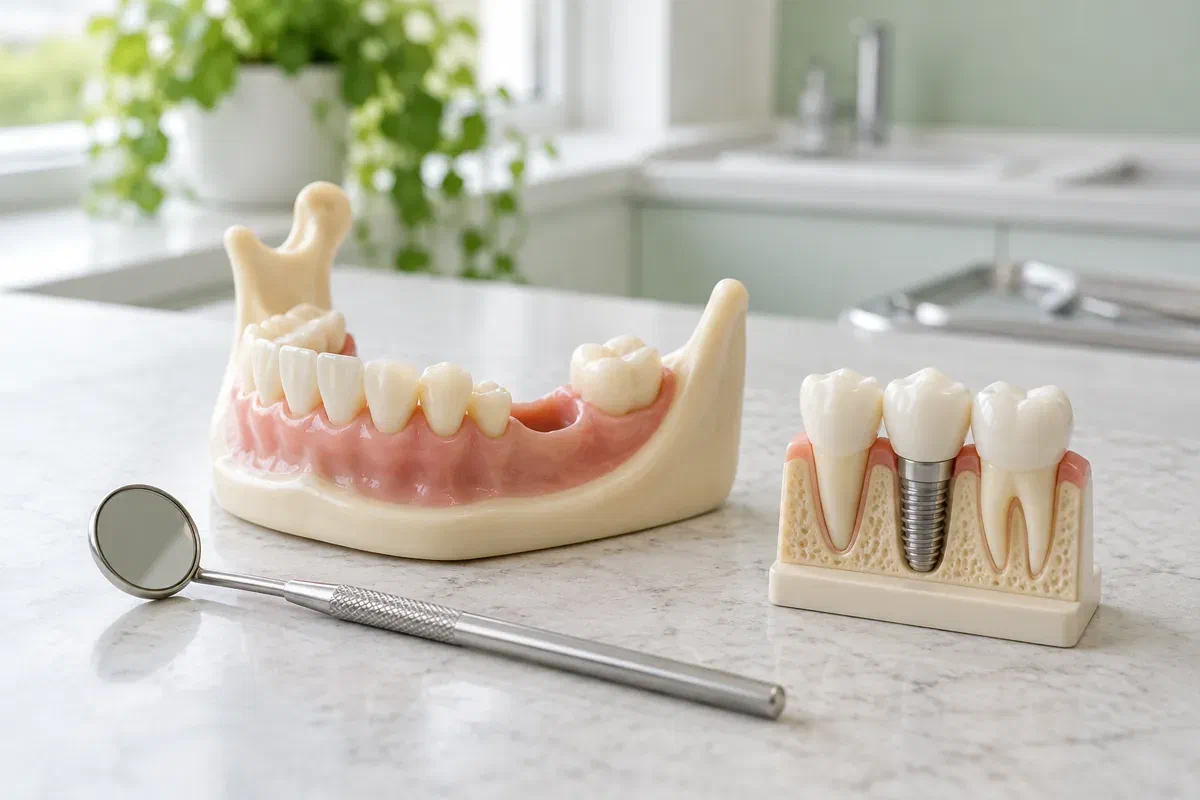
A good assessment looks beyond the empty space. The replacement needs reliable support, a cleaning routine you can keep, and a sequence of visits that suits your health and the distance involved.
Let us know whether the tooth is missing or whether another dentist has recommended removing it. If it is still in place, it is worth checking whether it could reasonably be kept before replacement is assumed.
Write down every prescription and supplement and any major past treatment before you set off. Complete details help the clinician consider healing, plan the order of care and decide whether to contact another health professional.
Think about your cleaning habits, how often you can realistically make the trip, and whether chewing or appearance matters more. A plan should be practical to look after, not just possible to carry out.
Continue taking prescribed medication normally. Please do not stop or alter anything because of an upcoming consultation; that decision belongs with the clinicians managing your care.
The assessment identifies what still has to be understood before implant care continues, such as the gums, the site, the adjacent teeth, or a medical concern that affects timing. Spotting those early helps avoid unnecessary visits later.
The next step may be more information rather than a recommendation. Ask what a scan, additional examination or referral is intended to answer, and whether it can be arranged in a way that limits extra travel.
You will hear what seems possible and what is still unknown, which keeps a quoted timeline or a friend's treatment from becoming your benchmark.
Compare an implant, a bridge and a removable replacement by groundwork, number of appointments, maintenance and limitations. For a longer trip, the visit count is a fair factor to weigh.
If different clinicians handle assessment, placement, restoration or follow-up, find out early. It helps you plan where each appointment takes place and who to call with questions.
One appointment may not answer everything, but it should leave you knowing what was assessed, which records may be needed, and when a more detailed recommendation is likely.
Tell us how long the tooth has been missing, what has been tried before and what you want to change. We review health history, medications, past dental care and how often you can realistically attend.
The dentist checks teeth, gums, bite and available space. If other problems need attention before implant planning, we explain the order and whether any of that care could be combined into the same visits.
We may suggest imaging or other records to understand the site and the anatomy close to it. Ask which are justified, whether images from your current dentist can be sent over, and whether another clinician should contribute.
We summarise findings, open questions and possible next steps. Ask for a clear description of preparation, surgical and healing stages, any temporary tooth, the final restoration, fees and upkeep before deciding.
Being assessed does not mean surgery is booked. Before heading home, confirm the decisions made, the purpose of the next appointment or record, and what to do about any current dental concern in the meantime.
Keep your outline, estimates and referral details in one folder or one email thread. Review them when you have time, and ask for any term to be explained before you consent to the next stage.
Gum care or treatment of other teeth may come first. Ask how progress will be checked, whether your regular dentist can help with any of it, and what needs confirming before the site is ready.
Tell us about new medicines, medical treatment or dental symptoms during planning. For severe pain, swelling or a dental injury, call us for advice, but seek urgent care nearer home if you cannot reach us promptly.
Ask the questions that help you plan, clinical or practical. You do not need any technical knowledge before booking.
Travel from Etobicoke to our Bronte Street practice for an assessment that makes the most of your time. We will talk through the missing tooth, explain what is known and what still needs answering, and outline how a suitable plan could be organised.
When you get in touch online, a short description of the tooth is enough. Keep medical history and medication details for the conversation with our clinical team in person.
