

Illustrative consultation about suitability for a dental implant
Restorative Dentistry

Dental Implant Assessment in Georgetown

A friend’s quick implant, a relative’s long one: other people’s stories rarely predict your own. Our implant assessment for people from Georgetown looks at your gap, gums and health so the plan is based on you.

Georgetown, and stories you have heard

Your mouth is not your neighbour’s.

Almost everyone knows somebody who has had an implant. One person says it was simple; another needed extra steps and months of healing. Both can be true, because suitability and timing depend on the individual mouth. An assessment looks at yours: the gap or failing tooth, the gums, the teeth on either side and anything that needs care first.

Part of why experiences differ is that an implant is a staged treatment. A support is placed in the jaw, it heals, a crown or other restoration is fitted, and the whole thing then needs cleaning and checking for years. Some people need more preparation than others before the first stage. Understanding where you might fall helps when weighing an implant against a bridge or removable tooth.

Feel free to bring the stories, along with your own questions. You do not need to have decided anything. We will explain what we see, what we cannot yet tell, and how the alternatives compare for you specifically.

Book a personal assessment
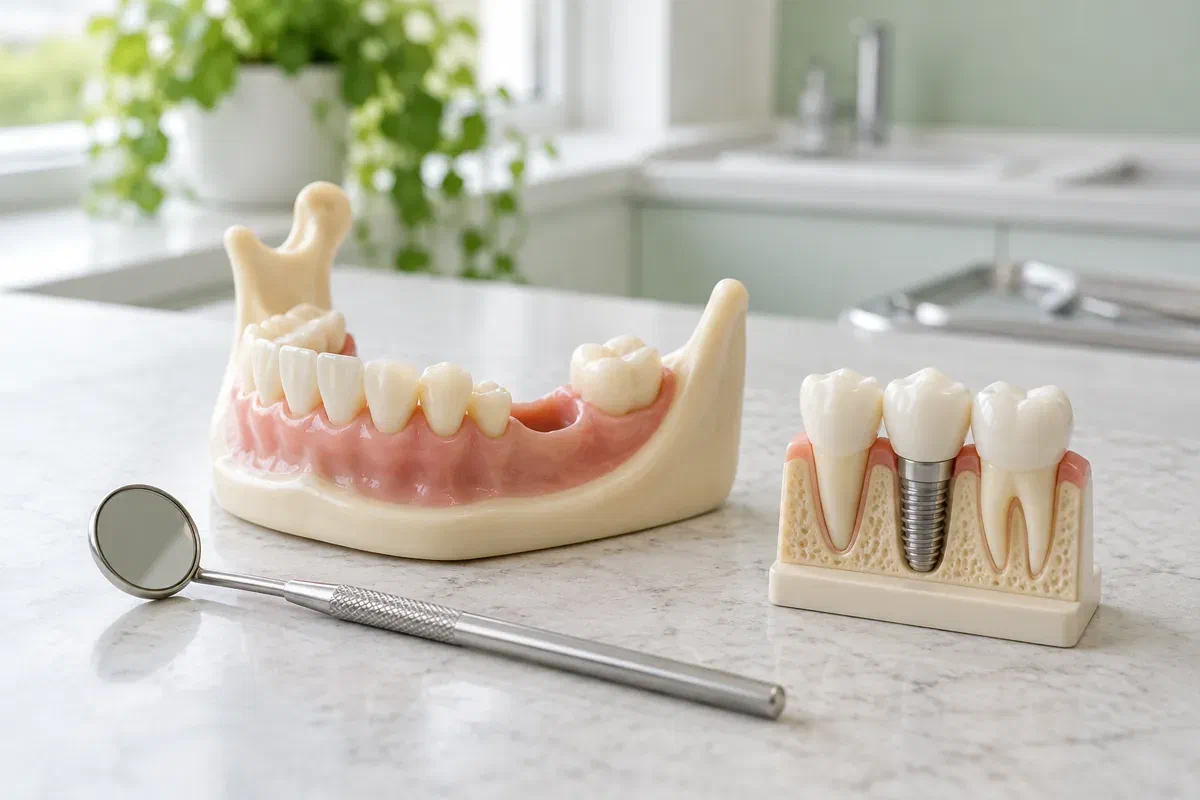
Dental teaching models showing a missing tooth and an implant-supported crown
What makes your case your own

The details that change the plan.

Two gaps can look alike and still call for different approaches. Support, home care and the right order of treatment all depend on your particular mouth and health.

Your tooth’s own history

Explain whether the tooth is already gone, when it was lost, or whether removal has only been suggested. A tooth that is still there deserves its own honest look; saving it may be possible, and that should be ruled in or out before anyone plans its replacement.

Your medicines and medical background

Bring a full list of prescriptions, supplements and significant past treatment. These details often explain why one person’s pathway differs from another’s, and may prompt the clinician to consult your doctor.

Your routine and priorities

Share how you manage cleaning, how often you can attend, and whether eating comfortably or appearance matters more. The right plan for someone else may not suit the way you live.

Keep taking any prescribed medicine exactly as directed. Medication decisions related to dental work should only be made with the clinicians responsible for them.

Why a personal assessment matters

Replace guesswork with findings.

In your case, certain questions have to be settled before implant care goes further. Perhaps it is the health of your gums, how much bone remains where the tooth used to be, the condition of the teeth either side, or a medical matter that affects when each step can safely happen.

Your first visit may end with a plan for more information. If imaging, further examination or a referral is suggested, ask what it should reveal and how the answer will help you choose.

Expectations that fit you

You will learn what appears achievable and what still needs checking, so a friend’s timeline or an online promise does not shape your expectations.

A comparison on your terms

Set an implant beside a bridge or removable replacement, looking at groundwork, upkeep, number of visits and the limits of each for your particular gap.

Responsibilities made clear

Different clinicians may handle different stages. Knowing early who assesses, places, restores and follows up makes referrals and fees easier to understand.

Your assessment visit

Built around what we find.

One visit may not answer everything. By the end you should know which findings are already clear, whether records would help, and roughly when a more complete recommendation could follow.

  1. Start with your story

    When was the tooth lost, and has anything filled the space since? What would you most like to be different? We also cover your health history, your medicines, how past dental visits have gone and any practical worries.

  2. Examine your teeth, gums and bite

    The dentist assesses the site, the available room, gum condition and how your teeth meet. If something else needs treating before implant planning continues, we explain why and where it fits.

  3. Suggest records that answer real questions

    Imaging or other records may be advised to understand the site and the anatomy around it. Ask how each one would help, whether older records exist, and whether another clinician’s view is worthwhile.

  4. Explain the possible next steps

    We share our findings and what remains uncertain. Before deciding, ask for a clear account of preparation, surgery, any temporary tooth, the restoration, fees and how the result would be maintained.

After your appointment

What did we agree, and what comes next?

Being assessed does not commit you to surgery. Before leaving, make sure you can say in your own words what was agreed, what the next step is, and how any present dental concern will be handled for now.

Review the outline at your own pace

Keep the treatment summary, estimates and referral notes together. Go through them at home, and ask for a plainer explanation of anything confusing before agreeing to the next stage.

Complete any preparation

Gum care or treatment of other teeth may be needed first. Ask how progress will be reviewed and what must be confirmed before the site is considered ready.

Keep your information current

A new prescription, a hospital visit or a fresh toothache during planning is worth a phone call. Those changes can alter the sequence, so an assessment should not be treated as permanently up to date.

Options worth comparing

Implant, bridge or removable tooth?

Implants are one category of replacement. Which of the others make sense for you depends on the teeth that border the space, how wide it is, your general health and what you care about most.

If your assessment supports it

Implant-supported crown or appliance

At a site that suits it, an implant may anchor a single crown or a larger restoration. Count the groundwork, surgery, healing time and ongoing care as part of the choice, not just the finished tooth.

Fixed, without implant placement

A bridge on the teeth beside the gap

Healthy teeth on both sides of a modest gap can sometimes carry a bridge. Find out how much of their surface would be reshaped and what flossing under the false tooth would involve.

When different priorities lead

Removable or other approaches

A removable replacement can be worth assessing, especially when several teeth are missing. Where clinically appropriate, the dentist can also explain what leaving the gap and monitoring it would involve.

Georgetown implant questions

Things people wonder about.

There are no silly questions here. You do not need to know any technical details before booking a first conversation.

(905) 876-4488
Why did my friend need bone grafting when I might not?
The amount and shape of bone at a site varies between people and can change after a tooth is lost. Some cases need additional procedures before or during implant placement. Only an assessment of your site, often with imaging, can show what might apply.
Can an implant fail?
Implants are a well-established treatment, but complications can happen, as with any surgical care. Factors such as gum health, smoking and some medical conditions may play a part. Ask the dentist what risks are relevant to you and how they would be monitored.
Does booking an assessment mean I have chosen an implant?
No. The appointment is for understanding your situation and the options. You can ask about alternatives and review the stages before deciding. Find out which assessment fees apply and what further investigations would cost before they are arranged.
Can I be assessed while the tooth is still in my mouth?
Yes. Planning can start before an extraction. The dentist should first consider whether the tooth could reasonably be kept and, if not, how removal affects replacement. Any implant timing depends on what the assessment finds.
Will the implant look like my other teeth?
The aim of the restoration is usually to blend with your natural teeth, but the result depends on the site, gum shape and other factors. Ask what can reasonably be expected in your case and whether a temporary tooth would be used along the way.
How do people from Georgetown usually plan the visits?
Ask at your first appointment which stages are likely and whether any can be grouped. Mentioning your usual availability when booking helps the team suggest a sensible schedule.
Implant assessment for Georgetown

Get answers about your own mouth.

Head to our Bronte Street practice from Georgetown to discuss a missing tooth and the assessment that helps you compare replacements fairly. You will hear how your own mouth looks today, which questions are still open, and what a realistic sequence of care might be.

Your health information deserves privacy. Bring your medication list to the appointment and go over it with the dentist, rather than sending it through our general online form.

Visit Milton Dental Clinic
Unit 1, 342 Bronte St. S, Milton, ON L9T 5B7
Get directions Clinic hours
Monday–Thursday
11am–7pm
Friday–Sunday
By appointment only

Areas we serve

  • Milton
  • Oakville
  • Mississauga
  • Georgetown
  • Halton Hills
  • Acton
  • Campbellville
  • Brampton
  • Burlington
  • Puslinch
  • Rockwood
  • Erin
  • Caledon
  • Etobicoke
  • Old Milton
  • Bronte Meadows
  • Timberlea
  • Dorset Park
  • Dempsey
  • Clarke
  • Beaty
  • Coates
  • Harrison
  • Scott
  • Willmott
  • Ford
  • Bowes
  • Cobden
  • Walker
  • Mountain View
  • Milton Heights
  • Hawthorne Village
  • Valley View
  • Fallingbrook
  • Nassagaweya
  • Trafalgar
  • Esquesing
  • Nelson
  • Brookville
  • Moffat
  • Glen Williams
  • Norval
  • Limehouse
  • Stewarttown
  • Ashgrove
  • Hornby
  • Silver Creek
  • Speyside
  • Scotch Block
  • North Oakville
  • River Oaks
  • Glen Abbey
  • West Oak Trails
  • Palermo
  • Bronte Creek
  • College Park
  • Joshua Creek
  • Uptown Core
  • Preserve
  • Iroquois Ridge
  • Lisgar
  • Meadowvale
  • Meadowvale Village
  • Churchill Meadows
  • Erin Mills
  • Central Erin Mills
  • Streetsville
  • East Credit
  • Creditview
  • Heartland
  • Sheridan
  • Mount Pleasant
  • Credit Valley
  • Huttonville
  • Churchville
  • Springbrook
  • Northwest Brampton
  • Bram West
  • Fletcher's Meadow
  • Fletcher's Creek South
  • Alton Village
  • Orchard
  • Millcroft
  • Headon Forest
  • Tansley
  • Brant Hills
  • Tyandaga
  • Kilbride
  • Lowville
  • Aberfoyle
  • Morriston
  • Arkell
  • Hillsburgh
  • Freelton
  • Carlisle
  • Waterdown
  • Flamborough
  • Mountsberg

How can we help?

Milton Dental Clinic

Have a question about your smile? Choose the option that works best for you.

For urgent dental concerns, please call.
Messages are reviewed during clinic hours.