Missing already, or possibly coming out
Say whether the tooth has gone or whether an extraction has been proposed. Where a natural tooth remains, the option of keeping it deserves a proper look before a replacement is treated as inevitable.


Before you weigh an implant, it helps to know every stage, who carries it out and what each part involves. From Mississauga, our implant assessment maps the whole pathway alongside the other ways a missing tooth can be replaced.
Most questions about implants come down to two things: what exactly will happen, and who will do it. An assessment is where those questions get specific to you. It reviews the space or failing tooth, the gums and teeth nearby, and any work that would need to come before a replacement could be considered.
Implant treatment is a chain of linked steps rather than one appointment. A support is placed in the jaw, the area is given time to heal, a crown or similar restoration is attached, and then the result is cleaned and checked for years. Each link affects how an implant compares with a bridge or a removable tooth.
Coming in does not mean you have agreed to anything. Share what you would like to fix and what you are unsure about. We will set out what we can see, what further checks might help, and which alternatives are reasonable, so you can compare without pressure.
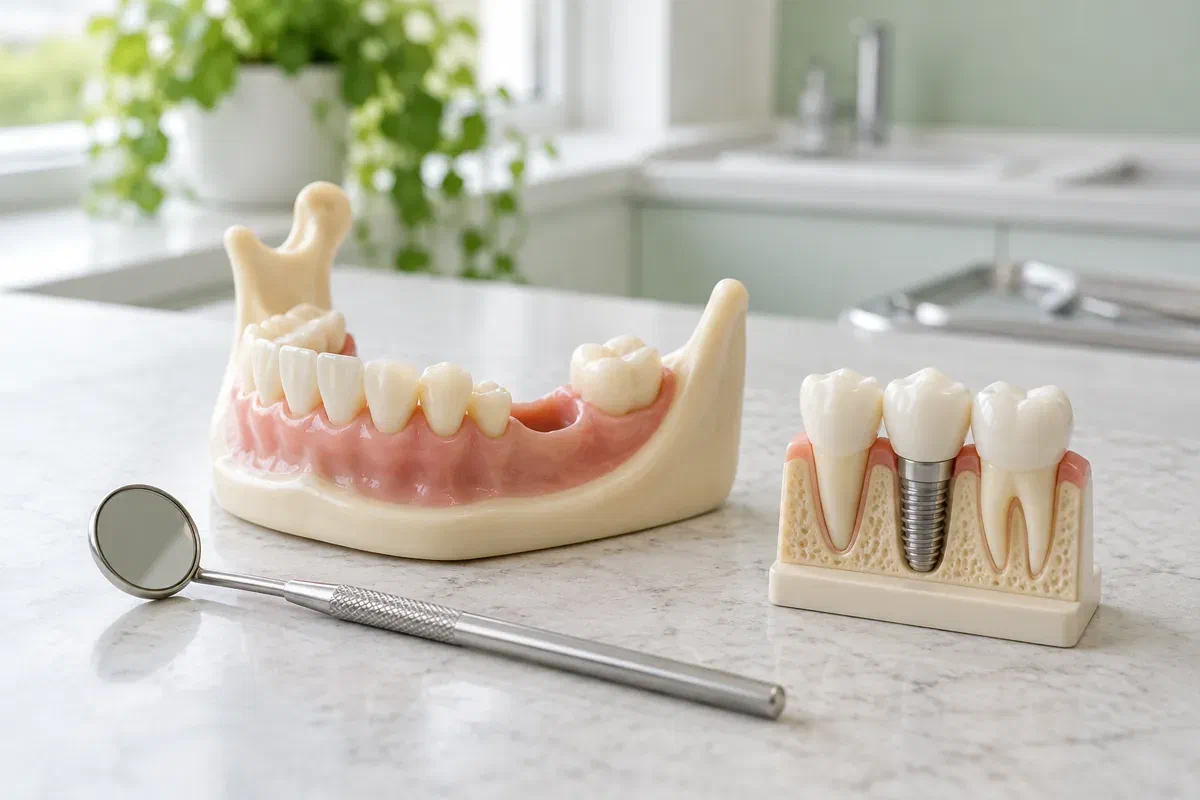
There is more to suitability than an empty space. Whatever replaces the tooth needs dependable support, a cleaning routine within reach, and an order of treatment that matches your health and commitments.
Say whether the tooth has gone or whether an extraction has been proposed. Where a natural tooth remains, the option of keeping it deserves a proper look before a replacement is treated as inevitable.
List every medicine and supplement, along with any important past treatment. Accurate information helps the clinician weigh healing and planning factors, and shows when advice from your doctor or another provider is needed.
Think about how many appointments you can manage, how confident you are cleaning around dental work, and whether function or looks matters most. Those answers help decide whether a plan is workable, not just possible.
Please do not adjust prescribed medication because a consultation is coming up. Any change linked to dental care is a decision for the clinicians who manage that medicine.
The assessment shows what has to be clarified before implant treatment is considered further. Common examples are gum health, the condition of the proposed site, the neighbouring teeth, and medical factors that affect timing.
Expect that further information may be the next step. If a scan, extra examination or referral is suggested, ask what it should clarify and how the result will feed into the eventual decision.
You will hear what seems achievable and what is still unconfirmed. That protects you from treating a marketed timeline, or a relative's experience, as a forecast for your own treatment.
Set an implant beside a bridge, a removable appliance or another approach. Include the groundwork, aftercare, likely number of visits and the limits of each when you weigh them.
Assessment, placement, the restoration and long-term follow-up may sit with different clinicians. Clarifying that at the outset makes it easier to understand referrals, estimates and whom to contact.
A first appointment rarely answers everything. You should leave knowing what was assessed, what records may still be needed, and when a firmer recommendation could reasonably be made.
We ask how long the gap has existed, what replacement you may have had before, and what you hope to change. Health history, medicines, dental experiences and practical concerns are all part of the conversation.
The dentist looks at the teeth, gums, bite and available room. Any decay or gum problem that should be treated before implant planning is explained, along with how it affects the order of care.
Imaging or other records may help in understanding the site and nearby anatomy. You can ask why each one is suggested, whether existing records will do, and whether input from another clinician would add value.
We summarise what we found, what remains uncertain and the options from here. Before committing, ask for a step-by-step account that covers groundwork, the surgical stage, interim teeth, the final crown, costs and care.
Nothing surgical is booked just because you were assessed. Leave with a clear sense of the decisions made, the next appointment or record request, and how any present dental concern will be handled meanwhile.
Keep estimates, the written plan and referral information together. Read them in a quiet moment and ask for any unfamiliar term to be explained plainly before you agree to the next stage.
Gum care or treatment of other teeth may be needed before implant decisions continue. Ask how your progress will be measured and what has to be confirmed before the site is ready.
If you start a new medicine, have medical treatment, or notice dental symptoms during planning, tell the clinic. Changes can alter the sequence, and an assessment from months ago may need to be refreshed.
Ask whatever helps you understand the plan. You do not need to know the terminology before your first appointment.
Make the trip from Mississauga to our Bronte Street practice to talk about a missing tooth and the assessment that helps you compare replacements fairly. We will explain where you are starting, what is still unanswered and the practical stages of a suitable plan.
For your privacy, please discuss medical and medication information with the clinical team in person rather than sending it through a general online enquiry.
