

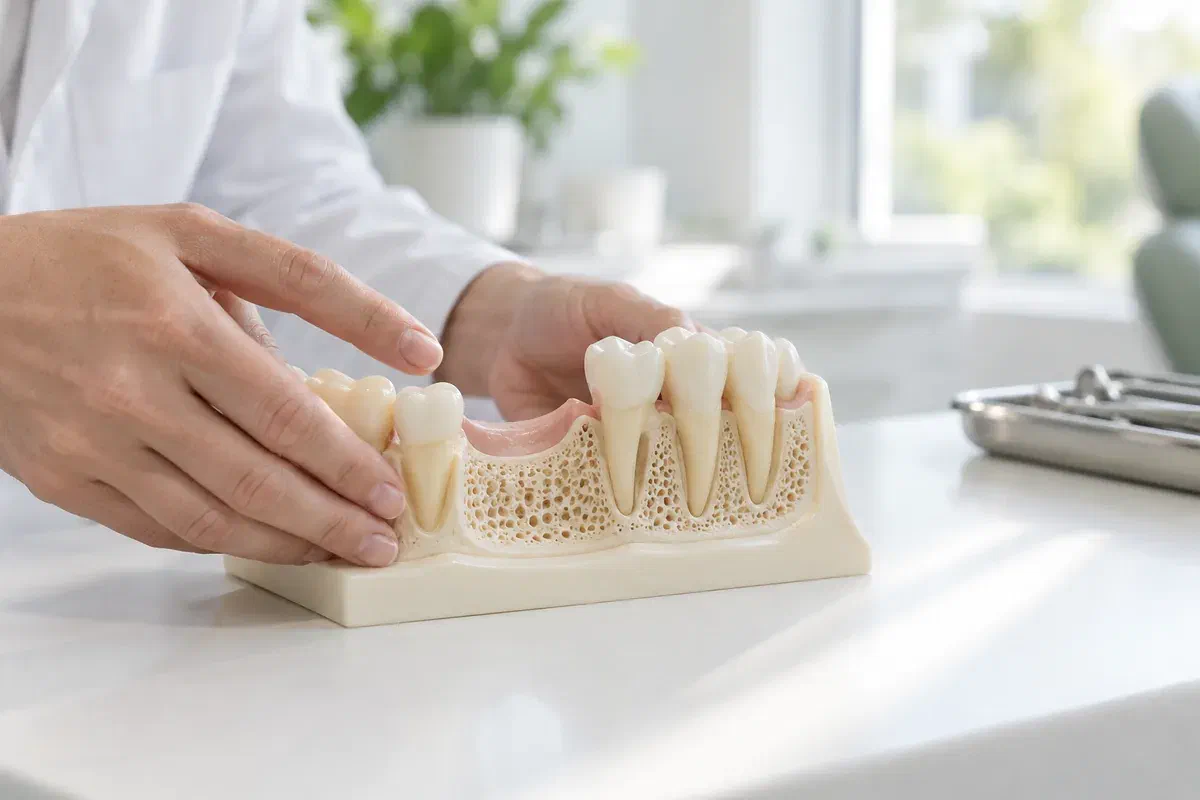
Illustrative consultation using a jaw model to discuss implant bone support
Restorative Dentistry

Dental Implant Bone Grafting

Understand why bone grafting may be discussed before or during implant care. Explore dental implant bone grafting in Milton with a conversation about the proposed site, materials, healing stages, and alternatives.

A closer look at implant bone grafting

Understand the foundation before planning the replacement.

Bone grafting may be considered when an implant plan needs additional bone at the proposed site. The aim is to support a suitable position for the implant and its eventual restoration. Whether it is needed, and how it would be carried out, depends on the site and the overall treatment plan.

The term covers different procedures and materials. A small area addressed during placement is not the same as a more extensive procedure followed by a separate healing period. You should understand which approach is being recommended and how it affects the number of appointments, recovery, and timing.

At Milton Dental Clinic, you can discuss the assessment behind a grafting recommendation and the questions to resolve before proceeding. The plan should explain the intended benefit, the alternatives, who will perform the procedure, and how the result will be reviewed before the next stage of implant care.

Discuss grafting within an implant plan
Educational jawbone model showing the contour beneath a missing tooth
Why grafting may enter the discussion

The available bone needs to suit the proposed treatment.

The visible space between teeth does not show all the information needed for implant planning. The clinician assesses the site and considers how the future restoration would be supported and maintained.

A site that has changed since tooth loss

The contour beneath a gap may differ from what is needed for the proposed implant position. Tell the team when the tooth was lost and what treatment occurred there, while recognizing that current assessment is needed to understand the site.

A position limited by local anatomy

The shape of the available bone and nearby structures can influence the options. Ask how the records inform the recommendation and whether additional assessment or a specialist opinion is needed before choosing a grafting approach.

A replacement plan with several stages

If grafting is proposed, discuss how it fits with extraction, implant placement, and the final tooth. Knowing which steps depend on healing helps you understand why the treatment cannot always be assigned a single fixed completion date.

A bone graft is not required for every implant, and completing a graft does not guarantee that an implant can subsequently be placed. The site needs reassessment as the plan progresses.

The intended role of a graft

Create support for a carefully chosen next step.

In a suitable case, grafting aims to improve the bone available for the planned implant. The clinician should connect that purpose to a specific finding at your site rather than describe grafting as a routine addition that everyone needs.

The benefit must be weighed against an additional procedure, healing time, cost, and the possibility of complications or an incomplete result. Ask what would happen if the graft does not provide the support anticipated and whether another approach could meet your priorities.

Patient information: Cambridge University Hospitals — bone grafting for dental implants

A site considered in relation to the final tooth

The proposed implant position should make sense for the replacement above it. Ask how the grafting plan supports the intended restoration and what limitations may remain even after healing.

An opportunity to plan in stages

A staged approach may allow healing and reassessment before implant placement. If this is recommended, clarify what the team will evaluate at the review and what determines readiness for the next procedure.

A fuller comparison of treatment choices

Knowing the preparation required helps you compare implant care with alternatives. Include the burden of the grafting procedure and its follow-up when deciding whether the complete plan suits your circumstances.

Understanding the grafting pathway

Discuss the site, the material, and the review before surgery.

The procedure and recovery instructions depend on the type and extent of grafting. The treating clinician should explain the proposed approach in terms you can understand, including any referral and the arrangements for follow-up.

  1. Assess the site and relevant health factors

    Review the mouth, medical history, medicines, and appropriate imaging. The clinician explains the finding that prompts consideration of grafting and whether other oral health issues need attention before the procedure is planned.

  2. Agree on the approach and material

    Discuss the source of the graft material, the extent of treatment, and any additional site involved. Ask about benefits, risks, alternatives, comfort measures, and the possibility that the proposed sequence may change with later findings.

  3. Complete the planned procedure

    The treating clinician carries out the agreed grafting approach and provides specific postoperative instructions. Before leaving, confirm what to expect, which medicines or care steps apply, and whom to contact if recovery raises a concern.

  4. Review healing before the next decision

    Follow-up assesses how the site is progressing and what further information is needed. Implant placement or restoration proceeds according to clinical findings rather than simply because a certain number of weeks has passed.

Supporting the healing period

Follow the instructions for the procedure you actually had.

General descriptions cannot replace the treating clinician’s directions. Grafting procedures vary, so keep the written instructions and contact details available and clarify anything that is difficult to follow at home.

Protect the surgical area as directed

Ask about eating, cleaning, activity, and any temporary tooth or appliance that contacts the area. Do not pull at stitches or explore the site with objects. Contact the treating team if something appears different from what was explained.

Use medicines according to the agreed plan

Follow the prescribed directions and raise questions about interactions or side effects with the relevant clinician or pharmacist. Do not add, stop, or change medication based on a general description of bone-grafting recovery.

Attend healing reviews and report concerns

Keep the scheduled appointments even if the site feels comfortable. Call about unexpected or worsening symptoms according to your postoperative instructions, rather than waiting until the next implant-planning visit.

Comparing preparation and alternatives

Choose the complete pathway, including the extra procedure.

A recommendation for grafting should include an explanation of other clinically reasonable approaches. The right comparison takes account of the final replacement, treatment burden, and uncertainty of each option.

When the site supports a combined approach

Grafting alongside implant placement

Selected situations may allow grafting at the placement appointment. Ask why this is considered suitable, what would change the plan during treatment, and how the site will be protected and reviewed afterwards.

When healing is needed first

Grafting followed by a separate placement stage

A separate grafting procedure may be recommended before implant placement. The clinician should explain the intended healing period, how progress is assessed, and what happens if further preparation is required.

When grafting is not the preferred choice

A different replacement plan

A bridge, removable appliance, or another appropriate approach may avoid the proposed grafting pathway. Discuss what those alternatives would involve and whether they can reasonably address the concerns that brought you to the consultation.

Questions about grafting for implants

Ask about the material and the milestones.

The details of grafting can affect both personal preferences and practical arrangements. Make space for these questions before agreeing to the procedure and its place in the larger treatment plan.

(905) 876-4488
Where can dental bone graft material come from?
Materials may come from your own bone, processed donor sources, animal-derived sources, or synthetic products. The options depend on the procedure and clinical judgement. Ask which material is proposed, why, and whether any personal or religious preferences can be accommodated within suitable alternatives.
Does needing a bone graft mean I am definitely suitable for an implant afterwards?
No. Grafting is intended to improve a site, but healing and the final amount of suitable support must be assessed. Ask what the clinician expects to achieve, how the result will be reviewed, and which alternatives would be discussed if the outcome is insufficient.
Can a graft and an implant always be placed during one appointment?
No. Some situations allow a combined approach, while others need a separate grafting stage and healing period. The site, extent of the deficiency, and treatment plan influence the decision. Convenience alone should not determine whether the procedures are combined.
Will my existing denture or temporary tooth need adjustment after grafting?
It may. An appliance that contacts the treated area needs to be considered in the surgical plan. Bring it to the consultation and ask how it should be used during healing. Do not assume it can be worn immediately in the same way as before.
What happens if the graft does not heal as expected?
The treating clinician assesses the cause and explains the available next steps. Depending on the findings, this may involve additional care, a revised timeline, or a different replacement approach. Ask about this possibility before treatment so the limits of the original plan are clear.
How should I compare a grafting estimate with another implant treatment estimate?
Check whether the estimates include the same procedures and stages. Ask about graft material, any additional surgical site, imaging, reviews, temporary teeth, implant placement, and the final restoration. A lower initial figure may describe a different scope rather than an equivalent complete plan.
Dental implant bone grafting in Milton

Let’s understand the preparation your plan may need.

Arrange a consultation at our Bronte Street clinic to discuss the proposed implant site and any recommendation for additional bone support. We can help clarify the purpose, sequence, and questions to resolve before you choose a treatment pathway.

If you have already had grafting and are concerned about recovery, contact the clinician responsible for the procedure using the postoperative arrangements provided.

Visit Milton Dental Clinic
Unit 1, 342 Bronte St. S, Milton, ON L9T 5B7
Get directions Clinic hours
Monday–Thursday
11am–7pm
Friday–Sunday
By appointment only

How can we help?

Milton Dental Clinic

Have a question about your smile? Choose the option that works best for you.

For urgent dental concerns, please call.
Messages are reviewed during clinic hours.