Thinning or reshaping after tooth loss
The bone under a missing tooth may lose some of its original form. Share the history of the tooth and any earlier treatment, knowing that an up-to-date examination is what defines the site today.


Want to know what a bone graft is actually made of before you agree to one? Our team welcomes visitors from Brampton to talk through graft materials, personal preferences, the stages of healing and other ways to replace a tooth.
For many people, the first reaction to hearing “bone graft” is a practical one: graft of what, and from where? It is a fair question. Grafting places material at a site where an implant would otherwise lack enough bone, and it is only recommended when the planned position and overall treatment call for it.
Both the material and the scale of the procedure vary. Some grafts are small and done during implant placement; others are separate procedures that need time to heal before the implant is planned. Your values, your health and the site itself all belong in that discussion, alongside the number of visits involved.
Families travelling from Brampton can sit down with our Bronte Street team to go over the assessment behind a recommendation. Expect to hear the intended benefit, the alternatives, who would perform the graft and how healing would be checked before implant care continues.
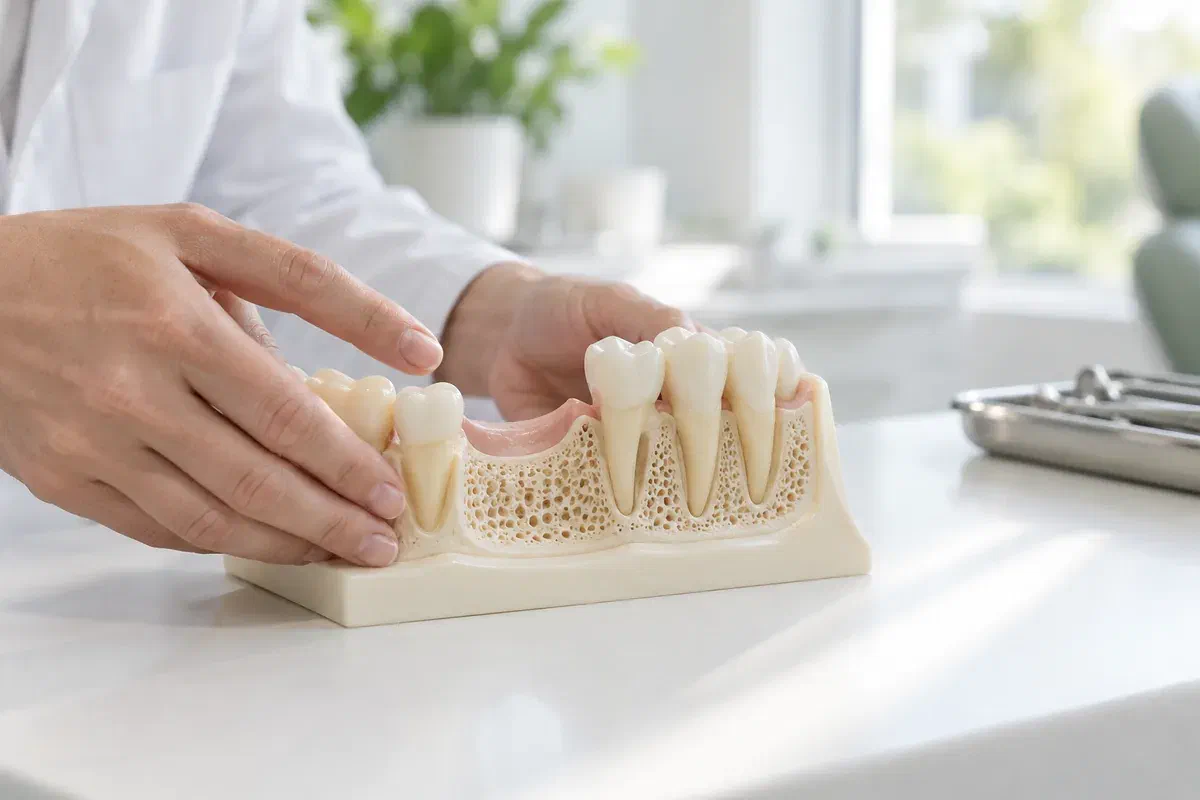
The gap you can see does not reveal the bone that an implant would rely on. Planning involves looking at that bone directly and considering how the future tooth will be held and kept healthy.
The bone under a missing tooth may lose some of its original form. Share the history of the tooth and any earlier treatment, knowing that an up-to-date examination is what defines the site today.
The shape of the bone and nearby structures can affect where an implant can safely go. Ask how imaging supports the recommendation and whether a specialist opinion or further records would help.
If a graft is proposed, ask how it connects to extraction, implant placement and the final crown. Some steps wait on healing, so the end point of treatment may not be fixed at the start.
Grafting is not part of every implant plan. A graft also cannot guarantee that an implant will be possible later, which is why each stage is reassessed.
When it suits the site, a graft aims to thicken or rebuild bone where the implant is meant to sit. The recommendation should rest on a clear finding in your own mouth, not on a general idea that implants always need extra bone, and you are entitled to have that finding explained.
That aim has to be balanced against an additional procedure, healing time, cost and the risk of complications or a partial result. Ask what would happen if the graft provides less support than hoped, and whether an alternative could meet your needs just as well.
Patient information: Cambridge University Hospitals — bone grafting for dental implants
The implant position should make sense for the tooth it will carry. Ask how grafting helps that restoration and what limitations could remain even once the site has healed.
A staged plan allows the graft to settle and be checked before placement. Ask what the review will assess and what would show the site is ready.
Knowing what preparation is involved, including the material, helps you compare implants with other replacements. Weigh the graft and its follow-up when deciding whether the plan suits you.
The steps and recovery vary with the type and size of graft. Whoever carries out the procedure should explain the plan clearly, including any referral and the follow-up arrangements.
The team considers your oral health, medical history, medicines and suitable imaging. They explain the finding that raises grafting and whether anything else, such as decay or gum problems, needs care first.
Discuss the possible sources of graft material, how much is needed and whether a second site is involved. Raise any personal, cultural or religious preferences, and talk through risks, benefits, alternatives and comfort measures.
The graft is completed as planned and aftercare instructions for it are given. Before you leave, check what to expect, which medicines or care steps apply and whom to contact with concerns.
At follow-up, the clinician checks progress and decides what further information is needed. The implant or restoration proceeds based on findings rather than the passing of a set number of weeks.
Grafts differ, and general guidance cannot take the place of your clinician’s directions. Keep the written instructions and contact details nearby, and ask about anything that seems unclear.
Ask about meals, cleaning, activity and any temporary tooth or appliance that rests on the site. Do not pull at stitches or touch the area with fingers or objects. Call if it looks different from what you expected.
Follow prescription directions, and check interactions or side effects with the clinician or a pharmacist. Do not start or stop medicines based on general reading about bone-graft recovery.
Attend scheduled reviews even when the area feels fine. If symptoms are unexpected or getting worse, call according to your postoperative instructions rather than waiting for the next implant visit.
Some questions touch on personal beliefs; others are about health and logistics. Raise them early so the plan reflects what matters to you.
Set up a conversation with our Bronte Street team about the proposed implant site and any advice you have received about added bone. We can explain the purpose, the material options, the sequence of visits and what to resolve before you decide.
If you have had a graft elsewhere and are worried about healing, contact the clinician who performed it through the aftercare arrangements you were given.
