Contour lost after removal
With time, the bone where a tooth used to be can lose some of its shape. Let us know when the tooth was taken out and what treatment followed, though the present-day examination is what settles the question.


The review after a bone graft decides what happens next, yet few people know what it checks. From Puslinch, talk with us about the proposed graft, the material, the meaning of “ready” and the options if plans change.
People tend to picture a bone graft as the hard part, and the appointment afterwards as a formality. In fact, that review is where the next decision is made. A graft is proposed to add bone where the planned implant would otherwise be short of support, and it only belongs in the plan when your site requires it.
What the review looks for depends on what was done. A small graft placed with the implant is checked differently from a standalone procedure that must heal before placement is even scheduled. Asking about the review at the start tells you how many visits to expect and what could alter the timeline.
For rural households in Puslinch planning trips carefully, our Bronte Street team can explain the finding behind a grafting recommendation and what each checkpoint involves: the expected benefit, the alternatives, who would perform the graft and how its healing will be judged.
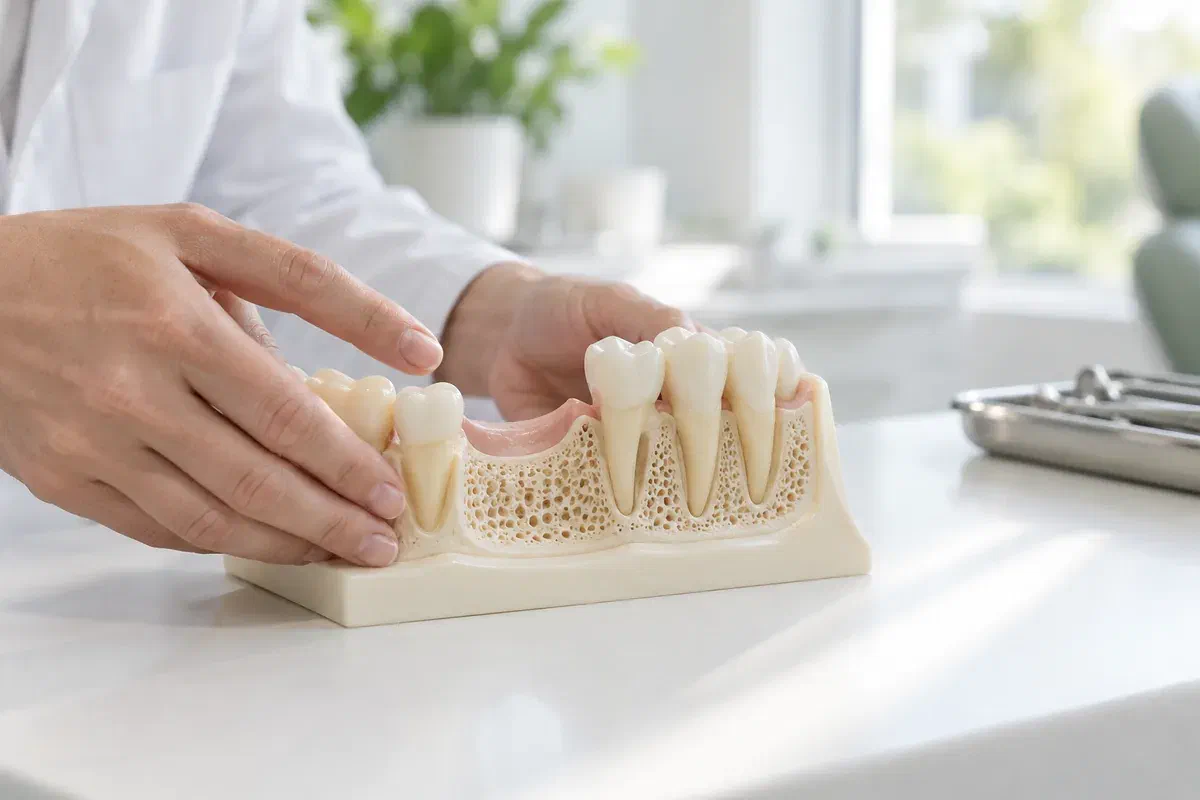
A missing tooth leaves a space you can see and a foundation you cannot. Implant planning focuses on that foundation, and on how the eventual tooth will be anchored and kept clean.
With time, the bone where a tooth used to be can lose some of its shape. Let us know when the tooth was taken out and what treatment followed, though the present-day examination is what settles the question.
Available bone and surrounding anatomy can restrict where an implant fits. Ask how imaging shaped the advice and whether additional records or a specialist assessment would help before choosing a method.
If grafting is suggested, ask where it falls among extraction, implant and crown, and where reviews sit between them. Each checkpoint depends on healing, which is why the final date is hard to pin down.
Many implants are placed with no graft at all. A graft, once done, still cannot guarantee the implant stage; the review decides whether the site is suitable.
When the case suits it, grafting is intended to increase the bone at the planned implant site. The clinician should name the specific finding that makes it relevant to you, instead of treating it as a default part of implant care.
Weigh that against the added procedure, healing time and cost, and the possibility of complications or a result that does not provide all the support hoped for. Ask what the review would need to show, and what the alternative would be if it does not show it.
Patient information: Cambridge University Hospitals — bone grafting for dental implants
The implant’s location should make sense for the replacement on top. Ask how the graft contributes to that and what limitations might persist after healing.
Staging creates a pause in which the graft heals and is assessed. Ask what that assessment covers, whether imaging is repeated and what result means you can go ahead.
Understanding each stage, including reviews, helps you weigh implant care against other replacements. Include the graft and its follow-up when deciding whether the plan works for you.
Procedure and recovery depend on how much grafting is planned and of what kind. Expect a clear explanation from the treating clinician, along with word on any referral and the timing of your next visit.
The team reviews your mouth, health history, medicines and appropriate imaging. They explain what raises the grafting question and whether other dental issues need treatment before planning continues.
Discuss where the material comes from, the extent of the graft and any second site. Talk through risks, benefits, alternatives and comfort measures, and agree that later findings may change the order of events.
The agreed graft is completed and aftercare instructions written for it are provided. Before leaving, make sure you know what normal recovery looks like, which medicines apply and who to phone.
The clinician examines the healed site, may take further imaging and decides what else is needed. Implant placement goes ahead when the findings support it, not merely when a set period has elapsed.
Because each graft is different, a general guide cannot replace the directions you are given. Keep those directions and the clinic’s contact details easy to find, and ask about anything that is hard to manage at home.
Ask what to eat, how to clean near the area, how active to be and whether a temporary tooth or partial can rest on it. Avoid tugging stitches or poking the site. Call if anything differs from the explanation you received.
Follow the prescription and bring questions about side effects or interactions to the clinician or a pharmacist. Do not change what you take based on general descriptions of graft recovery.
Keep the review appointment, but call earlier if symptoms are unexpected or getting worse. Use the contact route in your postoperative instructions instead of saving concerns for the next implant visit.
That post-graft appointment raises questions of its own, and most of them are easier to ask before surgery than after it. Bring these to your consultation so the plan, and its checkpoints, are clear from the start.
Arrange time with our Bronte Street team to look at the proposed implant site and any recommendation for extra bone. We can explain the purpose, what each review involves and the questions to resolve before you choose a pathway.
Healing from a graft performed elsewhere and worried about it? Contact the clinician who did the procedure using the postoperative arrangements they set out for you.
