

Illustrative older adult discussing implant options with a dentist
Restorative Dentistry

Dental Implant Consultations for Seniors in Campbellville

Living on a rural property means recovery has to be thought through. Seniors from Campbellville can discuss implants with healing at home, rides, help nearby and long-term cleaning all part of the conversation from the start.

Implant planning for country living

Think about the evening after, not just the appointment.

Out in the Nassagaweya countryside, neighbours may be a field away and errands get bundled into one trip to town. So when implants come up, a practical question follows quickly: if I had surgery, who would drive me home, and who would be around that night? Answering it early makes the rest of the planning easier.

Beneath the logistics is the clinical question every consultation has to settle. Would this treatment be appropriate and worthwhile for you? Age does not decide that. Your health, gums, jawbone and remaining teeth, the amount of treatment you would accept, and the cleaning involved are what count.

Campbellville sits within Milton, so the first visit can often be paired with other errands in town. Bring a spouse or friend if you like. The dentist will talk through what implants and alternatives might offer, their limits, the recovery each involves, and the care afterward, leaving the choice with you.

Talk through recovery and options
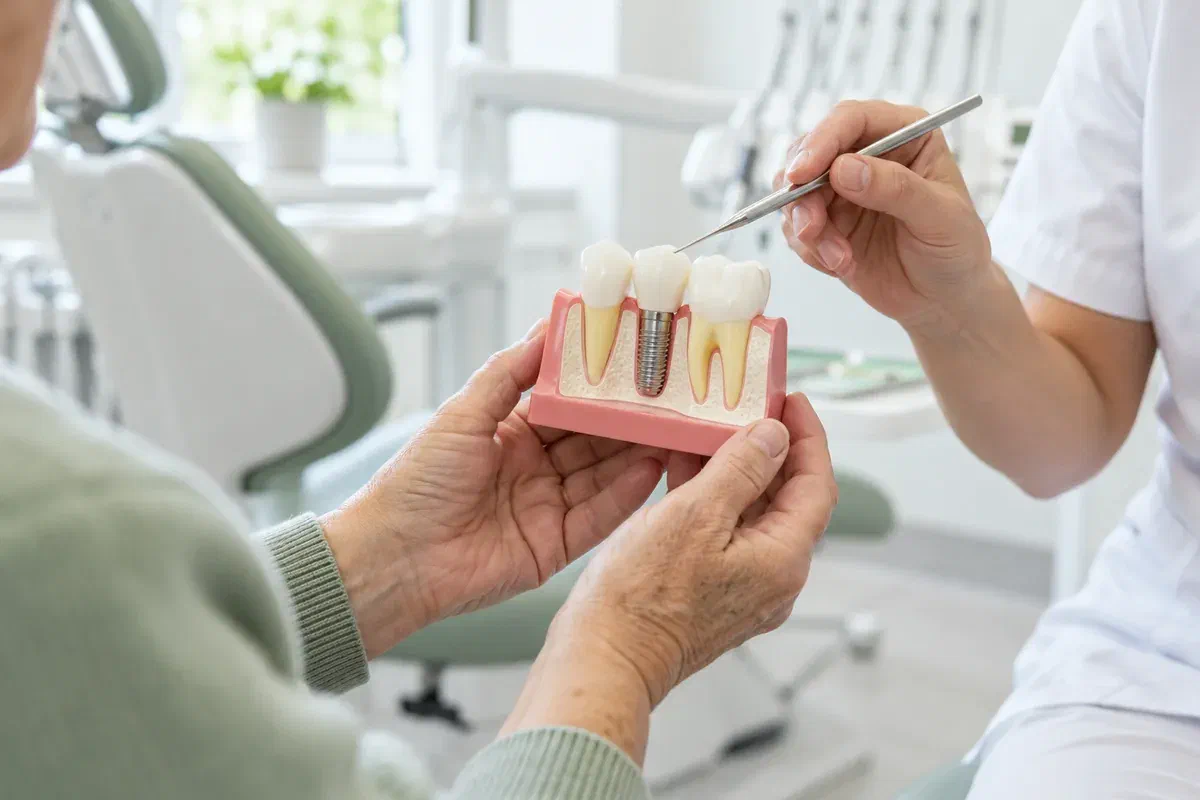
Older patient's hands holding an implant teaching model during a consultation
Practical questions for Campbellville

Health, the denture, and help close by

Chewing better is the aim, but any replacement also involves visits, a healing period, a daily routine and ongoing checkups. For a rural household, how those pieces fit together is as important as the dental findings.

Medical background and medicines

Write out every medicine, supplement and recent treatment before the visit. The dentist uses it to think about healing and planning, and to see whether a conversation with your physician would be useful before anything is proposed.

Your denture's real shortcomings

Be specific about what goes wrong, whether it lifts, rubs, looks off or rules out certain foods. Bring it in. An improved fit could be the simplest path and may avoid the recovery planning that surgery needs.

Rides, recovery and routine care

Mention who can drive you, whether someone could stay nearby after a procedure, and anything about grip, vision or mobility. These shape the design that suits you and how maintenance visits are scheduled.

Keep every prescribed medicine going as normal while you explore implants. Changes for dental treatment are only made through an individual plan with the clinicians who look after your health.

What careful planning gives you

Weigh the benefit, the recovery and the upkeep together.

Name one goal to measure everything against, such as a lower denture that slides when you eat or a missing tooth that makes chewing lopsided. With that in mind, you can ask whether the expected improvement is worth the surgery, healing time and trips the treatment would involve.

Implants are not automatically right because they can be offered, and they are not off the table because of your age. A fair conversation considers your wishes, your health, the examination, and how you would keep up maintenance if getting around became harder.

Patient information: ITI — advanced age and medical conditions in implant care

Your wishes set the comparison

Share what you most want to change and what you would prefer not to face. The dentist can line up realistic options against that, instead of treating the biggest plan as the starting point.

Recovery is planned in advance

Ask what the first day or two after each step usually involves, whether you would need someone with you, and what to do if a concern arose after hours. Knowing this makes it easier to arrange help.

Ongoing care is part of the choice

Find out how often a replacement would need checking, what repairs might involve, and how cleaning works at home. A plan that fits rural life over many years is worth more than a quick result.

At the appointment

From first questions to a plan you can arrange

Anything can be repeated, written out, or explained to your companion. This first meeting maps the options and their recovery needs, and nothing is booked unless you decide to go ahead.

  1. Describe what you want to fix

    Explain which teeth are missing, what appliance you use and the daily moments that bother you. Raise any worry about surgery, cost, healing or maintenance early so it shapes the discussion.

  2. Review health and examine

    After hearing about your health and what you take, the dentist examines the gums, any natural teeth and the work already in your mouth. Imaging could be advised to judge how much bone sits where an implant might be placed.

  3. Compare options and recovery demands

    Look at implant and non-implant approaches together, with their stages, effort, recovery and upkeep. Should another clinician need to weigh in, find out what that opinion would settle and where you would need to go for it.

  4. Settle on a next step

    Choose more information, time to think, or further planning. Request a written outline of agreed visits, and ask which existing problems should be treated regardless, so they can be grouped with other appointments.

Once you are back home

Plan the help before you book.

New terms and several routes can be a lot to absorb. Keep the written plan by the phone with the clinic's number, so you and your household can reread it, compare options and call about anything unclear.

Check that it fits your goal

Ask yourself whether the suggested treatment addresses the problem that brought you in. Keep a running list of anything you want to ask about cost, the healing weeks, interim teeth or upkeep.

Arrange rides and company

If a procedure would mean someone driving you or staying nearby afterward, organize that before treatment is scheduled. Family or neighbours can help with logistics while you keep the decision.

Report changes promptly

A new medicine, a medical procedure or more difficulty with daily cleaning may affect the plan. Let the dentist know before treatment and at later visits so advice stays appropriate.

Possible approaches

Compare the recovery as well as the result.

Options differ in steadiness, effort, cleaning and expense, and in how much healing time they need. An assessment decides what is suitable, and more treatment does not always serve your priorities better.

When avoiding surgery appeals

Reline, adjust or remake the denture

Correcting the fit or design of the current appliance may help without a surgical step or recovery period. Ask how much it could improve and which limitations would remain.

When steadier hold is worth the healing

Implant-retained removable denture

When the jaw is suitable, implants may anchor a removable denture so it shifts less. Ask about the surgery and healing, the attachments that need servicing, and taking the denture out each day to clean it.

When your mouth and upkeep can support it

Fixed teeth or a traditional bridge

A fixed crown or bridge on implants may suit an appropriate gap, while a bridge cemented to neighbouring teeth is another route. Compare cleaning, likely repairs and the number of appointments each needs.

Questions about recovery and planning

Practical answers for rural households

Every person's goals and support at home are different. These questions look at recovery and planning as well as the clinical assessment.

(905) 876-4488
Will I need someone to drive me home after implant surgery?
That depends on the procedure and any sedation used. The dentist will tell you in advance. It is wise to plan for a driver on surgical days until you know for certain.
What should I have ready at home before a procedure?
Ask the dentist for written aftercare instructions ahead of time. Many people stock soft foods, any recommended rinses or pain relief, and arrange to have someone nearby, especially for the first evening.
Who do I call if something worries me after hours?
Ask the clinic what to do outside office hours before any procedure. If you have severe swelling, difficulty breathing or swallowing, or bleeding that will not stop, seek emergency care right away.
Is older age a reason to avoid implant surgery?
Age alone is not the determining factor. Health, oral condition, the benefit you hope for and the demands of treatment and upkeep are what matter. Ask how these apply to you.
Do supplements and over-the-counter products count as medicines?
Yes, for planning purposes. List them along with prescriptions and past treatments, especially those affecting bone or blood clotting. Never stop a prescribed medicine without advice from the clinician who prescribed it.
Can my Campbellville visits be grouped with other trips into town?
Let the clinic know your preferred days when booking. Some steps can be scheduled flexibly around other errands or appointments, although healing time between stages should not be shortened.
Implant consultations for seniors from Campbellville

A plan that works from your front door to the dental chair

Visit our Bronte Street practice to discuss tooth replacement with your health, recovery and routine in mind. Bring your current denture, a medication list, and the questions you want answered.

If you need a support person, extra time, or help with mobility or hearing, let the clinic know when booking.

Visit Milton Dental Clinic
Unit 1, 342 Bronte St. S, Milton, ON L9T 5B7
Get directions Clinic hours
Monday–Thursday
11am–7pm
Friday–Sunday
By appointment only

Areas we serve

  • Milton
  • Oakville
  • Mississauga
  • Georgetown
  • Halton Hills
  • Acton
  • Campbellville
  • Brampton
  • Burlington
  • Puslinch
  • Rockwood
  • Erin
  • Caledon
  • Etobicoke
  • Old Milton
  • Bronte Meadows
  • Timberlea
  • Dorset Park
  • Dempsey
  • Clarke
  • Beaty
  • Coates
  • Harrison
  • Scott
  • Willmott
  • Ford
  • Bowes
  • Cobden
  • Walker
  • Mountain View
  • Milton Heights
  • Hawthorne Village
  • Valley View
  • Fallingbrook
  • Nassagaweya
  • Trafalgar
  • Esquesing
  • Nelson
  • Brookville
  • Moffat
  • Glen Williams
  • Norval
  • Limehouse
  • Stewarttown
  • Ashgrove
  • Hornby
  • Silver Creek
  • Speyside
  • Scotch Block
  • North Oakville
  • River Oaks
  • Glen Abbey
  • West Oak Trails
  • Palermo
  • Bronte Creek
  • College Park
  • Joshua Creek
  • Uptown Core
  • Preserve
  • Iroquois Ridge
  • Lisgar
  • Meadowvale
  • Meadowvale Village
  • Churchill Meadows
  • Erin Mills
  • Central Erin Mills
  • Streetsville
  • East Credit
  • Creditview
  • Heartland
  • Sheridan
  • Mount Pleasant
  • Credit Valley
  • Huttonville
  • Churchville
  • Springbrook
  • Northwest Brampton
  • Bram West
  • Fletcher's Meadow
  • Fletcher's Creek South
  • Alton Village
  • Orchard
  • Millcroft
  • Headon Forest
  • Tansley
  • Brant Hills
  • Tyandaga
  • Kilbride
  • Lowville
  • Aberfoyle
  • Morriston
  • Arkell
  • Hillsburgh
  • Freelton
  • Carlisle
  • Waterdown
  • Flamborough
  • Mountsberg

How can we help?

Milton Dental Clinic

Have a question about your smile? Choose the option that works best for you.

For urgent dental concerns, please call.
Messages are reviewed during clinic hours.