Health details that affect planning
Bring a full medication and supplement list and note recent medical treatment. This lets the dentist assess healing and planning factors and decide whether to contact your physician before suggesting an approach.


On a fixed income, a big dental decision deserves a clear breakdown. Older adults from Georgetown can learn what each implant stage involves, how alternatives compare, and which questions to ask about estimates before committing.
Retirement budgets tend to be planned carefully, and implant treatment can be a significant expense spread over several stages. It is reasonable to want to know, before anything starts, what each step involves, what the alternatives would cost by comparison, and what ongoing maintenance might add.
Money is only one piece, of course. The dentist first needs to decide whether implants would be suitable and worthwhile for you, which has little to do with age. Health, gums, bone, remaining teeth, the demands of treatment and your ability to keep a replacement clean all matter.
Coming in from Georgetown for one consultation gives you a full picture to take home and think over. You are welcome to bring a partner or adult child who helps with finances. Expect an honest outline of benefits, drawbacks, simpler options and long-term care, with no pressure to sign anything.
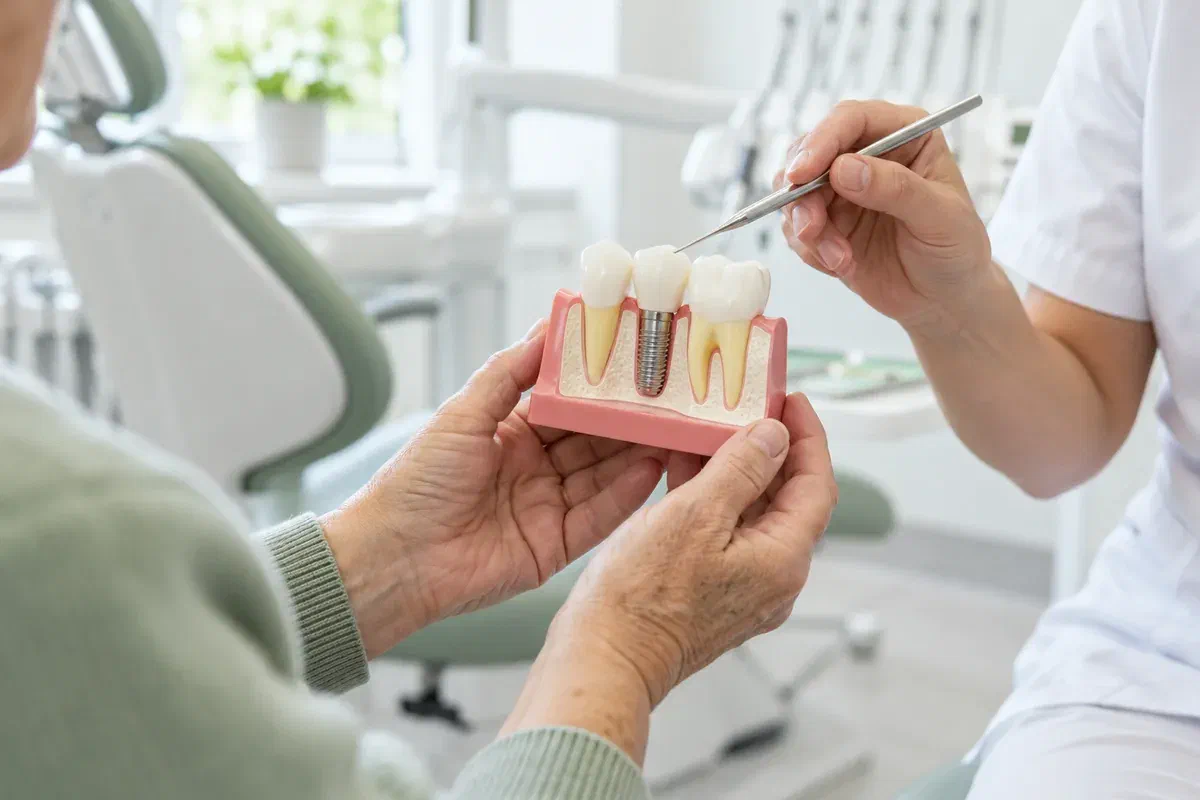
A replacement involves more than its price tag. Appointments, healing, a cleaning routine and future upkeep are part of the commitment, and they should be considered together with what the examination shows.
Bring a full medication and supplement list and note recent medical treatment. This lets the dentist assess healing and planning factors and decide whether to contact your physician before suggesting an approach.
Describe the daily price of a poor fit, whether that is sore spots, slipping, embarrassment or foods you avoid. Bring the denture in, since an adjustment or reline might help at a smaller commitment than surgery.
Mention hand strength, vision, mobility, transport and any help at home. These affect which restoration is practical and how often maintenance visits would be needed, which in turn shapes the long-term cost.
Never stop or reduce a prescribed medicine to prepare for possible implant work. Changes for dental reasons need an individual plan agreed with the clinicians who manage your health.
Begin with one concrete purpose, perhaps ending the struggle with a lower denture or replacing a single tooth you chew on. A clear purpose lets you ask a sharper question: is this improvement worth the time, effort and expense this treatment would require?
Being available does not make implants the best use of your money, and being older does not put them beyond you. A balanced conversation considers your priorities, your health, the clinical findings, and what maintenance could cost if your circumstances changed.
Patient information: ITI — advanced age and medical conditions in implant care
Say what you would most like to fix and what you are not prepared to take on. The team can then compare realistic choices with that in mind, rather than presenting the largest plan as the default.
Treatment can sometimes be spread over time, or a simpler step tried first. Ask whether a phased approach is clinically reasonable for you and what each phase would involve before you commit to the next.
Implant restorations and dentures both need periodic review, and parts can wear. Ask what typical maintenance looks like for each option so you can compare the full commitment, not just the first bill.
Ask for any explanation to be repeated, written down, or shared with the person beside you. You can leave this appointment with information and estimates to review, without agreeing to treatment.
Explain which teeth are missing, what appliance you use, and the daily moments that frustrate you. Be upfront about concerns over surgery, expense, recovery or upkeep so they shape the conversation.
The dentist works through your medical history and medicines, then examines gums, remaining teeth and existing work. Radiographs or other records may be advised to understand bone at any proposed implant site.
Compare implant and non-implant approaches by stage, effort and maintenance. If a specialist referral is suggested, ask what it would determine and whether it carries its own fee.
A written outline of the proposed stages, with estimates attached, lets you review everything at home. Confirm which existing problems should be addressed anyway, since those may need attention whatever you decide.
A consultation can produce new terms, several routes and an estimate or two. Keep them together with the clinic's number so you can compare carefully, check with any insurer, and call with follow-up questions.
Check whether the proposed treatment addresses the concern that brought you in. Write down any questions about fees, healing, temporary teeth or maintenance instead of trying to remember the discussion.
If you have dental insurance or another benefit plan, contact the provider directly with the written estimate. Coverage for implant work varies widely, so confirm details before booking treatment.
A new medicine, medical procedure or change in how you manage cleaning could affect the plan. Share it before any treatment and at later reviews so the recommendations stay appropriate.
Budgets, goals and support differ from one person to another. These questions explore the financial and practical side of implant care alongside the clinical assessment.
Visit our Bronte Street practice to talk about tooth replacement with your health, priorities and budget in mind. Bring your current denture, a medication list, and any benefit plan details you would like to ask about.
Should you want a companion present, a longer appointment, or help with mobility or communication, tell the clinic ahead of the visit.
