Medicines and medical history
Bring a full list of what you take, including supplements, and note any recent treatment. This helps the dentist consider healing and planning and decide whether to seek input from your physician or another specialist.


Snap-in denture or teeth that stay put? Seniors from Puslinch can use an implant consultation to understand how removable and fixed designs differ in surgery, cleaning, repairs and daily handling, and whether either suits them.
Once someone hears that implants might steady a denture, the next question is usually about which kind. A removable design clips on and comes out for cleaning. A fixed one stays in place and is cleaned around. Both have trade-offs, and neither suits everyone, so the comparison deserves time.
Before getting to designs, though, the dentist has to judge whether implant treatment of any kind would be suitable and worthwhile for you. Age does not make that call. Health, gum and bone condition, the teeth you still have, the treatment you are willing to undergo and your ability to keep it clean all feed in.
Travelling in from Puslinch, one well-prepared visit can cover both the suitability question and the design comparison. Bring someone along if it helps. The dentist will show models where useful, explain the gains and limits of each approach, describe simpler alternatives, and leave the decision with you.
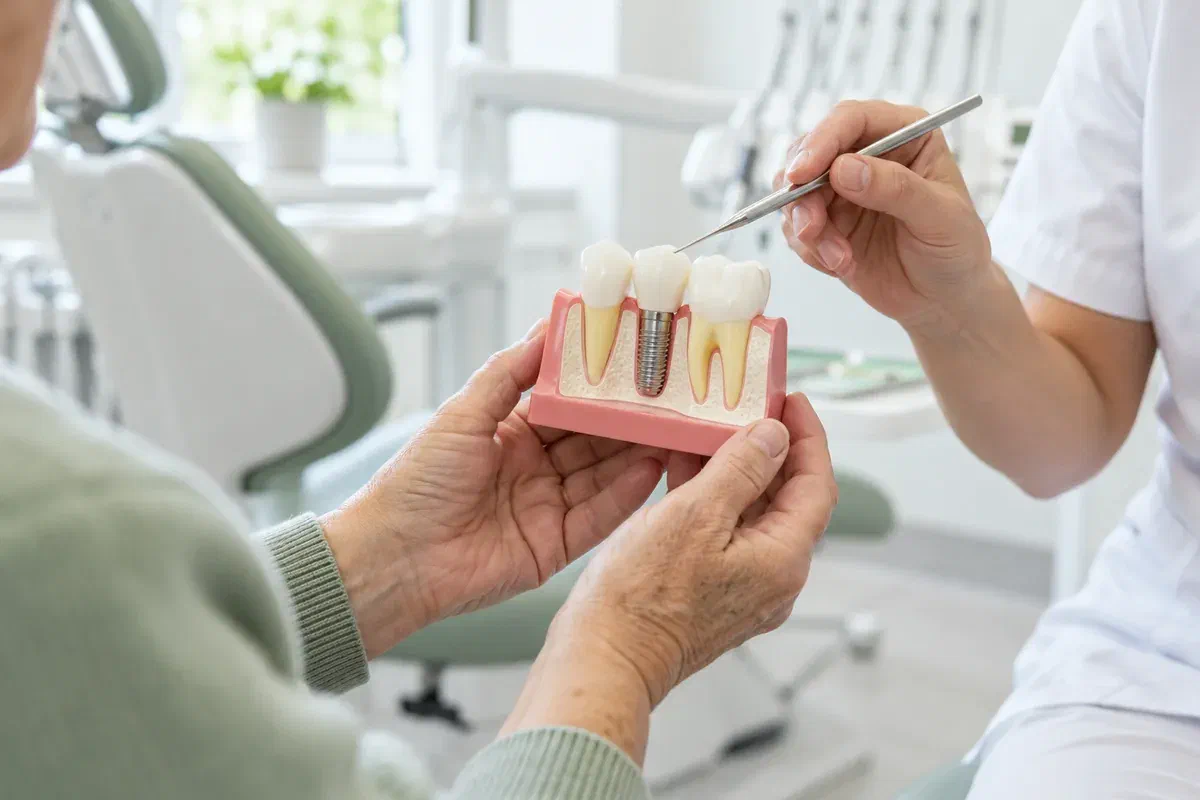
Stability is appealing, but every implant design also means surgery, healing, a particular cleaning method and maintenance visits. Those everyday demands differ a lot between designs and should be weighed with the examination.
Bring a full list of what you take, including supplements, and note any recent treatment. This helps the dentist consider healing and planning and decide whether to seek input from your physician or another specialist.
Explain whether the problem is movement, sore spots, appearance or particular foods. Bring the denture with you. Its fit may be improvable without implants, and how you handle it now hints at which design might suit you.
Removing and clipping in a denture takes some grip, while cleaning around fixed teeth needs reach and fine control. Mention hand strength, eyesight, mobility and any help you have, so the comparison reflects your situation.
Do not alter any prescribed medicine because you are weighing implant options. If treatment ever made a change advisable, it would be planned individually with the clinicians responsible for that medicine.
Start by naming the single thing you most want to improve, perhaps a lower denture that floats when you speak or eating raw vegetables again. That target helps you judge whether the extra stability of an implant design is worth the treatment and upkeep it brings.
Implants are not the answer just because they are available, nor are they ruled out because you are older. A balanced discussion takes in your preferences, your health, what the examination shows, and how each design could be maintained if your abilities changed later.
Patient information: ITI — advanced age and medical conditions in implant care
Tell the dentist whether you would rather remove teeth to clean them or clean around teeth that stay in. That preference, alongside clinical findings, helps narrow down which approach is worth exploring.
Different designs often need different numbers of implants and appointments. Ask how many each would involve, how long healing might take, and whether a driver would be needed on certain days.
Removable attachments and liners wear and need periodic replacement, while fixed teeth can chip or need professional removal for maintenance. Ask what is typical so the long-term picture is clear.
Ask for points to be repeated, sketched, written down, or explained to your companion. The purpose is to understand the options and their demands, and you are under no obligation to choose one on the day.
Describe which teeth are missing, the appliance you wear, and the moments it frustrates you. Bring up concerns about surgery, cost, healing or maintenance early so they are part of the comparison.
The dentist considers your medical history, medicines, gums, remaining teeth and existing dental work. Imaging may be recommended to see how much bone is available, which can influence which designs are possible.
Compare conventional, removable implant and fixed implant approaches by stages, effort and upkeep. Models can help show how each is handled. If a referral is advised, ask what it would determine.
You might want more information, a chance to think, or further planning. Request a written summary of any agreed appointments and which current dental problems should be handled regardless of design.
Implant designs come with their own vocabulary. Keep the written notes, any diagrams and the clinic's number together so you can walk through a typical day with each option and follow up with questions.
Think through removing, cleaning and replacing a denture, or cleaning around fixed teeth, as part of your actual routine. Note any doubts about expense, recovery, temporary teeth or upkeep to ask about.
If a procedure would need a driver or someone nearby afterward, or you want help understanding instructions, arrange it before booking. A trusted person can handle logistics while you decide.
Changes in medication, medical treatment or your ability to manage daily care may affect which design remains suitable. Let the dentist know before procedures and at later checkups.
Goals, health and help at home differ for everyone. These questions explore how implant designs differ in daily life as well as in the clinical assessment.
Visit our Bronte Street practice to compare tooth replacement designs with your health, preferences and routine in mind. Bring the denture you wear now, your list of medicines, and the questions that matter most to you.
Let the clinic know about mobility, hearing, vision or companion arrangements that would help you take part comfortably.
