The fit or the bite has changed
A denture that rocks, a fixed tooth that meets too soon, or soreness after meals is worth reporting. Let us know about work on other teeth, as the implant restoration has to fit with everything around it.


If your implant-retained denture no longer clicks in as firmly, or a fixed implant tooth feels different, it is time for a look. Implant maintenance for Brampton covers attachments, gum, bite and how you clean.
People who wear a denture held by implants often notice the change first as a feeling: the appliance seats less firmly than it used to, or it lifts when they eat something sticky. With a fixed crown or bridge the hints are different, perhaps food trapping or a slight change in how the teeth come together.
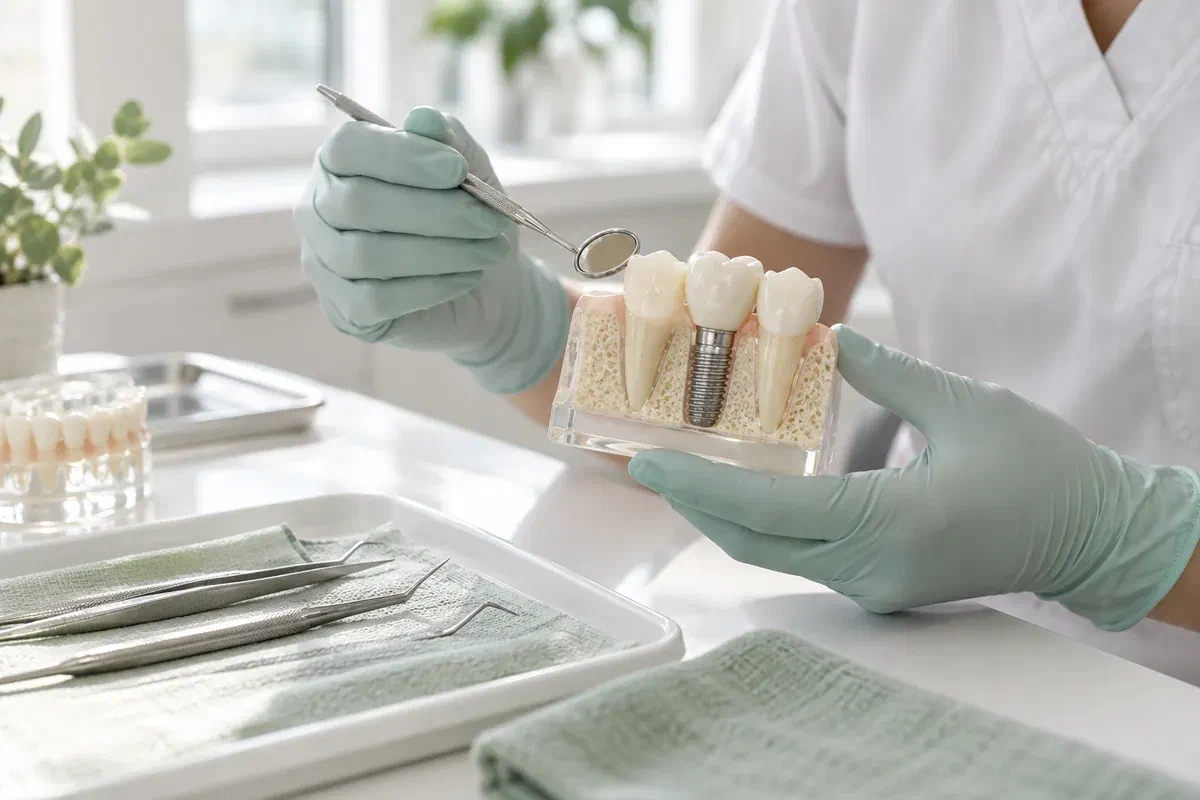
Either way, the question is the same. Which part of the system has changed? An implant restoration includes what you see, the components that connect it, the gum that wraps around it and the bone that holds the fixture. Maintenance examines each of those, because a worn attachment and inflamed tissue need entirely different care.
Coming from Brampton, it pays to bring the appliance itself if you wear one, along with any records about your implants and a note of what has felt different. Tell us about health changes as well. That gives the team what it needs to recommend maintenance suited to your particular restoration.
There is no need to identify the faulty part. Explain what you notice, whether it is gradual or sudden, and when it is most obvious, and the clinician will assess the restoration and its surroundings with that information.
A denture that rocks, a fixed tooth that meets too soon, or soreness after meals is worth reporting. Let us know about work on other teeth, as the implant restoration has to fit with everything around it.
Weaker retention, a rattle or movement may involve an attachment, a crown, a bridge or another component. That is not the same as the implant fixture failing, but the cause should be identified rather than lived with.
Health changes, new medicines or reduced hand strength can make removing, cleaning and replacing an appliance a struggle. Tell us, because the plan should be something you can manage comfortably now.
Call promptly about swelling, discharge, a restoration that has come loose or pain that is building. Those concerns need an assessment before your next routine date.
Over a series of visits the team can follow how attachments wear, how the gum responds and how well your routine is working. That record makes it easier to see when a concern is outside everyday cleaning and calls for a particular assessment or repair.
No plan can guarantee that an implant restoration will remain free of complications. Your care should be individual, and fresh findings may adjust the interval or the kind of attention needed. Ask what is being followed and how the advice relates to your history.
Patient information: European Federation of Periodontology — dental implants
Notes from each visit, plus earlier information about your implants, help the clinician recognise change. If another office made the appliance or placed the implants, system details make it easier to coordinate future care.
Attachments and components can wear while the gum is healthy, and tissue problems can occur while the hardware is sound. Looking at both avoids blaming every complaint on hygiene or assuming the implants are lost.
Ask which parts tend to need servicing on your design, how cleaning access can be improved and who would carry out repairs. Preparation makes a broken clip or loose crown easier to deal with.
The appointment depends on the design. A single crown, a bridge across several implants and an overdenture with attachments are maintained in different ways, so the visit is built around yours.
We discuss the implant treatment you had, repairs since, earlier professional care and the routine you follow. Health and medication updates are recorded, along with symptoms, movement and any trouble with an appliance.
The clinician reviews the restoration or appliance, the attachments, your bite and the surrounding gum. Further records or imaging may be suggested when your history and the findings make them useful.
Cleaning is planned for the restoration you actually wear. If an attachment, the tissue or the design needs another procedure, the team explains the finding and the next step being proposed.
You are shown how to clean, remove and replace your appliance where relevant, which signs mean you should call and when to return. If other clinicians are involved, each person’s role is agreed.
The best routine is one that is clear and realistic. Ask for a hands-on demonstration, keep your implant information somewhere safe and let us know about a change rather than waiting for a recall.
Follow the brushes and technique recommended for your implants and appliance. If an attachment area becomes hard to reach, or a tool no longer slides in easily, say so; reassessment is usually more helpful than more pressure.
Please do not bend attachments, tighten anything or glue a loose crown or appliance. These parts need correct assessment and equipment, and home adjustment can hide the problem or damage something serviceable.
Write down what you know about the implant system, list major repairs and keep the contact details of each office that has treated you. This is useful if a different team ever needs to service a component.
Long-term care is easier when you know what to expect and whom to ask. These questions cover keeping implant restorations, including removable ones, working well over time.
Come to our Bronte Street practice and we will look over your implant crown, bridge or appliance, the tissue supporting it and your daily routine. We can explain what needs monitoring, investigate changes and coordinate a repair or referral when cleaning is not the answer.
If an attachment or crown has come off, keep it safe and contact us. Mention any movement, swelling or increasing discomfort when you book.
