

Illustrative discussion of ongoing implant maintenance with a patient
Restorative Dentistry

Dental Implant Maintenance in Burlington

New work on a neighbouring tooth can change how an implant takes the load when you chew. Implant maintenance for Burlington reviews the bite, the restoration, the gum and your cleaning so small shifts are understood.

Where the bite comes in

Your mouth changes. The implant has to keep up.

Natural teeth drift slightly, wear down and sometimes need crowns or fillings of their own. An implant does not move in the same way. So when the teeth around it change, the implant restoration can end up meeting its opponent earlier or harder than it once did, and that extra load is something a clinician will want to look at.

Bite is only one strand, though. Implant maintenance also reviews the visible crown or appliance, the parts that connect it to the fixture, the gum that seals around it and the supporting bone. Each can run into its own kind of difficulty, and one symptom may have more than one possible source.

For people travelling from Burlington, a review is a chance to bring everything together in one conversation. Tell us about recent treatment elsewhere, any clenching or grinding you have noticed, and how your cleaning is going. Along with your implant history, that lets us suggest a maintenance plan suited to the restoration you have.

Request a Burlington implant review
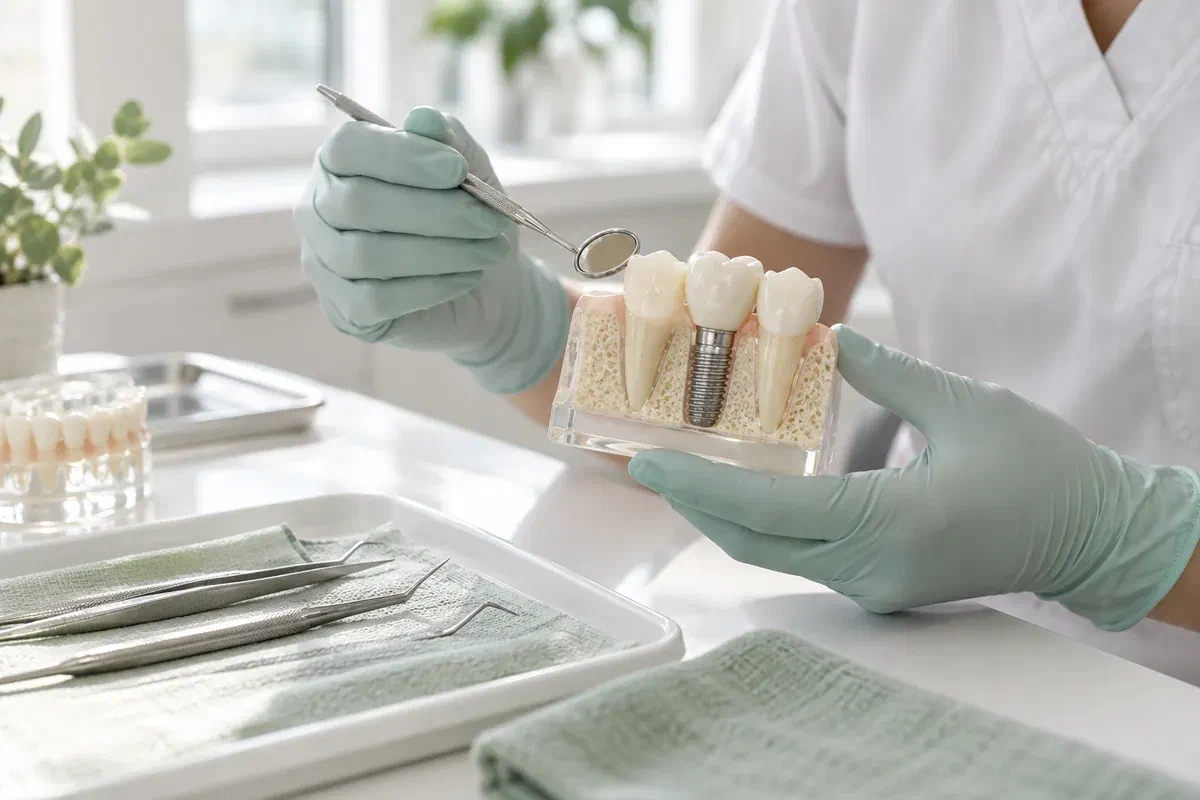
Gloved clinician inspecting an implant teaching model with a dental mirror
Things to point out

Describe the feeling, not the part.

Working out which component is behind a symptom is the clinician’s job. What helps most is your account of what feels different, when you notice it and whether anything set it off.

The implant tooth lands first

A high spot, tenderness after meals or a feeling that you are chewing around the implant are all worth raising. Mention any recent crowns, fillings or aligner treatment, because the restoration works as part of the whole bite.

Something has started to give

The source might be a crown, bridge, attachment or another piece of the system. Movement is not proof that the fixture has failed, yet it should never be brushed aside. An examination is needed to find what is moving.

Life has changed your routine

A health diagnosis, a new prescription or more trouble with fine hand movements can all make cleaning harder. Share these, so recommendations fit what you can comfortably manage.

Phone the clinic about a loose restoration, swelling, discharge or pain that is getting worse. These should be checked without waiting for a regular maintenance slot.

Why the check is worthwhile

Small shifts are easier to manage when caught early.

Reviewing an implant across several visits shows how the bite, tissue and restoration are behaving over time. It also helps the team tell whether a complaint is a simple cleaning matter or something that calls for its own assessment or repair.

Maintenance cannot promise an implant will never develop a complication. The plan ought to be individual, and new findings can alter the interval or the level of care. Ask what is being watched and how the recommendation reflects your own history.

Patient information: European Federation of Periodontology — dental implants

A trail of findings to compare

Notes from earlier reviews, plus any records from the office that placed the implant, help the clinician understand what has changed. Information about the system and restoration is especially helpful when treatment happened elsewhere.

Mechanics and tissue, weighed separately

An overloaded crown, a loosening screw and inflamed gum are three different problems. Looking at each prevents the assumption that every symptom comes from cleaning, or that one loose piece means losing the whole implant.

Answers ready before you need them

Ask about spare components, the cleaning access your restoration allows and who would carry out a repair. Knowing this in advance takes some of the stress out of an unexpected change.

Step by step

A review that follows the evidence

No two reviews are identical, because restorations differ. A single crown, a bridge spanning several implants and a removable denture held by attachments each have their own needs.

  1. Hear what is new

    We go over the implant’s history, repairs, past professional care and your home routine, then ask about changes to your health or medicines. New symptoms, movement or difficulty with an appliance are noted.

  2. Check the restoration, bite and gum

    The clinician examines the implant tooth or appliance, how it meets the opposing teeth and the tissue around it. If the history and findings justify it, further records or imaging may be suggested.

  3. Carry out care or set up treatment

    Cleaning and routine care are matched to your restoration. Where a component, the tissue or the bite needs a different procedure, the finding is explained along with the proposed next step.

  4. Confirm the routine and next visit

    You hear how to look after the restoration at home, which signs should prompt a call and when you are due back. If several clinicians are involved, we clarify who manages each review or stage.

At home in Burlington

Steady habits, clear contacts

A plan is only useful if you can follow it day to day. Ask to be shown what to do, keep your treatment details somewhere you will find them, and get in touch when a change appears.

Keep to the cleaning method you learned

Use the tools and technique suggested for your implant. If an area becomes awkward or an aid stops fitting comfortably, let us know, since the right response may be reassessment rather than extra force.

Avoid fixing parts yourself

Do not tighten screws, adjust attachments or use glue on a loose crown. These components need proper assessment and equipment, and tinkering can disguise the cause or damage parts that might have been salvaged.

Keep a record of the implant

File away the implant brand if you know it, a note of any big repairs and the phone numbers of everyone who has treated it. Those scraps of paper matter if care is transferred or a different team must assess a part.

Choosing the next step

Match the care to the cause.

Reviews do not all end in the same place. The team should tell you whether the matter is routine prevention, a part that can be serviced, or the health of the tissue supporting the implant.

If the implant and tissue look stable

Keep up personalized maintenance

Reviews and professional cleaning go on, with home-care guidance to suit your restoration. The interval is based on your risks and present condition, and you know how to report changes in between.

If wear, overload or looseness is found

Adjust or repair a component

A damaged or loose part, or a bite that needs adjusting, may require a restorative appointment and details about your implant system. Ask which component is involved and what the work would correct.

If cleaning is not settling things

Treat the surrounding support

Inflamed gum or a change in the bone support may need a closer look and its own treatment. You will hear whether a referral is wise, and how that work will link with looking after the restoration.

Questions about bite and upkeep

Helpful answers before your review

Knowing what is checked, and who looks after which part, makes implant care far easier to manage. These questions focus on the bite and the continuing care of the whole restoration.

(905) 876-4488
Why does my implant feel high after I had a filling on the opposite tooth?
A new filling or crown can change how the teeth meet, and an implant restoration may take more of the contact as a result. Mention it at your review so the bite can be checked and adjusted if the clinician feels it is needed.
Can grinding or clenching affect an implant restoration?
Heavy forces can place extra demand on a crown and its components. If you clench or grind, or have been told you do, mention it. The clinician can look for signs of wear and discuss whether any protective measures make sense.
My implant crown wobbles slightly. Is the implant itself coming loose?
Not always. The movement may come from the crown or another component, and only an examination can identify it. Try not to test it repeatedly, and do not attempt to tighten or reattach the crown. Call to arrange a visit.
Will my bite be checked at every implant maintenance visit?
The bite is often part of a review, especially when there have been symptoms or changes elsewhere in the mouth. Ask what is included in your planned visit and whether any separate assessment is being recommended.
How often should an implant be reviewed?
There is no single interval for everyone. Your history, tissue findings, the type of restoration and how easily you can clean it all shape the recommendation. Ask why a particular interval suits you and what would lead to a change.
Is it practical to come from Burlington for implant maintenance?
Many people travel for ongoing care. Booking reviews ahead and asking for any needed work to be grouped can help. Call first if something feels urgent, so you know whether to come in or seek care nearer home.
Implant maintenance for Burlington

Keep the implant working with the rest of your teeth.

Book a review at our Bronte Street practice to look at your implant restoration, the tissue supporting it, your bite and your routine at home. We can explain what needs watching, investigate changes and arrange the next step when care beyond cleaning is needed.

If a component comes off, keep it safe and call us. Mention movement, swelling or increasing discomfort when you arrange your visit.

Visit Milton Dental Clinic
Unit 1, 342 Bronte St. S, Milton, ON L9T 5B7
Get directions Clinic hours
Monday–Thursday
11am–7pm
Friday–Sunday
By appointment only

Areas we serve

  • Milton
  • Oakville
  • Mississauga
  • Georgetown
  • Halton Hills
  • Acton
  • Campbellville
  • Brampton
  • Burlington
  • Puslinch
  • Rockwood
  • Erin
  • Caledon
  • Etobicoke
  • Old Milton
  • Bronte Meadows
  • Timberlea
  • Dorset Park
  • Dempsey
  • Clarke
  • Beaty
  • Coates
  • Harrison
  • Scott
  • Willmott
  • Ford
  • Bowes
  • Cobden
  • Walker
  • Mountain View
  • Milton Heights
  • Hawthorne Village
  • Valley View
  • Fallingbrook
  • Nassagaweya
  • Trafalgar
  • Esquesing
  • Nelson
  • Brookville
  • Moffat
  • Glen Williams
  • Norval
  • Limehouse
  • Stewarttown
  • Ashgrove
  • Hornby
  • Silver Creek
  • Speyside
  • Scotch Block
  • North Oakville
  • River Oaks
  • Glen Abbey
  • West Oak Trails
  • Palermo
  • Bronte Creek
  • College Park
  • Joshua Creek
  • Uptown Core
  • Preserve
  • Iroquois Ridge
  • Lisgar
  • Meadowvale
  • Meadowvale Village
  • Churchill Meadows
  • Erin Mills
  • Central Erin Mills
  • Streetsville
  • East Credit
  • Creditview
  • Heartland
  • Sheridan
  • Mount Pleasant
  • Credit Valley
  • Huttonville
  • Churchville
  • Springbrook
  • Northwest Brampton
  • Bram West
  • Fletcher's Meadow
  • Fletcher's Creek South
  • Alton Village
  • Orchard
  • Millcroft
  • Headon Forest
  • Tansley
  • Brant Hills
  • Tyandaga
  • Kilbride
  • Lowville
  • Aberfoyle
  • Morriston
  • Arkell
  • Hillsburgh
  • Freelton
  • Carlisle
  • Waterdown
  • Flamborough
  • Mountsberg

How can we help?

Milton Dental Clinic

Have a question about your smile? Choose the option that works best for you.

For urgent dental concerns, please call.
Messages are reviewed during clinic hours.